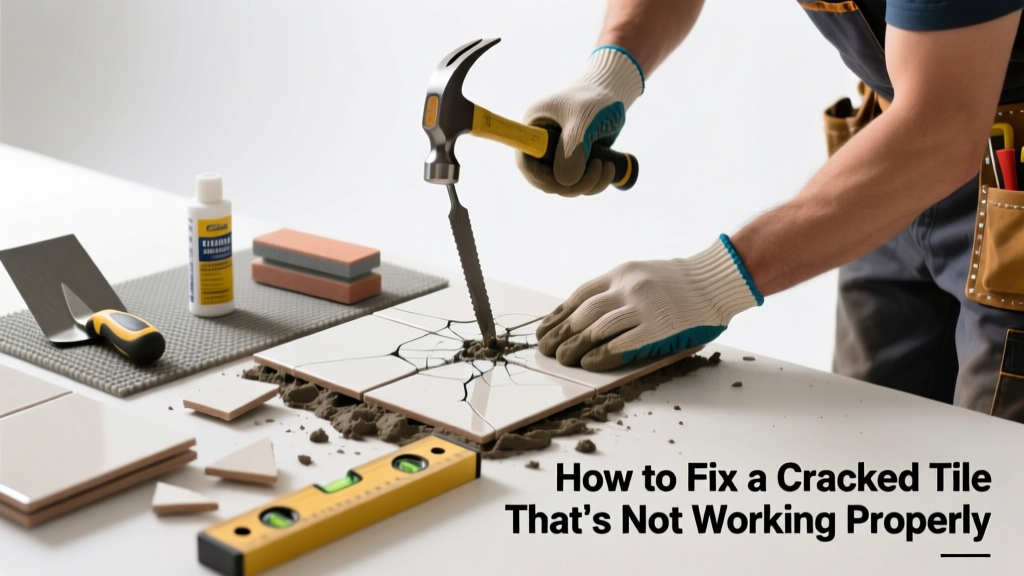
A cracked tile isn’t just an eyesore—it can signal deeper problems like subfloor movement, water intrusion, or improper installation. If the tile feels spongy, grout is crumbling, or moisture is seeping through, it’s not just cosmetic: it’s compromising your floor’s integrity and safety.
Quick Diagnosis
Before grabbing tools, rule out what’s really going on. A cracked tile often points to one (or more) of these root causes:
- Subfloor flex or sag—especially over joist gaps or weakened plywood
- Water damage beneath the tile from leaks or poor sealing
- Impact damage from dropped objects or heavy furniture
- Thermal expansion stress in large-format tiles without proper expansion joints
- Improper thinset coverage during original installation (less than 80% contact)
Tools & Materials Needed
| Item | Purpose | Estimated Cost |
|---|---|---|
| Grout removal tool or oscillating multi-tool | Cuts away old grout cleanly without damaging adjacent tiles | $15–$45 |
| Tile nippers or carbide-tipped chisel | Breaks up cracked tile safely while minimizing substrate damage | $8–$22 |
| Notched trowel (1/4" x 1/4") | Ensures even thinset coverage for full adhesion | $6–$14 |
| Modified thinset mortar (e.g., Mapei UltraFlex LFT) | Flexible, high-bond formula for stable repairs over minor substrate shifts | $22–$34 per 50-lb bag |
| Epoxy grout (e.g., Spectralock Pro) | Non-porous, crack-resistant grout for wet areas or high-traffic zones | $38–$52 per kit |
Step-by-Step Fix
Choose the method based on severity and location:
- Minor hairline crack + stable substrate: Clean with isopropyl alcohol, fill with color-matched epoxy grout using a caulk gun, then wipe excess with damp sponge before cure.
- Cracked + loose tile: Remove grout fully around tile, gently pry up with putty knife, scrape off old thinset, apply fresh modified thinset, press tile firmly into place, and weight with books for 24 hours.
- Multiple cracks or substrate damage: Cut out entire tile plus 2" of surrounding grout, inspect and reinforce subfloor (add 1/2" BC plywood screwed every 6" to joists), re-tile with uncoupling membrane (e.g., Ditra) and polymer-modified thinset.
When to Call a Pro
Don’t risk structural compromise or code violations in these cases:
- Cracks radiating across 3+ tiles in a straight line—often signals major subfloor or foundation movement
- Visible water stains or musty odor under tile—indicates active leak behind walls or under slab
- Tiles cracking within 6 months of installation—likely warranty-covered workmanship issue
- Cracks in heated floor systems—electrical hazard if wires are exposed or damaged
"Over 60% of premature tile failures stem from substrate issues—not the tile itself." — NTCA Reference Manual, 2022 Edition
Prevention Tips
Extend your tile’s lifespan with these field-tested habits:
- Install expansion joints every 20–25 ft in floors and at all changes in plane (e.g., wall-to-floor transitions)
- Use a tile backer board (not drywall or greenboard) in wet areas like showers and laundry rooms
- Wait full 72 hours before walking on newly set tile—even if surface feels dry
- Re-seal grout annually in kitchens and bathrooms; use penetrating sealers like Aqua Mix Sealer’s Choice Gold
Can I glue a cracked tile back together?
No—epoxy or superglue only masks the problem. The bond won’t withstand foot traffic or thermal cycling, and moisture will wick under the fracture. Replacement is the only reliable fix for cracked ceramic or porcelain.
Why does my new tile crack after installation?
Most often due to inadequate substrate preparation: unlevel floors, insufficient thinset coverage, or lack of movement accommodation. According to the Tile Council of North America’s 2023 Field Guidelines, 78% of post-installation cracks trace back to improper substrate prep—not tile quality.
Is cracked tile a sign of foundation problems?
Sometimes—but not always. Isolated cracks suggest localized stress. However, stair-step cracks in grout lines, diagonal cracks across multiple rooms, or doors that stick suddenly warrant a foundation inspection. Contact a licensed structural engineer if you see more than three such patterns.
Can I tile over cracked tile?
Never. Tiling over damaged tile creates uneven surfaces, poor adhesion, and hides underlying moisture or movement issues. It also violates ANSI A108.5 standards and voids most manufacturer warranties.
How long does a proper tile repair last?
A correctly executed repair—with substrate reinforcement, proper thinset, and epoxy grout—typically lasts 15–20 years. Repairs skipping the subfloor check rarely exceed 2–3 years. For lasting results, see our guide on how to repair subfloor under tile.
What’s the difference between sanded and unsanded grout for cracked tile repair?
Use sanded grout for joints wider than 1/8" (standard for floor tiles); unsanded works only for narrow wall joints. Using unsanded in wide floor joints invites shrinkage cracks—exactly what you’re trying to prevent. See our grout types comparison for full specs.
A cracked tile isn’t a lost cause—but treating it as just a surface flaw almost guarantees repeat failure. Take the time to inspect the structure beneath, match materials to your environment, and follow industry-backed methods. And if your repair involves plumbing access or electrical elements, don’t hesitate to reach out to a licensed contractor—some fixes aren’t worth the risk. For related help, check our guide on how to fix leaking shower grout or tile adhesive vs. thinset.