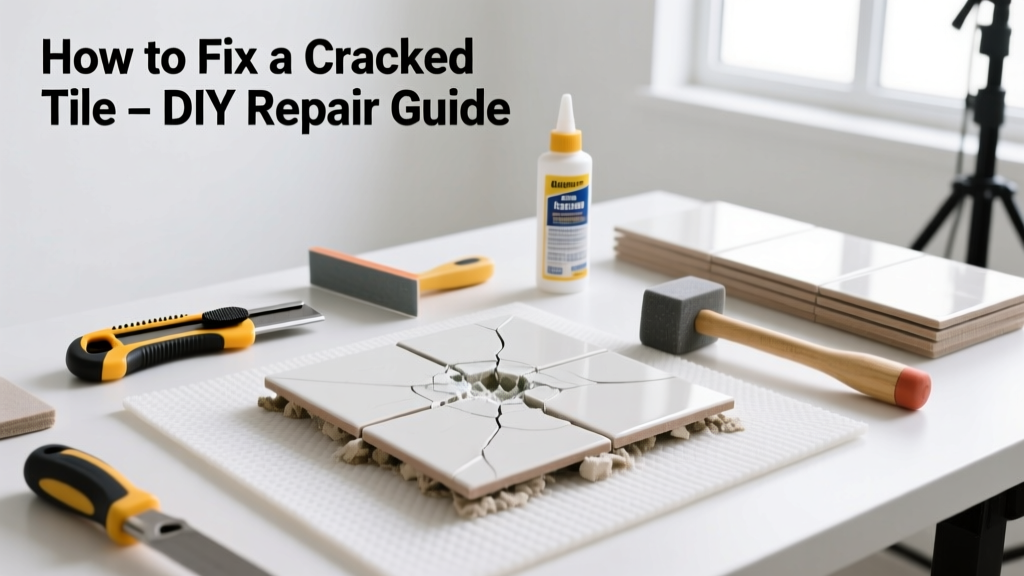
A hairline crack in your kitchen backsplash or a jagged fracture in your bathroom floor isn’t just unsightly—it’s a red flag for moisture intrusion, tripping hazards, or underlying structural issues. Most small cracks can be repaired in under an hour with basic tools, but misjudging the severity can lead to costly water damage or tile failure down the line.
Quick Diagnosis
Before grabbing tools, identify what caused the crack—this determines whether you’re patching a symptom or solving a root problem. Common causes include:
- Impact from dropped heavy objects (e.g., cast-iron skillet on ceramic)
- Subfloor movement or improper thinset application during original install
- Thermal expansion in unheated garages or sun-drenched entryways
- Moisture buildup beneath tiles due to grout failure or missing caulk
- Heavy furniture legs without felt pads concentrating pressure on single tiles
Tools & Materials Needed
| Item | Purpose | Estimated Cost |
|---|---|---|
| Grout removal tool or oscillating multi-tool with carbide blade | Removes old grout cleanly without damaging adjacent tiles | $12–$45 |
| Epoxy-based tile repair kit (e.g., Sikaflex-1a or Loctite PL Premium) | Fills cracks with flexible, waterproof, color-matching filler | $8–$22 |
| Tile nippers and safety goggles | Safely removes broken fragments without shattering surrounding tile | $6–$15 |
| Notched trowel (1/8" x 1/8") and polymer-modified thinset | Required only if full tile replacement is needed | $10–$18 |
| Matching grout (sanded or unsanded) and grout float | Seals joints and prevents future moisture penetration | $4–$12 |
Step-by-Step Fix
Choose the method based on crack size, location, and tile type:
- Surface Crack (≤1/16" wide, no missing pieces): Clean with vinegar-water solution, dry thoroughly, apply clear epoxy filler with toothpick, smooth with cotton swab dipped in rubbing alcohol, let cure 24 hrs.
- Chipped Corner or Small Fragment Missing: Use color-matched epoxy putty (e.g., PC-11), press into void, shape with plastic spoon, sand lightly after 3 hours, then seal with grout sealer.
- Full Tile Replacement (crack spans >50% of tile or shows lifting): Score grout lines with utility knife, remove grout, carefully pry up tile using flatbar and wood block, scrape old thinset, apply fresh thinset, set new tile, wait 24 hrs, then regrout and seal.
When to Call a Pro
Some cracked tiles signal deeper problems that demand expert assessment. Call a licensed tile contractor if:
- You see three or more cracked tiles in a straight line—often indicates subfloor deflection or joist spacing issues
- The crack runs continuously across multiple tiles and grout lines (a "spiderweb" pattern), suggesting foundation settlement
- There’s softness or sponginess around the tile—possible water damage or rot in substrate
- The tile is part of a heated floor system; cutting into it risks damaging heating wires or hydronic tubing
- You’re working on large-format porcelain (≥12"x24") over concrete slab—requires specialized thinset and curing protocols
"Over 68% of premature tile failures stem from inadequate substrate preparation—not poor tile quality," states the Tile Council of North America’s 2022 Installation Handbook.
Prevention Tips
Extend tile life by addressing vulnerabilities before they cause damage:
- Install rubber or cork underlayment beneath tile in high-impact areas like kitchens and laundry rooms
- Recaulk perimeter joints (where tile meets tub, wall, or baseboard) every 18 months using 100% silicone caulk
- Use furniture pads rated for hard surfaces—test them with a 50-lb weight for 72 hours to confirm no compression
- Maintain indoor humidity between 30–50% year-round to minimize expansion/contraction stress on grout and tile
- Never use abrasive scrubbers or acidic cleaners (like muriatic acid) on glazed ceramic or porcelain—they erode glaze and weaken edges
Can I paint over a cracked tile?
No—paint won’t bond reliably to glazed surfaces and will chip at the crack line within weeks. Instead, use a tinted epoxy filler designed for tile, which bonds chemically and flexes with minor substrate movement.
Will super glue work for a hairline crack?
Not long-term. Cyanoacrylate (super glue) becomes brittle and yellow when exposed to UV or moisture. It also lacks flexibility—so thermal cycling will reopen the crack. Epoxy-based fillers remain pliable and resist discoloration for 5+ years.
How do I match grout color when replacing one tile?
Take a small chipped piece to a local tile supplier—they’ll scan it with a spectrophotometer. If unavailable, mix small batches of pre-mixed grout with powdered oxide pigments (e.g., Custom Building Products Grout Boost) until you match under natural light. Always test on scrap tile first.
Can I replace just one tile in a patterned floor?
Yes—but only if you have an identical spare. Patterned tiles (like encaustic cement or hand-painted zellige) vary batch-to-batch. If no spare exists, consider replacing a symmetrical group (e.g., a 2x2 block) to minimize visual disruption. See our guide on patterned tile repair for layout tips.
Do I need to seal the repaired area?
Yes—if you used epoxy filler or new grout. Wait 72 hours after curing, then apply two coats of penetrating sealer (e.g., Aqua Mix Sealer’s Choice Gold) with a microfiber cloth. Unsealed repairs absorb stains and degrade faster, especially in showers or mudrooms.
Is cracked tile covered by homeowners insurance?
Rarely. Most policies exclude wear-and-tear or maintenance-related damage. However, if the crack resulted from a sudden, covered peril—like a burst pipe or fallen tree limb—file a claim with photos documenting the cause. For documentation, see our homeowners insurance claims checklist.
A well-executed tile repair doesn’t just restore appearance—it restores function and buys time before larger issues escalate. Whether you patch, replace, or pause to consult a pro, acting early keeps moisture out, prevents slips, and preserves your home’s value. And remember: every tile you successfully repair builds confidence for the next project—like fixing a loose floor tile or regrouting a shower wall.