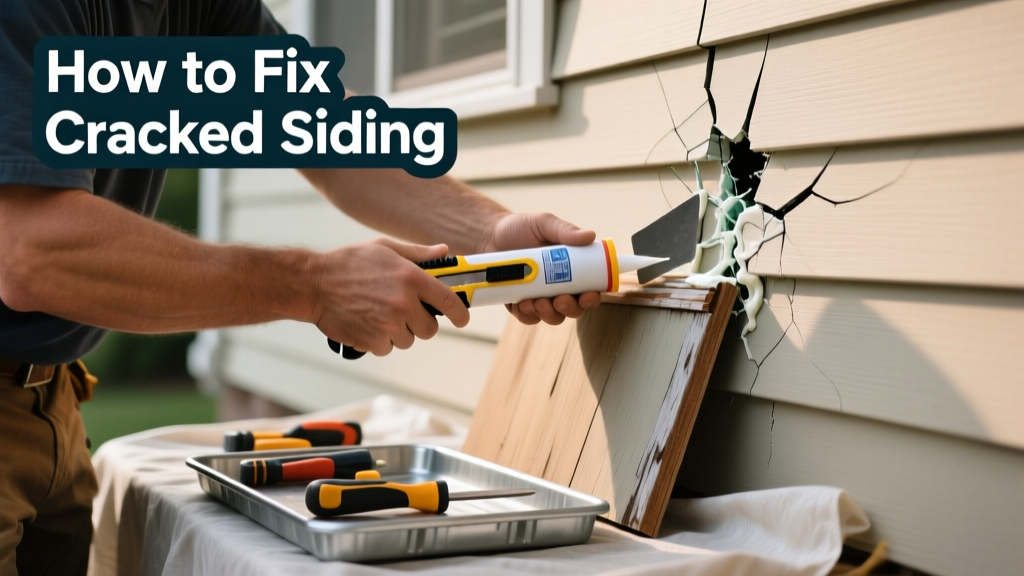
That hairline crack near your garage door? It’s not just cosmetic—it’s an open invitation for moisture, insects, and rot. Left unaddressed, even small cracks in vinyl, fiber cement, or wood siding can grow into costly structural issues within a single season.
Quick Diagnosis
Cracks rarely appear out of nowhere. Here are the most common root causes:
- Thermal expansion and contraction (especially in vinyl during extreme summer/winter swings)
- Impact damage from lawn equipment, hail, or falling branches
- Improper installation—nails driven too tightly or boards nailed at incorrect intervals
- Aging material fatigue, particularly in fiber cement older than 15 years or wood siding without recent sealing
- Underlying wall movement or foundation settling stressing the cladding
Tools & Materials Needed
| Item | Purpose | Estimated Cost |
|---|---|---|
| Utility knife with snap-off blades | Cutting away damaged sections cleanly without gouging substrate | $8–$15 |
| Flexible exterior-grade caulk (e.g., OSI Quad Max) | Fills narrow cracks and remains elastic through temperature shifts | $12–$18 |
| Replacement siding panel (matching profile & color) | Required for cracks wider than 1/8" or broken corners | $25–$60 per 12' panel |
| Corrosion-resistant siding nails (1-1/4" galvanized) | Securing new panels without rust stains or pop-outs | $6–$10 per box |
| Butyl rubber tape (e.g., Vycor) | Flashing behind seams to block water infiltration at joints | $14–$22 per roll |
Step-by-Step Fix
Choose the method that matches your crack’s size, location, and siding type:
- Small hairline cracks (under 1/16") in vinyl or fiber cement: Clean with mild detergent and rinse. Dry thoroughly. Apply flexible acrylic-latex caulk using a fine-tip nozzle. Smooth with a damp fingertip. Let cure 24 hours before exposure to rain.
- Cracks 1/16"–1/8" with minor chipping: Use a utility knife to undercut edges slightly (creating a "V" groove). Fill with elastomeric patching compound (e.g., DAP Crack Shot), then sand flush once dry. Prime and paint with 100% acrylic exterior paint.
- Cracks wider than 1/8" or broken panel corners: Remove the damaged piece by unlocking the top panel’s nailing flange and sliding it up. Cut replacement panel to length (leave 1/4" expansion gap at top/bottom). Install with proper nail spacing (6" on center at top, 12" elsewhere) and embed butyl tape under lap joints.
When to Call a Pro
DIY is smart—but not always safe or effective. Call a licensed siding contractor if:
- The crack runs vertically across multiple courses and aligns with interior drywall cracks (possible foundation shift)
- You spot soft, spongy sheathing or dark mold staining behind the crack
- More than three adjacent panels show cracking—indicating systemic installation failure or moisture intrusion
- Your home has stucco or EIFS over wood framing: water trapped behind cracked veneer can cause rapid rot unseen from the surface
According to the Insurance Institute for Business & Home Safety's 2023 report, 68% of siding-related insurance claims involved secondary water damage that started from unrepaired cracks smaller than 3/16".
Prevention Tips
Extend your siding’s life with these proactive habits:
- Inspect all exterior walls twice yearly—spring and fall—with binoculars for early signs of stress lines or discoloration
- Keep shrubs and vines trimmed at least 12 inches from walls to reduce moisture trapping and abrasion
- Ensure gutters are clean and downspouts direct water at least 5 feet from the foundation
- Re-caulk all siding-to-window and siding-to-door seams every 5 years—even if they look intact
Can I use regular interior caulk on cracked siding?
No. Interior acrylic caulk dries rigid and will crack again within months outdoors. Always use exterior-rated, paintable, elastomeric caulk rated for UV exposure and temperature cycling—like GE Silicone II or Sikaflex-1A.
Will painting over a crack hide the problem?
Paint may temporarily mask it, but it won’t stop moisture intrusion—and often traps vapor behind the crack, accelerating decay. A painted-over crack is a red flag for inspectors during resale.
How long does a DIY repair last?
A properly executed caulk repair lasts 5–7 years on south-facing walls (more UV exposure) and up to 10 years on shaded north sides. Panel replacement, when installed correctly, should match the lifespan of adjacent siding—typically 20+ years for fiber cement, 15–25 for quality vinyl.
Can I replace just one piece of fiber cement siding?
Yes—but only if you have the exact product line, batch number, and cut it with a diamond-tipped blade (not standard saws, which shatter edges). Mismatched textures or faded colors make patching obvious. Consider fiber cement siding repair techniques for subtle blending.
Does homeowner’s insurance cover cracked siding repair?
Rarely. Most policies exclude wear-and-tear or gradual deterioration. Coverage applies only if the crack resulted directly from a named peril—like windstorm damage documented by photos taken immediately after the event. Review your policy’s exclusions section in homeowners insurance claims guidance.
What’s the difference between a crack and a split in wood siding?
A crack follows the grain and often starts at nail holes; a split runs across the grain and usually originates at board ends. Splits indicate drying shrinkage or poor acclimation before installation—and require epoxy consolidation or board replacement, not just caulking.
Fixing cracked siding isn’t about perfection—it’s about stopping the leak before it becomes a flood. Even a 15-minute inspection and $12 tube of caulk can buy you years before full replacement. And if you’re weighing options, check our guide on vinyl vs. fiber cement siding to inform future upgrades.