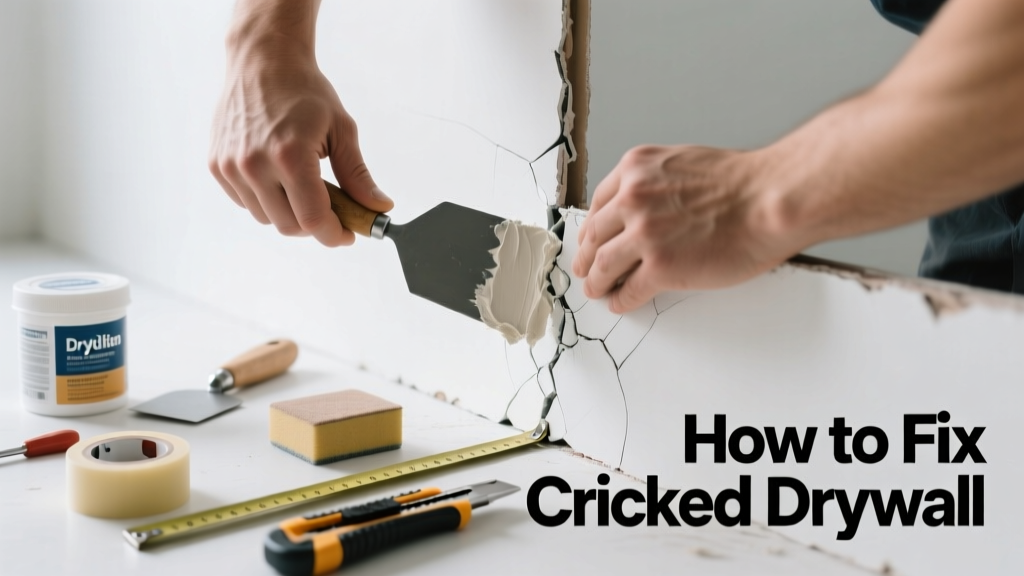
That hairline crack snaking up your living room wall? It’s not just ugly—it’s a red flag. Most cracks are simple fixes, but ignoring them invites moisture, dust, and bigger structural issues down the line. The good news: 80% of drywall cracks can be repaired in under two hours with basic tools and $25 in materials.
Quick Diagnosis
Drywall cracks rarely appear without cause. Pinpointing why helps prevent recurrence—and tells you whether this is a cosmetic patch or a symptom of something deeper.
- Settlement cracks (diagonal, near corners or windows): Common in homes under 5 years old as foundations stabilize
- Stress cracks (horizontal across seams or ceilings): Often from truss uplift or seasonal wood framing movement
- Impact cracks (spiderweb or starburst patterns): Caused by door slams, furniture bumps, or dropped objects
- Expansion/contraction cracks (fine, straight lines along seams): Usually due to poor taping, low humidity, or subpar joint compound
- Structural cracks (stair-step in brickwork, widening over time, doors sticking): Signal foundation or framing problems requiring engineering evaluation
Tools & Materials Needed
| Item | Purpose | Estimated Cost |
|---|---|---|
| Utility knife with fresh blades | Cuts away loose paper and crumbled gypsum cleanly | $3–$8 |
| 12-inch drywall knife (flexible) | Smooths joint compound without ridges or gouges | $7–$14 |
| Mesh or paper drywall tape | Reinforces the seam; mesh for beginners, paper for smoother finish | $2–$6 |
| Setting-type joint compound (e.g., Durabond 45) | Hardens chemically—less shrinkage than premixed mud | $12–$18 per 25-lb bag |
| 150- and 220-grit sanding sponge | Creates feathered edge without cutting through tape | $4–$9 |
| Drop cloth & painter’s tape | Protects floors and trim during sanding and mudding | $5–$10 |
Step-by-Step Fix
Most cracks fall into one of three repair tiers—choose based on severity and location. Always wear an N95 mask when sanding.
- Clean & Prep: Use a utility knife to V-groove the crack (1/8" wide × 1/8" deep), removing all loose paper and dust. Wipe with a damp microfiber cloth—no residue allowed.
- Tape & Mud (Standard Method): Apply a thin coat of setting-type compound into the groove. Press mesh tape firmly into wet mud. Cover with a second 6-inch-wide coat, feathering edges. Let cure 90 minutes before sanding.
- Seam Reinforcement (for recurring cracks): Cut out a 6"×12" section around the crack. Install backing wood strips behind the drywall using drywall screws. Tape and mud the new seam like a fresh joint.
- Texture Match (optional): If your wall has orange peel or knockdown texture, use a hopper gun or sponge to replicate it after final sanding and priming.
When to Call a Pro
Some cracks aren’t about technique—they’re warnings. Don’t risk your safety or home value trying to patch these yourself.
- Cracks wider than 1/4 inch that reopen within 30 days of repair
- Multiple vertical cracks running floor-to-ceiling on interior walls
- Cracks accompanied by sloping floors, sticking windows, or gaps between walls and ceilings
- Any crack where you see exposed framing lumber or insulation behind the drywall
- Cracks in load-bearing walls (typically perpendicular to floor joists) showing visible bowing
"Over 60% of drywall repairs fail within a year because homeowners skip the V-grooving step or use only premixed joint compound," says contractor Maria Chen in Residential Construction Digest (2022).
Prevention Tips
Fixing cracks is easy. Stopping them from returning takes planning and attention to your home’s environment and structure.
- Maintain indoor humidity between 30–50% year-round using a hygrometer and humidifier/dehumidifier
- Avoid nailing or screwing heavy items directly into drywall—always hit studs or use toggle bolts
- Wait at least 30 days after new construction before painting or texturing walls
- Use flexible acrylic caulk instead of rigid spackle for cracks where drywall meets trim or cabinets
Can I just paint over a hairline crack?
No. Paint bridges the gap temporarily but doesn’t stop movement. Within weeks, the crack reappears—often wider and with paint flaking around it. Always cut, tape, and mud first.
Do I need to prime before painting the repair?
Yes—absolutely. Unprimed joint compound absorbs paint unevenly, causing a dull spot or 'flash.' Use a high-build drywall primer like Zinsser Bulls Eye 1-2-3, then apply two topcoats.
Why does my repaired crack keep coming back?
Recurring cracks usually mean underlying movement isn’t addressed. Check for unsecured ceiling joists, missing blocking between studs, or soil drainage issues pushing against your foundation. Also verify you used setting-type compound—not premixed 'all-purpose' mud—for the base layer.
Can I use caulk instead of joint compound?
Only for non-structural, non-load-bearing gaps—like where drywall meets window casing or baseboard. Caulk flexes but lacks strength for seams or stress points. Joint compound bonds to paper and gypsum; caulk doesn’t.
How long does the repair take to fully dry?
Setting-type compound (e.g., Durabond 45) hardens in 45–90 minutes but needs 24 hours before priming. Premixed compounds require 24 hours per coat—and often 3 coats. Sand only when completely dry; damp mud clogs sandpaper and gums up sponges.
Is it safe to repair cracks near electrical outlets?
Only if power is turned OFF at the breaker and verified with a non-contact voltage tester. Never work within 6 inches of an outlet or switch without confirming no live wires are exposed. If drywall around the box is crumbling, replace the outlet box bracket first—see our guide on drywall electrical box repair.
A well-executed drywall crack repair should last 10+ years—if the root cause is truly resolved. Keep an eye on repaired areas for six months, especially after seasonal shifts. For stubborn or widespread cracking, consider consulting a structural engineer—signs of foundation trouble often start small. And if you're tackling multiple rooms, don’t forget to sand like a pro to avoid the dreaded 'mud halo.'