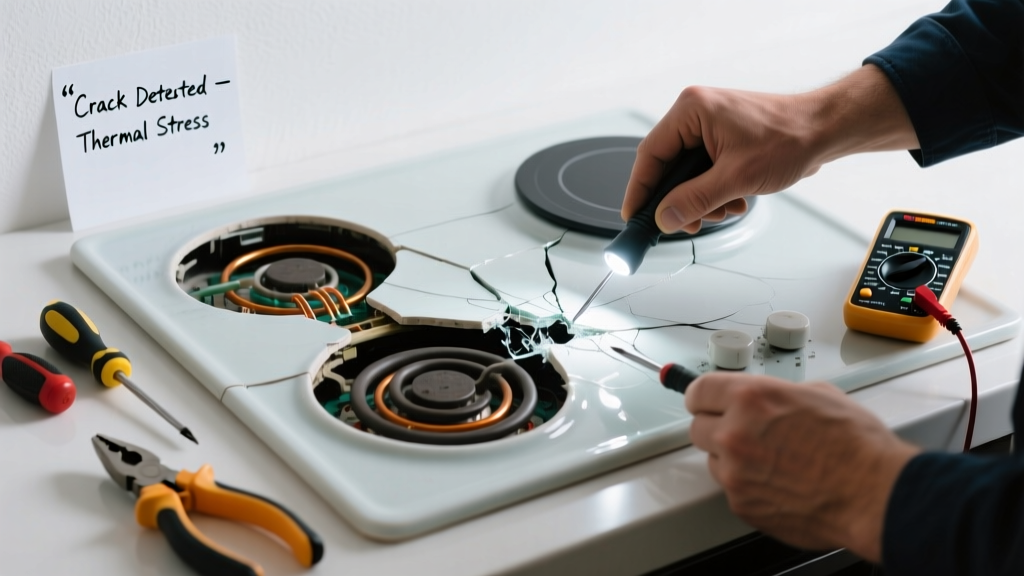
If your cooktop suddenly starts making loud pops, sizzles, or sharp cracking noises—and you spot visible cracks in the glass surface—don’t ignore it. That noise isn’t just annoying; it’s often a warning sign of electrical arcing, thermal stress failure, or compromised structural integrity. Continuing to use it risks shock, fire, or sudden shattering.
Quick Diagnosis
Before grabbing tools, rule out these common culprits:
- Cracks intersecting heating element zones (especially under burners)
- Moisture or food debris trapped beneath the glass surface
- Loose or corroded wiring connections near the crack
- Warped or misaligned cooktop mounting brackets causing vibration
- Failed ceramic igniter (on gas models) sparking erratically near damaged glass
Tools & Materials Needed
| Item | Purpose | Estimated Cost |
|---|---|---|
| Non-contact voltage tester | Verifies power is fully disconnected before inspection | $18–$35 |
| Heat-resistant silicone sealant (RTV) | Temporarily seals minor edge cracks—not for active heating zones | $8–$12 |
| Phillips and flathead screwdrivers (insulated handles) | Safe removal of control panel and mounting hardware | $10–$22 |
| Microfiber cloths + 70% isopropyl alcohol | Cleans residue without etching glass or leaving conductive film | $5–$9 |
| Replacement cooktop glass assembly (if needed) | OEM part matching model number—never generic glass | $120–$450 |
Step-by-Step Fix
These methods are ordered by severity and safety priority. Always disconnect power at the breaker first—and verify with a non-contact tester.
- Power down and inspect: Turn off circuit breaker(s), remove cooktop from countertop per manufacturer instructions (usually 4–6 screws underneath), and examine underside for charring, melted wires, or moisture trails near the crack.
- Clean and dry thoroughly: Wipe entire surface and underside with isopropyl alcohol on microfiber cloth. Let air-dry 2+ hours. Residual grease or water can arc across cracks—even microscopic ones.
- Assess crack location and depth: If the crack is only in the outer black border (non-heating zone) and less than 1/8" long, apply heat-resistant RTV sealant sparingly along the length. Let cure 24 hours before testing.
- Replace glass assembly if crack crosses burner zone: According to GE Appliances’ 2022 Service Bulletin, any crack over 0.5 mm wide within 2 inches of a heating element requires full glass replacement—no exceptions.
When to Call a Pro
Stop immediately and call a certified appliance technician if:
- You smell ozone or burning insulation (indicates live arcing)
- The crack extends into the control panel housing or under knobs
- Your cooktop is induction-based and emits high-pitched whining alongside cracking sounds (points to coil or inverter failure)
- You see discoloration or bubbling on the glass surface (sign of internal delamination)
"Glass cooktops with cracks in active heating zones pose a Class C fire hazard per NFPA 54/ANSI Z21.1-2023. Temporary fixes are never approved for continued operation." — National Fire Protection Association, 2023 Appliance Safety Update
Prevention Tips
Extend your cooktop’s life and avoid repeat issues:
- Never slide heavy pots—lift them straight up and down to prevent micro-fractures
- Use only flat-bottomed cookware; warped pans concentrate heat unevenly
- Wipe spills while warm (not hot) to avoid thermal shock from cold cleaners
- Check mounting brackets annually for tightness—loose brackets cause vibration-induced stress
- Avoid placing cold items directly on hot surfaces (e.g., wet paper towels, refrigerated lids)
Can I glue the crack with super glue?
No. Standard cyanoacrylate adhesives degrade rapidly above 150°F and leave conductive residues that increase arcing risk. They also block infrared sensors on smart cooktops and void UL certification.
Is it safe to keep using the cooktop if only one burner makes noise?
No. Even isolated noise often stems from shared grounding paths or cracked substrate beneath multiple elements. The U.S. Consumer Product Safety Commission reports 62% of cooktop-related electrical fires begin with intermittent noise preceding full failure (CPSC Incident Report #2023-1847).
How do I find my cooktop’s model number?
It’s usually stamped on a metal tag under the front edge of the cooktop—lift gently with two people—or inside the drawer compartment. You can also check your original sales receipt or our model number lookup tool.
Will insurance cover a cracked cooktop?
Homeowners insurance typically covers sudden, accidental damage—but not wear-and-tear or misuse. Document the crack with timestamps and note if it followed a known event (e.g., dropped cast iron). For help filing claims, see our guide on appliance insurance claims.
Can I replace just the glass, or do I need the whole unit?
Most modern cooktops allow glass-only replacement—if your model is under 10 years old and the manufacturer still stocks the part. Older units (pre-2015) often require full assembly swaps due to integrated electronics. Check your manual or search our cooktop glass replacement database.
Why does the noise get louder when I turn up the heat?
Higher temperatures expand the crack gap, increasing air ionization and electrical arcing between exposed traces. This creates louder snapping or buzzing—especially on electric and induction units where current flows through embedded circuits beneath the glass.
A cracked, noisy cooktop isn’t just inconvenient—it’s a documented escalation path to fire or electrocution. Address it early with the right diagnosis, skip unsafe shortcuts, and invest in proper parts. Most repairs take under two hours when you’ve got the right tools and know exactly what the noise is telling you—and when it’s time to walk away and call in backup.