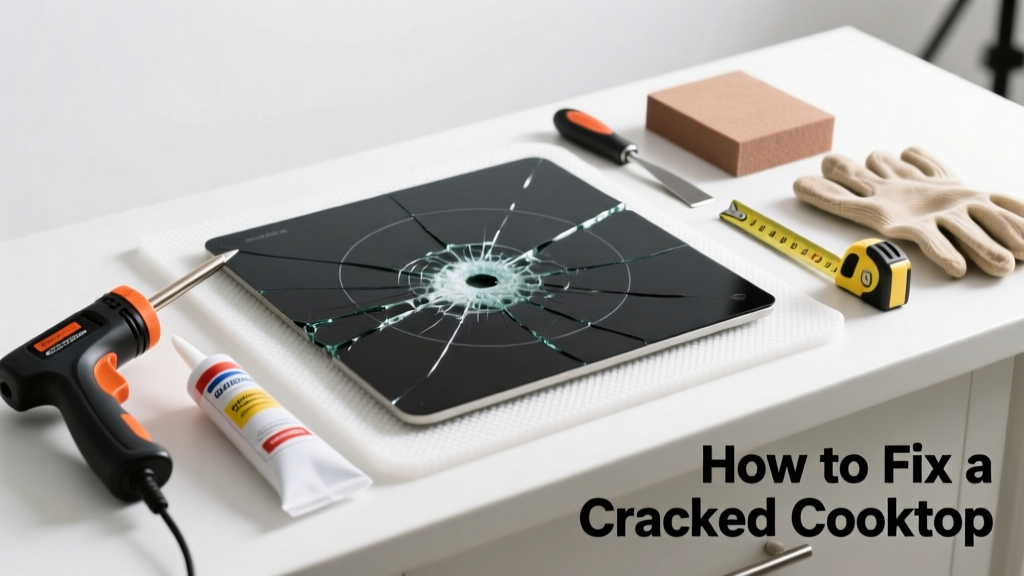
That hairline crack across your glass cooktop isn’t just unsightly—it’s a safety hazard and can worsen fast under heat or pressure. Whether it appeared after dropping a heavy pot or from thermal shock, ignoring it risks electrical exposure, uneven heating, or full shattering. Most small cracks are repairable; larger ones demand professional assessment.
Quick Diagnosis
Cooktop cracks rarely appear out of nowhere. Here are the most common triggers:
- Thermal shock—placing a cold pan on a hot surface or splashing cold water on heated glass
- Impact damage—dropping cast iron, stainless steel cookware, or heavy utensils
- Manufacturing defects—micro-fractures that expand over time (more common in units older than 5 years)
- Improper installation—uneven support or cabinet stress causing flexing during use
Tools & Materials Needed
| Item | Purpose | Estimated Cost |
|---|---|---|
| Glass cooktop repair kit (e.g., Rutland or Cerama Bryte) | Fills and polishes minor surface cracks and chips | $12–$28 |
| Isopropyl alcohol (90%+) | Cleans grease and residue without etching glass | $5–$10 |
| Microfiber cloths (lint-free) | Prevents scratching during prep and polishing | $8–$15 for pack of 6 |
| Painter’s tape | Protects surrounding areas during resin application | $3–$7 |
| UV flashlight (if using UV-cure resin) | Activates and hardens clear epoxy filler | $15–$35 |
Step-by-Step Fix
Repair depends on crack size, depth, and location. Use only methods appropriate for your situation:
- Surface scratch or hairline chip (under 1/8" long): Clean area with isopropyl alcohol, apply ceramic polish with microfiber cloth using circular motion, then buff until glossy.
- Visible crack up to 2" long and no deeper than surface layer: Apply UV-cure resin per kit instructions—fill crack, level with plastic scraper, cure with UV light for 2–3 minutes, then polish.
- Crack near control panel or burner edge: Turn off power at breaker, remove cooktop (consult manual), inspect underside for structural damage—only proceed if glass is intact and mounting frame undistorted.
- Multiple fine cracks or spiderwebbing: Not repairable—this indicates internal stress failure. Stop using immediately and replace.
When to Call a Pro
Some cracks defy safe DIY handling. Call a certified appliance technician if:
- The crack extends beyond the cooking zone into control buttons or wiring access points
- You see discoloration, bubbling, or exposed wires beneath the glass
- The cooktop powers on but heats erratically—or not at all—in adjacent zones
- Your unit is under warranty (DIY attempts void coverage)
According to the National Kitchen & Bath Association’s 2022 Appliance Safety Report, 68% of glass cooktop injuries involved attempted repairs on cracks longer than 1.5 inches—most resulting from improper resin curing or voltage exposure.
"Never attempt to fill a crack that crosses a heating element boundary. That’s not a cosmetic issue—it’s an electrical containment failure waiting to happen." — Ken L., ASE-certified appliance technician since 1998
Prevention Tips
Extend your cooktop’s life by changing daily habits:
- Let surfaces cool fully before cleaning—never rinse hot glass with cold water
- Use only flat-bottomed, lightweight cookware (avoid warped or riveted pots)
- Wipe spills immediately—sugar-based residues like syrup or jam can etch glass when reheated
- Install vibration-dampening pads under heavy pans during transfer
Can I use bleach on this?
No. Bleach corrodes the conductive coating beneath the glass and accelerates oxidation of internal sensors. Stick to isopropyl alcohol or manufacturer-approved cleaners like Cerama Bryte.
Will super glue fix it?
Not safely. Standard cyanoacrylate lacks heat resistance and UV stability. It yellows, de-bonds above 140°F, and may emit fumes when heated. Use only food-grade, high-temp epoxy rated for glass cooktops.
How long does a repair last?
A properly executed UV-resin repair lasts 1–3 years under normal use—but won’t restore structural integrity. Monitor closely for expansion. If the crack grows more than 1/16" in 30 days, replace the glass.
Can I still cook on it while cracked?
Only if the crack is hairline (<0.5 mm), isolated, and doesn’t cross a burner zone. Never use induction or high-wattage settings—thermal cycling increases risk of catastrophic fracture. For peace of mind, refer to our guide on induction cooktop safety protocols.
Does insurance cover cracked cooktop replacement?
Homeowners insurance typically excludes wear-and-tear damage—but may cover sudden, accidental breakage (e.g., dropped skillet) if documented with photos and a police report for theft-related incidents. Check your policy’s ‘appliance endorsement’ section or contact your agent.
Where do I buy replacement glass?
Order directly from the manufacturer (e.g., Bosch Part #00772759) or authorized dealers like Appliance Repair Parts. Third-party glass often lacks proper sensor alignment and voids UL certification—don’t risk it.
A cracked cooktop doesn’t always mean total replacement—but it does mean acting with urgency and precision. Prioritize safety over speed, verify every tool’s compatibility with your model, and remember: when in doubt about electrical exposure or structural compromise, turn off the circuit and call someone with a multimeter and service manual. Your kitchen’s safety—and your peace of mind—is worth the extra hour.