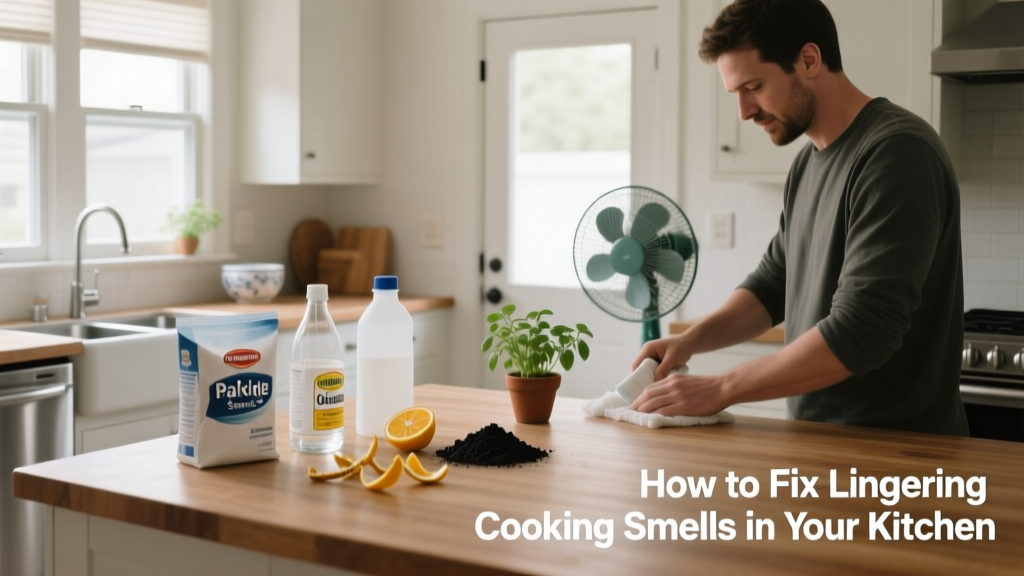
That burnt garlic scent clinging to your curtains two days after stir-frying? The fishy tang that won’t budge from your microwave? Lingering cooking smells aren’t just annoying—they’re often signs of trapped grease, moisture, or ventilation failure. Most cases resolve in under an hour with the right approach.
Quick Diagnosis
Before grabbing supplies, pinpoint where the odor is rooted. Common sources include:
- Grease buildup inside range hoods and ductwork
- Stale food particles stuck in microwave vents or oven crevices
- Odor-absorbing materials like drywall, carpet, or unsealed wood cabinets
- Clogged or disconnected kitchen exhaust ducts (especially in older homes)
- Dirty dishwasher filters or garbage disposal residue
Tools & Materials Needed
| Item | Purpose | Estimated Cost |
|---|---|---|
| Baking soda | Neutralizes acidic and basic odor molecules on surfaces and in air | $2–$4 |
| White vinegar (distilled) | Dissolves grease film and kills odor-causing bacteria | $3–$5 |
| Microfiber cloths | Traps grease without scratching stainless steel or glass | $6–$12/pack |
| Flexible duct brush (10-ft) | Cleans interior of range hood ducts inaccessible to vacuuming | $18–$24 |
| N95 respirator mask | Protects lungs when cleaning greasy ducts or using strong cleaners | $10–$15 |
Step-by-Step Fix
Try these methods in order—start with the least invasive and escalate only if needed:
- Air out & absorb: Open windows, run fans, then place open bowls of baking soda near problem zones (stovetop, microwave, pantry) for 12–24 hours.
- Clean all grease traps: Remove and soak range hood filters in hot water + ½ cup vinegar + ¼ cup baking soda for 30 minutes. Scrub with a non-abrasive sponge.
- Steam-clean hidden vents: Boil 2 cups water + ¼ cup vinegar in microwave for 5 minutes. Let sit 10 minutes, then wipe interior with damp microfiber cloth.
- Flush garbage disposal: Run cold water, then feed ½ cup ice cubes + ¼ cup rock salt + lemon peels for 30 seconds. Follow with ½ cup vinegar.
- Vacuum duct access points: Use a shop vac with brush attachment on range hood’s exterior vent cover and interior grill—this removes loose grease particulate before deeper cleaning.
When to Call a Pro
DIY stops being safe or effective when:
- You detect mold growth behind walls or inside ductwork (visible black specks or musty dampness)
- Your range hood fan runs but pulls zero airflow—even after cleaning filters and external vent cover
- You smell gas alongside cooking odors (shut off gas supply and call a licensed plumber immediately)
- Ductwork is rigid metal (not flexible) and requires cutting into ceiling or wall to access
According to the U.S. EPA’s Indoor Air Quality Guide (2022), “Unvented or poorly maintained kitchen exhaust systems contribute to 37% of residential indoor air quality complaints related to persistent odors.”
Prevention Tips
Stop smells before they set in:
- Run your range hood 3–5 minutes before cooking and 10 minutes after—not just during—to capture rising vapors
- Wipe stovetop and backsplash with vinegar-water (1:1) daily—not weekly
- Replace charcoal filter inserts in recirculating hoods every 6 months (check model manual)
- Store strong-smelling foods (fish, onions, spices) in airtight glass containers—not plastic bags
- Install a smart humidity sensor near stove; sustained >60% RH encourages odor retention in drywall
Can I use bleach on this?
No. Bleach reacts with organic cooking residues to produce toxic chloramine gas—and it doesn’t neutralize grease-based odors. Stick to vinegar, baking soda, or enzymatic cleaners like RMR-86 for protein-based smells.
Will an air purifier help?
Only if it has a true HEPA filter plus a minimum 150g activated carbon bed. Most $100 units contain <50g carbon and last 2–3 weeks with heavy cooking. See our kitchen air purifier comparison for verified models.
Why does my microwave still smell after cleaning?
The odor is likely baked into the waveguide cover—a thin plastic or mica sheet behind the interior vent. If discolored or warped, replace it ($4–$9 at appliance parts sites). Never operate the microwave without it.
Does boiling cinnamon sticks really work?
It masks—but doesn’t eliminate—odors. A 2021 study in Journal of Environmental Health found masking agents reduced perceived odor intensity by 42%, but volatile organic compounds (VOCs) remained unchanged. Use only as a final step after deep cleaning.
How long should a smell linger after proper cleaning?
Most residual odors fade within 4–8 hours post-cleaning. If noticeable after 24 hours, suspect hidden grease in ductwork or porous cabinetry. Test by closing kitchen doors and checking adjacent rooms—if odor migrates, duct leakage is likely.
Can I clean my own range hood duct?
Yes—if it’s flexible aluminum duct under 15 feet long and accessible from above the hood. Use a duct brush and shop vac. But if duct runs through attic, wall cavity, or exceeds 20 feet, hire an HVAC technician certified by NADCA (National Air Duct Cleaners Association).
Odors don’t vanish overnight—but they shouldn’t haunt your home for weeks either. Consistent ventilation habits and quarterly deep cleans keep your kitchen smelling like fresh herbs instead of yesterday’s dinner. For stubborn cases, remember: a well-maintained exhaust system is quieter, safer, and more energy-efficient than any deodorizer you’ll buy.