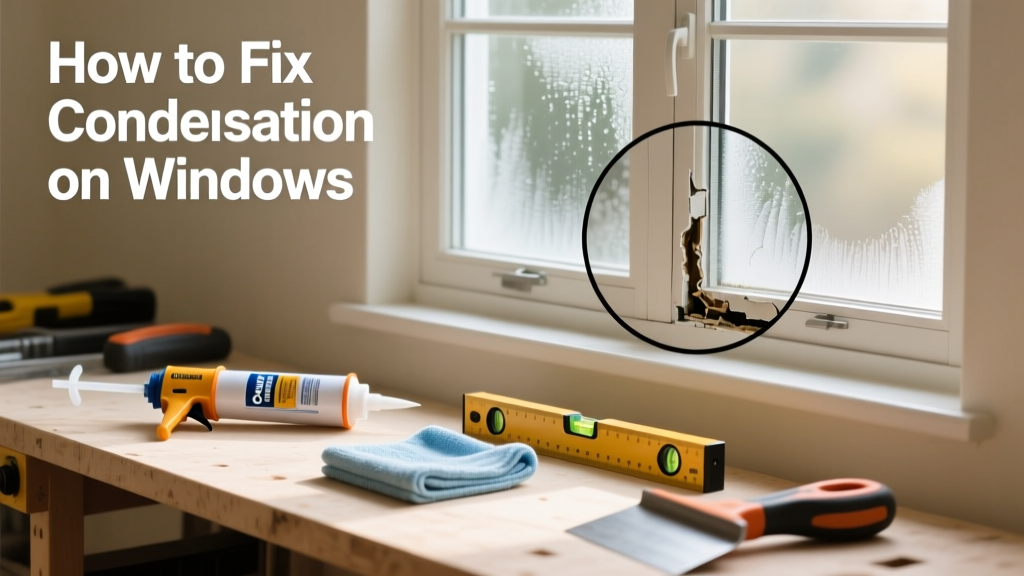
Waking up to fogged-up windows or water pooling on the sill isn’t just annoying—it’s a red flag for hidden moisture problems that can rot sills, warp frames, and feed mold. Condensation forms when warm, humid indoor air hits cold glass, but persistent cases often point to deeper issues like poor ventilation or failing seals. The good news? Most causes are fixable with basic tools and under an hour of work.
Quick Diagnosis
Before grabbing tools, identify the root cause. Not all condensation is created equal—interior surface condensation (on the room-side glass) usually signals high humidity or low window U-value, while condensation *between* panes means your double-glazed unit has failed.
- Interior surface fogging during cold weather → High indoor humidity or inadequate heating/air circulation
- Water pooling on sills or dripping → Poor drainage, blocked weep holes, or severely cold glass surfaces
- Fog or streaks *between* glass panes → Seal failure in insulated glass unit (IGU)
- Condensation only on single-pane windows → Expected—but worsens with poor insulation or drafts
- Mold growth on adjacent trim or drywall → Chronic moisture exposure; requires immediate action
Tools & Materials Needed
| Item | Purpose | Estimated Cost |
|---|---|---|
| Hygrometer | Measures indoor relative humidity; critical for confirming if RH exceeds 40–50% in winter | $12–25 |
| Dehumidifier (portable) | Removes excess moisture from air; essential for rooms over 50% RH | $180–350 |
| Window insulation film kit | Creates interior vapor barrier and raises surface temperature of glass | $10–20 |
| Exhaust fan timer switch | Ensures bathroom/kitchen fans run long enough post-shower or cooking (minimum 20 min) | $15–30 |
| Weatherstripping (V-seal or foam) | Seals air leaks around operable sash to reduce cold infiltration and localized chilling | $5–12 |
Step-by-Step Fix
Apply these methods in order of likelihood and impact—start with humidity control before moving to physical fixes.
- Lower indoor humidity: Use a hygrometer to confirm RH is above 50%. Run a dehumidifier in affected rooms, especially bedrooms and bathrooms. Vent clothes dryers outside (never into attics or crawlspaces), and cover pots while cooking.
- Improve air circulation: Position ceiling or oscillating fans to gently move air across window surfaces—this prevents stagnant, saturated air from settling on cold glass.
- Install interior storm panels or shrink-film insulation: Apply window insulation film per manufacturer instructions. It raises the interior glass surface temperature by 5–10°F, dramatically reducing condensation.
- Seal air leaks: Check for drafts with incense or a lit candle near sash edges. Install V-strip weatherstripping along meeting rails and foam tape on frame stops—focus on older wood or aluminum windows.
- Clean and unclog weep holes: On vinyl or aluminum windows, locate small drain holes at the bottom of the exterior frame track. Clear debris with a pipe cleaner or stiff brush to restore drainage.
When to Call a Pro
Some condensation issues go beyond DIY scope—and ignoring them risks structural decay or health hazards.
- You see persistent fog *between* panes—even after cleaning both sides (IGU seal failure requires full sash or window replacement)
- Wood window sills or jambs feel soft, crumble, or show dark staining (early rot or mold behind finishes)
- Condensation coincides with musty odors or visible mold on walls, ceilings, or insulation (requires professional mold assessment)
- Your home lacks balanced mechanical ventilation (e.g., no HRV/ERV system) and indoor RH stays above 60% year-round despite dehumidification
Prevention Tips
Long-term prevention hinges on managing moisture at the source—not just wiping glass. According to the U.S. EPA, 14% of household water usage is from leaks and unvented moisture sources—many contributing directly to window condensation.
"In homes with relative humidity above 55% during winter, 92% report visible condensation on windows—and over half develop related wood decay within five years." — Insurance Institute for Business & Home Safety's 2023 Residential Moisture Report
- Run bathroom and kitchen exhaust fans for at least 20 minutes after showering or cooking
- Set whole-house humidifiers to no more than 35% RH when outdoor temps drop below 20°F
- Add thermal curtains with backing—especially on north-facing or poorly insulated windows
- Ensure attic and basement ventilation meets code (1 sq ft net free vent area per 150 sq ft of attic floor)
- Replace single-pane windows with ENERGY STAR–certified double- or triple-glazed units (U-factor ≤ 0.30)
Can condensation cause mold on window frames?
Yes—especially on wood or MDF frames. Mold spores thrive where RH exceeds 60% for 48+ hours. Wipe frames daily during high-condensation periods and inspect for discoloration or musty smells. If mold covers >10 sq in, follow EPA mold cleanup guidelines or hire certified remediators.
Why does condensation happen more on double-hung windows?
Double-hung windows have larger surface areas of exposed glass and often poorer perimeter seals than casements or awnings. Their vertical sash design also traps cold air at the bottom rail—creating a natural ‘cold sink’ where moisture condenses first and pools.
Will new windows eliminate condensation completely?
No—new windows reduce it significantly but won’t eliminate condensation if indoor humidity remains too high. Even triple-pane windows with low-E coatings will fog if RH exceeds 50% and surface temps dip below dew point. Upgrade windows *and* manage humidity together.
Can I use vinegar to clean condensation residue?
Yes—diluted white vinegar (1:1 with water) safely removes mineral deposits and mild mold stains left by evaporated condensate. Avoid bleach on wood or vinyl—it degrades finishes and doesn’t penetrate mold roots. Always rinse and dry thoroughly afterward.
Is condensation on windows a sign of poor insulation elsewhere?
Often yes. Windows are the ‘thermometer’ of your home’s thermal envelope. If condensation appears only on certain windows, check nearby walls for missing insulation, gaps around electrical boxes, or uninsulated rim joists. Infrared scans (energy audit services) reveal these hidden weaknesses.
How do I know if my window seal is broken?
Look for hazy, cloudy, or streaked glass that doesn’t clear after cleaning either side. Tap lightly on the glass—intact IGUs sound solid; failed ones may produce a faint ‘rattle’ or dull thud. You might also notice increased noise transmission or draftiness near the sash.
Fixing condensation isn’t about chasing water droplets—it’s about balancing heat, air, and moisture in your home’s ecosystem. A few targeted adjustments now prevent costly repairs later: rotted sills, peeling paint, warped trim, and even respiratory issues from chronic mold exposure. Stay proactive, monitor humidity regularly, and treat your windows as early-warning sensors—not just views to the outside.