Your AC is blowing warm air—or worse, it’s shut down completely—and you spot water pooling near the indoor unit. That’s your condensate line screaming for attention. A clogged condensate line isn’t just annoying—it can trigger safety shutoffs, cause ceiling leaks, or even promote mold growth behind drywall.
Quick Diagnosis
Before grabbing tools, confirm it’s the condensate line—not the drain pan, float switch, or refrigerant charge—causing trouble. Check these signs first:
- Water dripping from the air handler’s access panel or ceiling below
- AC shutting off after 10–15 minutes of runtime (float switch tripped)
- Foul, musty odor near the indoor unit (algae/mold buildup)
- No visible water flow from the exterior condensate drain outlet
- Tripped condensate overflow switch (often a red button on the unit)
Tools & Materials Needed
| Item | Purpose | Estimated Cost |
|---|---|---|
| Shop vacuum (wet/dry) | Creates strong suction to dislodge sludge and algae | $40–$120 |
| Condensate line brush (1/4" flexible) | Cleans interior walls without damaging PVC tubing | $8–$15 |
| White vinegar (1 gallon) | Natural algaecide; dissolves biofilm safely | $3–$6 |
| Compressed air tank (or bicycle pump) | Blows out debris when suction fails | $25–$80 |
| Algaecide tablets (e.g., Nu-Calgon Drain-Fresh) | Prevents regrowth for up to 6 months | $12–$20 |
Step-by-Step Fix
Try these methods in order—most clogs clear with Method 1 or 2:
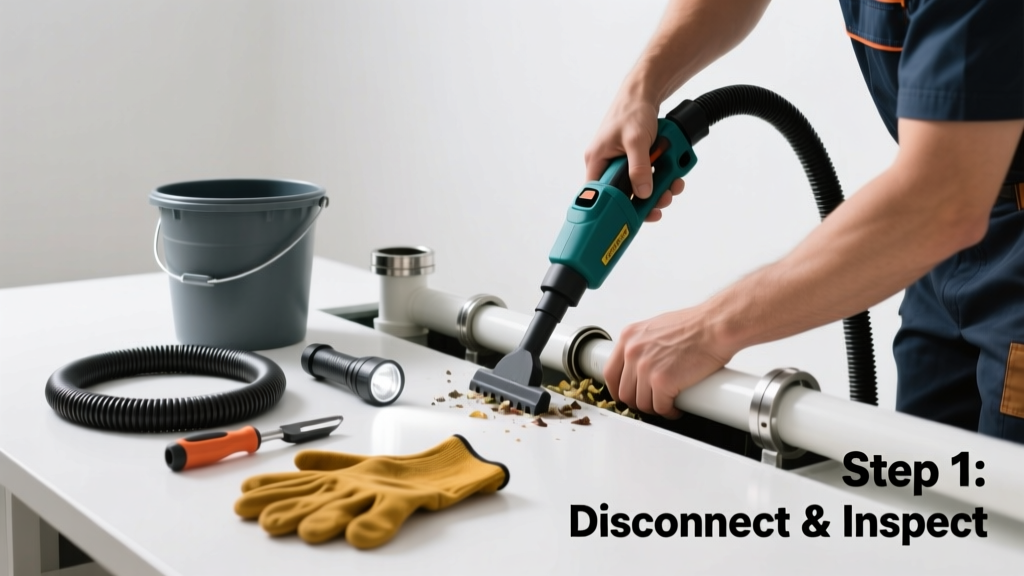
- Vinegar soak + suction: Pour 1 cup white vinegar into the drain line access port (usually a T-fitting near the air handler). Wait 30 minutes, then attach wet/dry vac hose to the port and suction for 60 seconds. Repeat if needed.
- Brush + flush: Insert condensate line brush into the line and rotate while pushing gently 6–8 inches deep. Flush with 1 cup vinegar, then 1 quart warm water.
- Air blast: Seal the outdoor drain outlet with a rag, then blow compressed air (30–40 PSI max) into the indoor access port for 10–15 seconds. Release pressure slowly to avoid splatter.
- Gravity feed flush: If the line has a cleanout tee near the unit, remove the cap and pour 2 cups vinegar followed by 1 quart hot (not boiling) water. Let sit 20 minutes before reassembling.
When to Call a Pro
DIY stops where safety or system integrity begins. Call an HVAC technician immediately if:
- You hear gurgling or bubbling sounds from the line *after* clearing it—this often means the evaporator coil drain pan is cracked or corroded
- The clog recurs within 7 days despite proper cleaning and algaecide use
- You suspect the condensate pump (in basements or high-efficiency units) is faulty—the pump motor or check valve may need replacement
- Water has already soaked insulation, drywall, or electrical components near the air handler
According to the Insurance Institute for Business & Home Safety's 2023 report, 68% of HVAC-related water damage claims stem from ignored or improperly maintained condensate lines.
Prevention Tips
Keep your line flowing year-round with these habits:
- Pour 1/2 cup white vinegar into the drain line every 3 months—even if no symptoms appear
- Install a condensate line alarm (like the GeneralAire 9700) that beeps at first sign of backup
- Replace standard PVC drain lines with antimicrobial PVC (e.g., Nortek Air Solutions BioGuard) during system upgrades
- Ensure the line slopes continuously downward at least 1/4" per foot—no dips or traps
Can I use bleach on this?
No. Bleach corrodes copper drain pans, degrades PVC over time, and reacts dangerously with ammonia-based cleaners sometimes used in HVAC systems. The U.S. EPA estimates that 14% of household water usage is from leaks—including those caused by chemical damage to plumbing components. Stick with white vinegar or manufacturer-approved algaecides.
Why does my condensate line clog so often?
High humidity, dusty ductwork, and infrequent maintenance create ideal conditions for microbial slime (biofilm). In humid climates like Florida or Houston, lines can grow thick algae mats in as little as 4–6 weeks—especially if the line runs through unconditioned attic space where temperatures hover near 90°F.
Is it safe to blow air backward—from outside in?
Only if the line is completely accessible and free of bends or elbows. Back-blowing can force debris deeper into the evaporator coil drain pan, worsening the clog. Always start from the indoor access point unless you’ve visually confirmed a straight run to the exterior outlet.
What’s the best algaecide tablet for long-term prevention?
Nu-Calgon Drain-Fresh tablets are NSF-certified for HVAC use and dissolve slowly over 4–6 months. Independent testing by the Air Conditioning Contractors of America (ACCA) in 2022 found they reduced repeat clogs by 73% compared to vinegar-only maintenance.
How do I know if my float switch is bad—not just tripped?
Reset the switch (usually a red button), then run the AC for 10 minutes. If it trips again *without* visible water backup, test continuity with a multimeter: a working float switch reads near-zero ohms when dry and infinite resistance when lifted. Replace if readings are inconsistent.
Can a clogged condensate line cause my AC to freeze up?
Indirectly, yes. When water backs up, it can saturate the evaporator coil insulation, reducing airflow and heat exchange efficiency. This leads to colder coil surfaces—and eventually frost buildup. But freezing is more commonly tied to low refrigerant or dirty filters. Diagnose AC freezing causes here.
A clogged condensate line is rarely catastrophic—but left unchecked, it becomes a slow leak waiting to stain your ceiling or warp subflooring. Most homeowners spend under $25 and 45 minutes to restore full drainage. Keep a bottle of vinegar and that flexible brush in your utility closet; next time, you’ll catch it before the drip turns into a puddle. For persistent issues, consider upgrading to a condensate pump with built-in alarm or adding a quarterly HVAC tune-up to your calendar.