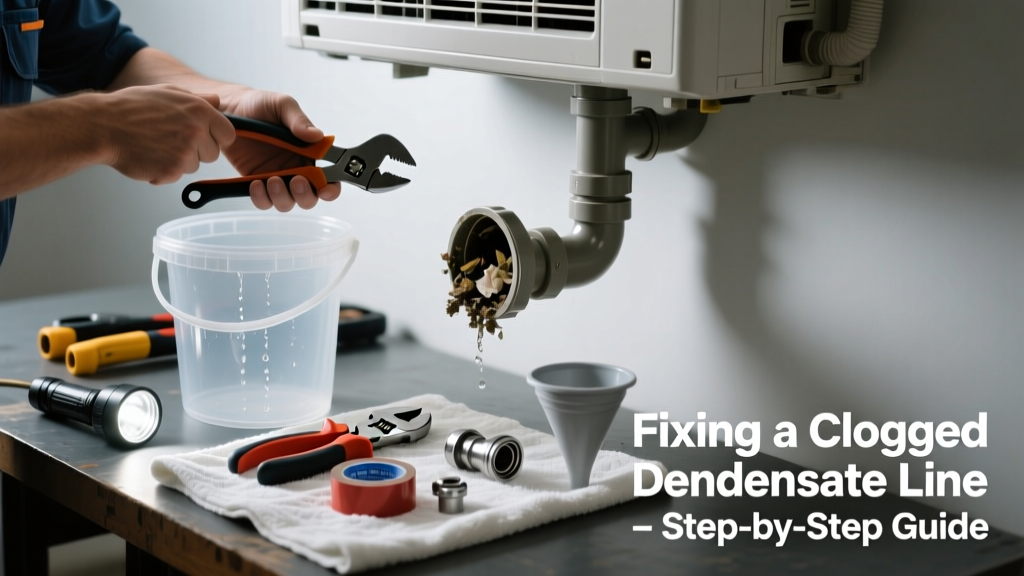
If your air conditioner starts gurgling, bubbling, or dripping loudly—and you spot water pooling near the indoor unit—you’re likely dealing with a clogged condensate line. This isn’t just annoying; it’s a red flag for potential water damage, mold growth, or system shutdown. Most homeowners can fix this in under 30 minutes with basic tools and no HVAC license.
Quick Diagnosis
Before grabbing tools, confirm the issue isn’t something else. Unusual noises from your AC’s drain line usually point to one or more of these causes:
- A biofilm or algae blockage inside the PVC drain pipe (most common)
- A kinked, crushed, or disconnected condensate tube near the air handler
- Algae buildup in the drain pan or primary trap
- An improperly sloped line causing stagnant water and noise
- A failed float switch triggering intermittent overflow alarms
Tools & Materials Needed
| Item | Purpose | Estimated Cost |
|---|---|---|
| Vinegar (white, undiluted) | Dissolves organic sludge and mildew without corroding copper or PVC | $2–$4 |
| Shop vacuum with wet/dry capability | Creates strong suction to dislodge stubborn clogs | $40–$80 (rental: $15/day) |
| Condensate line brush (1/4" diameter, flexible) | Scrapes biofilm off interior pipe walls | $6–$12 |
| Zip tie or stiff wire (e.g., coat hanger) | Manual snaking for short, accessible sections | $0–$3 |
| Small funnel and measuring cup | For controlled vinegar pour and monitoring flow | $3–$7 |
Step-by-Step Fix
Try these methods in order—from simplest to most aggressive—until flow resumes and noise stops:
- Vinegar flush: Pour 1 cup of undiluted white vinegar into the drain access port (usually a T-fitting near the air handler). Let sit 30 minutes, then flush with 2 cups warm water. Repeat if gurgling persists.
- Brush the line: Insert the condensate line brush into the access port and gently rotate while pushing 12–18 inches deep. Withdraw slowly, cleaning debris off the bristles between passes.
- Vacuum suction: Seal the shop vac hose over the outdoor drain outlet (or use a rubber adapter). Set to "suction only." Run for 60 seconds—then reverse to "blow" for 10 seconds to dislodge residue.
- Trap cleaning: Remove the P-trap (if present) using slip-joint pliers. Soak in vinegar, scrub with an old toothbrush, rinse thoroughly, and reinstall with fresh Teflon tape on threads.
When to Call a Pro
Stop and call a licensed HVAC technician if any of these apply:
- You hear hissing or refrigerant-like odors—possible coil or line leak
- The air handler shuts off repeatedly and won’t restart after resetting the float switch
- Water is leaking from the secondary drain pan or ceiling drywall is sagging
- Your condensate line runs through attic insulation or behind finished walls (risk of hidden mold or structural damage)
- You’ve cleared the line three times in one season—indicating chronic airflow or humidity issues needing system tuning
Prevention Tips
Prevent future clogs—and the noise that comes with them—with these habits:
- Pour 1/2 cup of white vinegar down the drain line every 3 months (spring, summer, fall)
- Install a condensate line algaecide tablet in the drain pan (replace quarterly)
- Ensure the line has consistent 1/4" per foot slope—check with a level and adjust hangers if sagging
- Clean or replace the air filter monthly during cooling season to reduce moisture load on the evaporator coil
- Add a secondary float switch with alarm to catch early overflow before noise begins
Can I use bleach on this?
No—bleach corrodes copper drain pans and degrades PVC over time. It also reacts dangerously with ammonia-based cleaners if used previously. According to the Air Conditioning Contractors of America’s 2022 Maintenance Guidelines, vinegar or EPA-registered HVAC-safe algaecides are the only approved residential drain line cleaners.
Why does my line gurgle only when the AC first turns on?
This points to an airlock caused by partial blockage or improper trap priming. When the system starts, rapid condensation creates a vacuum that pulls air through standing water—causing the gurgle. A fully clear line with proper slope and trap seal eliminates this.
How do I know if the clog is in the main line or the secondary drain?
Check the secondary drain outlet—if water flows freely there while the primary is silent, the clog is upstream of the T-fitting. If both are dry, the blockage is likely at the evaporator coil drain nipple or inside the pan itself.
Is it safe to blow compressed air into the line?
Only if pressure stays below 25 PSI and you’ve removed the drain pan access cover first. Higher pressure can rupture PVC joints or force mold spores into your ductwork. The U.S. EPA estimates that 14% of household water usage is from leaks—including those caused by DIY pressure mishaps (EPA WaterSense Report, 2023).
What’s the white slimy stuff inside the line?
That’s Legionella-friendly biofilm—a mix of algae, bacteria, and dust. It thrives in warm, dark, moist environments like condensate lines. As HVAC technician Marco Ruiz told Contractor Magazine in 2021: "If you see that slime, assume the entire drain path needs brushing—not just flushing. Vinegar alone won’t penetrate mature biofilm."
"If you hear gurgling but see no visible drip, check the float switch first—it’s often the culprit before the line fully clogs." — James L. Chen, NATE-certified trainer, HVAC Excellence 2023
Can a clogged condensate line cause my AC to freeze up?
Indirectly, yes. A backed-up drain restricts airflow across the evaporator coil and raises coil temperature differential, increasing frost risk—especially if combined with low refrigerant or dirty filters. That’s why noise often precedes freezing by 1–2 days.
Once the line is clear and quiet, run your system for 20 minutes and verify steady, silent drainage at the outdoor end. Mark your calendar for your next vinegar flush—and consider adding a seasonal maintenance checklist to keep things running smoothly year after year.