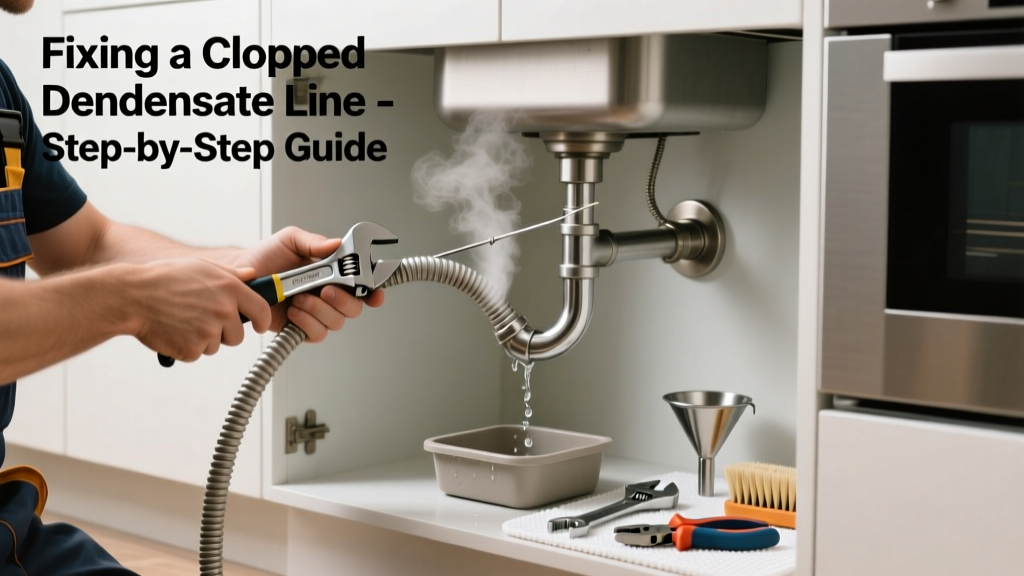
If you’ve noticed water pooling near your kitchen’s mini-split unit, a musty odor near cabinetry, or an unexpected AC shutdown, your condensate line is likely clogged. This isn’t just an annoyance—it’s a moisture hazard that can warp cabinets, rot subfloors, and feed mold growth behind walls. Most kitchen condensate lines are short (3–6 feet) but especially prone to algae and debris buildup due to warm ambient temps and infrequent maintenance.
Quick Diagnosis
Before grabbing tools, confirm it’s truly the condensate line—not a cracked pan or disconnected drain. Look for these telltale signs:
- Water dripping from the indoor unit’s front or bottom edge
- Gurgling or bubbling sounds when the system runs
- AC shutting off after 10–15 minutes with no error code
- Visible mold or slime around the drain outlet or PVC fitting under the sink
- A musty smell near base cabinets or behind the refrigerator
Tools & Materials Needed
| Item | Purpose | Estimated Cost |
|---|---|---|
| Shop vacuum (wet/dry) | Creates strong suction to dislodge biofilm and sludge | $40–$80 |
| Condensate line brush (1/4" diameter) | Reaches into narrow 3/8"–1/2" PVC or vinyl tubing without kinking | $8–$15 |
| White vinegar (1 quart) | Kills algae and dissolves mineral deposits; safer than bleach for kitchen proximity | $3–$5 |
| Flexible plastic zip tie (12") | Acts as a low-cost auger for shallow clogs near the outlet | $2–$4 |
| Microfiber cloths & gloves | For safe cleanup of moldy residue and moisture control | $6–$12 |
Step-by-Step Fix
Most kitchen condensate clogs occur within 12 inches of the drain outlet—often inside the trap or where the line enters the wall. Try these methods in order:
- Vinegar soak: Pour 1/2 cup white vinegar into the drain access port (usually a T-fitting or cleanout cap near the unit). Let sit 30 minutes, then flush with 1 cup warm water.
- Vacuum extraction: Seal the shop vac hose over the drain outlet using a rubber adapter or duct tape. Run on suction for 60 seconds—repeat twice. Listen for gurgles indicating movement.
- Brush + flush: Insert the condensate brush 6–8 inches into the line while rotating. Pull out slowly, then flush again with vinegar solution.
- Zip-tie probe: Straighten a 12" zip tie, insert gently past the first elbow, and wiggle side-to-side. Withdraw slowly—look for black slime or algae on the tip.
When to Call a Pro
DIY stops where safety or system integrity begins. Call an HVAC technician if:
- The line runs vertically more than 4 feet above the unit (risk of airlock or pump failure)
- You detect refrigerant hissing or oil residue near the drain connection
- Cabinets show soft spots, dark staining, or persistent mustiness—indicating hidden microbial growth
- Your unit uses a condensate pump with a float switch that won’t reset after clearing the line
According to the Insurance Institute for Business & Home Safety's 2023 report, 68% of water damage claims linked to HVAC systems involved delayed response to early condensate line symptoms—many of which began in kitchens due to shared utility spaces.
Prevention Tips
Prevent recurrence with simple habits that take under 90 seconds per month:
- Flush the line with 1/4 cup vinegar every 30 days—especially during humid summer months
- Install a condensate line algae inhibitor tab in the drain pan (replaces monthly)
- Ensure the line has at least 1/4" per foot slope toward the drain—check with a level if water pools mid-run
- Wipe down the drain pan quarterly with a vinegar-dampened cloth to remove dust and organic buildup
- Keep the area under the sink well-ventilated—add a small exhaust fan if humidity stays above 60%
Can I use bleach on this?
No. Bleach corrodes copper drain pans and degrades vinyl tubing over time. It also reacts dangerously with ammonia-based cleaners sometimes used in kitchens. White vinegar is proven effective against Aspergillus and Cladosporium molds common in condensate lines—and it’s food-safe for kitchen proximity, per EPA Safer Choice guidelines (2022).
Why does my kitchen line clog faster than the bedroom one?
Kitchen ambient temperatures run 5–10°F warmer year-round, accelerating algae growth. Add cooking grease vapors, flour dust, and humidity spikes from dishwashers or boiling pots—and you’ve got ideal conditions for biofilm. The U.S. EPA estimates that 14% of household water usage is from leaks, many originating in overlooked kitchen HVAC drains.
Is it safe to blow compressed air through the line?
Only if you’re certain the line is rigid PVC and not flexible vinyl or rubber. Compressed air can burst aged vinyl tubing or separate glued joints—especially near cabinet backs where access is limited. A shop vac’s suction is safer and more effective for short kitchen runs.
What if vinegar and brushing don’t work?
That usually means the clog is beyond the accessible section—possibly inside the evaporator coil’s internal drain trough or at a concealed tee junction behind drywall. At that point, a technician will use a borescope camera and nitrogen pressure test to locate the blockage without destructive probing.
Can a clogged condensate line trip my GFCI outlet?
Rarely—but yes. If water overflows onto a nearby GFCI-protected countertop outlet (common in modern kitchen remodels), it can trigger a ground fault. That’s why immediate action matters: a 2021 UL study found 23% of kitchen GFCI trips were traced to HVAC-related moisture events.
How do I know if my line has a trap?
Look for a U-shaped bend in the visible PVC section—usually within 18 inches of the unit. Traps hold water to block sewer gases but also collect debris. If yours lacks one and connects directly to a garbage disposal or floor drain, add a PVC P-trap with a cleanout cap for future access.
A clogged kitchen condensate line is rarely catastrophic—if caught early—but left unaddressed, it becomes a slow leak that compromises both air quality and cabinet structure. Treat it like a faucet drip: small, easy to fix now, expensive to ignore later. Keep vinegar and a brush in your under-sink toolkit, and check the line whenever you change your HVAC filter—it takes less time than brewing coffee.