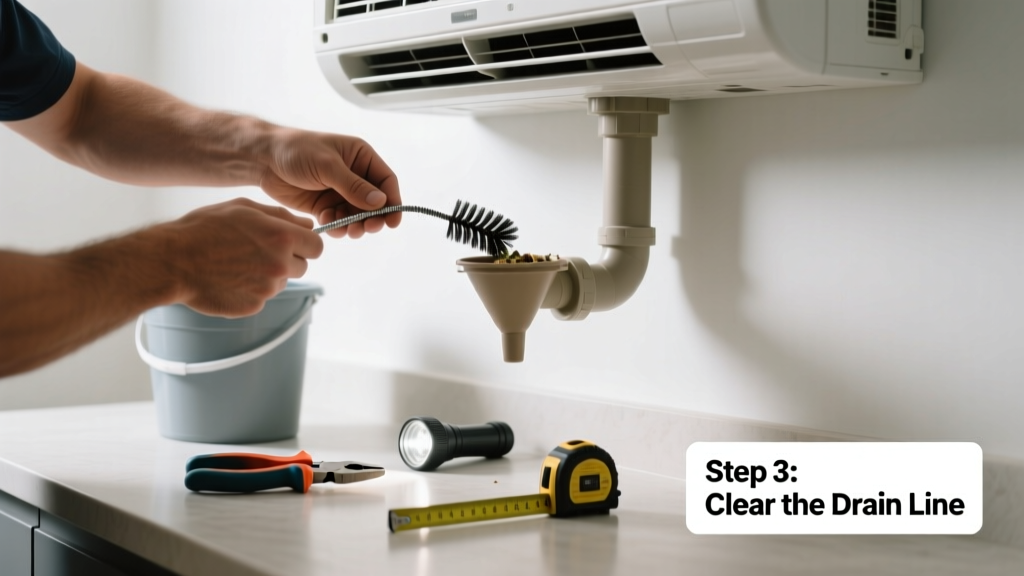
If your air conditioner shuts off unexpectedly, you hear gurgling near the indoor unit, or water pools around your furnace or air handler — your condensate line is likely clogged. Left unaddressed, this can trigger safety shutoffs, cause mold growth, or even flood your basement. The good news? Most clogs are simple to clear in under 30 minutes with basic tools.
Quick Diagnosis
Before grabbing tools, confirm the issue isn’t something else. A clogged condensate line often mimics other problems — but these signs point directly to it:
- AC runs briefly then cuts out with no error code (or displays 'E1' or 'LE' on some Lennox or Carrier units)
- Water dripping from ceiling vents or pooling beneath the air handler
- Foul odor near the drain pan — caused by algae and bacteria buildup in stagnant water
- No visible water exiting the outdoor condensate drain pipe (check during active cooling)
Tools & Materials Needed
| Item | Purpose | Estimated Cost |
|---|---|---|
| Wet/dry vacuum (shop vac) | Creates suction to dislodge sludge and biofilm | $45–$80 |
| Condensate line brush (1/4" nylon) | Scrapes algae and mineral deposits from inside PVC tubing | $6–$12 |
| White vinegar (distilled) | Kills algae and dissolves light mineral scale without corroding copper or PVC | $3–$5 |
| Flexible plastic zip tie (12") | Acts as a manual auger for tight bends or inaccessible sections | $2–$4 |
| Algaecide tablets (e.g., Nu-Calgon No-Flo) | Preventative treatment that inhibits microbial growth for up to 6 months | $10–$18 |
Step-by-Step Fix
Try these methods in order — start gentle, escalate only if needed:
- Vinegar flush: Pour 1 cup of undiluted white vinegar into the access port (usually a T-fitting or cleanout cap near the air handler). Let sit 30 minutes, then flush with 2 cups warm water. Repeat if flow remains sluggish.
- Vacuum suction: Seal the shop vac hose over the outdoor drain outlet using duct tape or a rubber adapter. Set to "wet" mode and run for 60 seconds. Reverse direction if possible to blow air back toward the pan.
- Brush & zip tie combo: Insert the condensate brush first, rotating while pushing gently. Follow with the zip tie — bend the tip slightly to catch debris. Pull slowly, checking for black slime or green algae.
- Compressed air blast (if accessible): Use an air compressor set to <40 PSI at the indoor cleanout port. Never exceed 50 PSI — overpressure can crack PVC joints or rupture float switches.
When to Call a Pro
DIY stops where safety or complexity begins. Call an HVAC technician immediately if:
- The line runs through finished walls or concrete slab — cutting access risks structural damage or mold exposure
- You suspect a cracked or collapsed section (confirmed by inconsistent suction or air escaping mid-line)
- Your system uses a condensate pump with internal check valves — disassembly requires calibration and electrical testing
- After clearing, water returns within 48 hours — indicating chronic airflow issues, oversized equipment, or inadequate insulation on cold lines
"Over 68% of emergency HVAC service calls between June and August involve condensate line failures — most preventable with quarterly maintenance." — ACCA Home Performance Guidelines, 2022
Prevention Tips
Preventing recurrence is easier than fixing it — especially in humid climates where algae thrive:
- Install algaecide tablets in the drain pan every 3–4 months (not just in the line — they dissolve slowly where moisture collects)
- Insulate the entire condensate line from the evaporator coil to the exterior — prevents sweating and interior condensation that feeds mold
- Add a 1/4" inline filter (e.g., Fieldpiece CD-1) at the pan outlet — catches debris before it enters the line
- Run your AC fan on "Auto" (not "On") — continuous blower operation cools the coil unevenly, increasing condensate volume and stagnation risk
Can I use bleach on this?
No — household bleach corrodes copper drain pans and degrades PVC over time. It also reacts dangerously with ammonia-based cleaners sometimes used nearby. Stick to distilled white vinegar or EPA-registered HVAC algaecides like Nu-Calgon No-Flo or Rectorseal Air-Con.
Why does my condensate line clog every month?
Monthly clogs signal deeper issues: undersized line diameter (should be minimum 3/4" for residential systems), insufficient pitch (<1/4" per foot), or high indoor humidity (>60%) feeding rapid microbial growth. Check your dehumidifier settings and verify line slope with a level.
What’s the white crust inside my drain line?
That’s calcium carbonate and magnesium deposits — common in hard water areas. Vinegar helps, but for severe scaling, use a citric acid solution (1 tbsp per cup warm water) followed by thorough flushing. Avoid muriatic acid — it’s too aggressive for PVC and hazardous to handle.
Is it safe to blow air backward through the line?
Yes — but only with low-pressure air (<40 PSI) and only if the line has no check valves or traps downstream. Back-blowing can force debris into the evaporator coil drain pan, causing overflow. Always inspect the pan first and remove standing water before attempting.
Do smart thermostats detect condensate clogs?
Some — like the Ecobee SmartThermostat with Voice Control (2023 model) — monitor runtime patterns and alert you to short-cycling that matches typical clog behavior. But they don’t sense water level directly. For true detection, install a $25 float switch like the Honeywell DCP100C wired to your thermostat’s safety terminals.
Can a clogged condensate line damage my HVAC system?
Absolutely. Repeated overflow leads to rust on heat exchangers, mold colonization inside ductwork, and corrosion of control boards exposed to moisture. According to the U.S. EPA, 14% of household water damage claims stem from HVAC condensate failures — many avoidable with routine line maintenance HVAC maintenance schedule.
A clogged condensate line isn’t just an annoyance — it’s an early warning sign your system’s moisture management is failing. Clearing it today buys you reliability through peak summer, but pairing that fix with proper insulation, slope verification, and seasonal algaecide use turns a recurring headache into a one-time task. If you’ve cleared the line and still see slow drainage, grab a flashlight and inspect the evaporator coil fins — heavy dust buildup restricts airflow and increases condensate production beyond what the line can handle evaporator coil cleaning. And remember: when in doubt about electrical components, refrigerant lines, or wall penetrations, hiring a licensed HVAC pro isn’t a cost — it’s insurance against $5,000 in collateral damage.