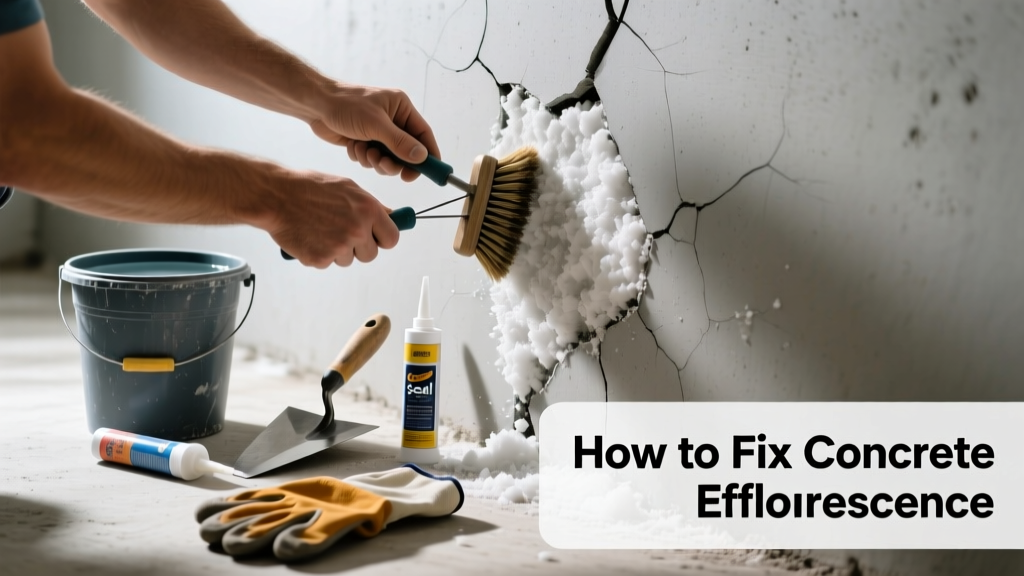
You wake up to a chalky white powder dusting your basement floor or walls — it’s not mold, but efflorescence: dissolved salts surfacing as water evaporates from porous concrete. Left unchecked, it signals deeper moisture issues that can weaken foundations and invite mold growth.
Quick Diagnosis
Efflorescence isn’t just cosmetic — it’s a red flag for moisture migration. Common root causes include:
- Hydrostatic pressure pushing groundwater through foundation cracks or mortar joints
- Poor exterior grading directing rainwater toward the foundation
- Lack of or failed interior perimeter drain tile (especially in homes built before 1990)
- High indoor humidity combined with cold basement walls causing condensation
- Unsealed concrete floors or walls allowing vapor transmission
Tools & Materials Needed
| Item | Purpose | Estimated Cost |
|---|---|---|
| White vinegar (5% acetic acid) or muriatic acid (10–15% diluted) | Dissolves calcium carbonate deposits without damaging concrete substrate | $3–$12 |
| Stiff nylon brush (not wire — avoids scratching) | Scrubbing surface without embedding abrasive particles into pores | $8–$15 |
| Shop vacuum with HEPA filter | Removes loose salt residue and prevents airborne dust inhalation | $80–$200 |
| Concrete sealer (silane/siloxane-based, breathable) | Blocks water vapor transmission while allowing concrete to breathe | $40–$75 per 5-gallon pail |
| Moisture meter (pin-type or non-invasive) | Measures slab moisture content (ideal: <75% RH for sealing) | $60–$180 |
Step-by-Step Fix
Start only after confirming moisture levels are stable — never seal over damp concrete. Follow this sequence:
- Dry thoroughly: Run a dehumidifier (50+ pint capacity) for 72 hours; verify surface is bone-dry with a moisture meter.
- Remove efflorescence: For light deposits, scrub with undiluted white vinegar and nylon brush. For heavy buildup, use 1 part muriatic acid to 10 parts water — always add acid to water, never reverse. Rinse twice with clean water.
- Neutralize and dry: After acid cleaning, apply baking soda paste (1:1 with water) to neutralize residual acid, then rinse and air-dry 48 hours.
- Seal strategically: Apply two coats of silane/siloxane sealer using a low-nap roller; avoid film-forming acrylics, which trap moisture underneath.
When to Call a Pro
DIY stops where structural integrity or health risk begins. Call a licensed waterproofing contractor if you observe:
- Efflorescence reappearing within 3 weeks of cleaning — indicates active water intrusion
- Vertical cracks wider than 1/8 inch or horizontal cracks in foundation walls
- Musty odor plus visible mold on insulation or framing (not just surface salts)
- Standing water or dampness above the footer line after heavy rain
According to the Insurance Institute for Business & Home Safety's 2023 report, 68% of basement water damage claims involved untreated efflorescence as an early warning sign — yet fewer than 12% of homeowners addressed the source before failure occurred.
Prevention Tips
Fixing efflorescence without addressing its cause is like mopping a flooded floor while the faucet runs. Prioritize these long-term controls:
- Extend downspouts at least 5 feet from the foundation and slope soil away at 1 inch per foot for 6 feet
- Install or repair a functional interior perimeter drain system tied to a sump pump (tested annually)
- Maintain indoor relative humidity between 30–50% year-round using a smart dehumidifier
- Seal all above-grade foundation cracks with hydraulic cement before painting or siding
Can I use bleach on efflorescence?
No. Bleach does not dissolve mineral salts and may react with calcium to form insoluble compounds that worsen discoloration. It also offers zero moisture-control benefit and poses respiratory risks in confined basements.
Will painting over efflorescence hide the problem?
Painting seals the surface — but traps moisture behind it. Within weeks, blistering, peeling, or alkali burn (a yellowish stain) appears. Always remove efflorescence *and* address the moisture source before any coating.
Is efflorescence dangerous to my family’s health?
The salts themselves (calcium carbonate, sodium sulfate) aren’t toxic, but their presence means chronic moisture — which supports mold growth, dust mites, and compromised indoor air quality. The U.S. EPA estimates that 14% of household water usage is from leaks — many hidden behind basement walls.
How long does efflorescence removal last?
If the moisture source is fixed, properly sealed concrete stays efflorescence-free for 7–15 years. Without source control, recurrence is likely within 1–3 months — especially during spring thaw or monsoon season.
Can I seal just the floor and ignore the walls?
No. Water migrates laterally through concrete. Sealing only the floor forces hydrostatic pressure upward along wall-footing joints — often worsening wall efflorescence and spalling. Treat the entire below-grade envelope as one system.
Does temperature affect efflorescence formation?
Yes. Efflorescence peaks in cool, dry conditions (fall/winter), when evaporation pulls salts to the surface faster than warm, humid air allows. That’s why you’ll often see it appear after heating season starts — not during summer rains.
Efflorescence is rarely the problem itself — it’s the symptom of a moisture pathway you can trace, treat, and shut down. Once you’ve cleaned, tested, and sealed correctly, that white dust won’t return unless something changes outside your basement walls. For persistent cases, explore basement waterproofing options or how to test basement moisture levels to build your next line of defense.