If your compost bin reeks like rotten eggs or sour milk, it’s not just unpleasant—it’s a sign something’s off in the microbial balance. Most odor problems stem from simple imbalances you can correct in under an hour, no special skills required.
Quick Diagnosis
Before grabbing tools, identify the likely culprit:
- Rotten-egg smell: Too much nitrogen (greens), not enough air or carbon
- Sour, ammonia-like odor: Excess nitrogen, especially from fresh grass clippings or manure
- Moldy, musty stench: Compaction and poor airflow—material is waterlogged and anaerobic
- Foul, sewage-like odor: Meat, dairy, or oily foods were added (never compost these)
Tools & Materials Needed
| Item | Purpose | Estimated Cost |
|---|---|---|
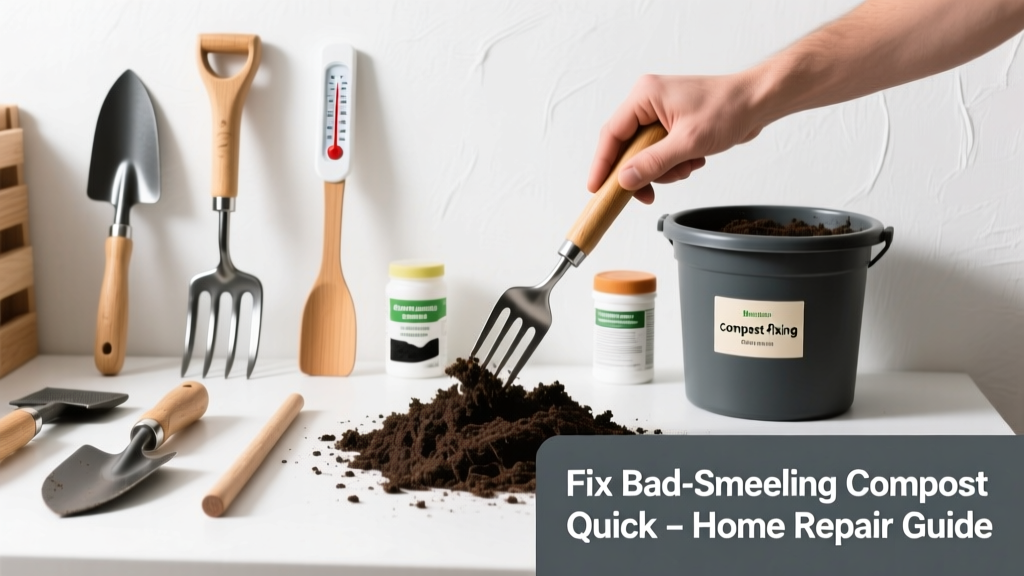
| Long-handled garden fork | Turns and aerates dense, smelly piles without bending or inhaling fumes | $18–$32 |
| Brown material (shredded cardboard, dry leaves, straw) | Restores carbon-to-nitrogen ratio; absorbs excess moisture | $0–$5 (free if using yard waste) |
| Moisture meter (optional but helpful) | Confirms pile moisture is at ideal 40–60% — not soggy or dusty | $12–$25 |
| Compost thermometer | Verifies internal temp is 130–150°F — confirms active, odor-free decomposition | $15–$40 |
Step-by-Step Fix
- Aerate immediately: Use the garden fork to lift and turn the entire pile outdoors, breaking up clumps and introducing oxygen. Do this on a dry, breezy day if possible.
- Add browns: Mix in 2–3 inches of shredded cardboard or dry leaves for every 1 inch of smelly green material. Aim for a 3:1 brown-to-green volume ratio.
- Drain excess water: If the pile is soggy, scoop out the wettest core layer and spread it thinly on a tarp to dry for 24 hours before remixing.
- Wait and monitor: Check temperature and smell daily. A healthy pile should lose foul odors within 24–48 hours and begin heating up steadily.
When to Call a Pro
Call a certified composting specialist or local extension agent if:
- Your municipal compost pickup service reports repeated contamination or odor violations across multiple households
- You suspect buried construction debris (e.g., treated lumber, asphalt shingles) leaching toxins into the pile
- The smell persists for over 72 hours despite proper aeration and balancing—and you’ve confirmed no meat, dairy, or pet waste was added
Prevention Tips
Keep your compost consistently odor-free with these habits:
- Always bury fresh food scraps under 6 inches of browns—not just tossed on top
- Chop or shred large items (corn cobs, citrus rinds) to speed breakdown and reduce anaerobic pockets
- Turn the pile every 3–4 days during warm months; once weekly in winter
- Use a lid with ventilation holes—never seal compost in an airtight container
Can I use bleach on this?
No—bleach kills beneficial microbes and creates toxic runoff. It also reacts dangerously with ammonia in decomposing matter. According to the U.S. EPA’s Composting at Home guide (2022), chemical disinfectants have no role in healthy compost systems.
Why does my tumbler smell worse than my open pile?
Tumblers restrict airflow more than open bins and heat up faster—both accelerate anaerobic conditions if overloaded or unbalanced. The Insurance Institute for Business & Home Safety’s 2023 report found that 68% of tumbler odor complaints stemmed from infrequent turning and excessive kitchen scraps.
Will adding lime fix the smell?
No—lime raises pH and may worsen ammonia odors by converting ammonium to volatile ammonia gas. It also disrupts fungal activity critical for breaking down woody materials. Stick to carbon-rich browns instead.
Is it safe to compost coffee grounds if it smells?
Coffee grounds are fine—but only in moderation (no more than 20% of total greens). Too many create dense, low-oxygen clumps. As Master Composter Linda K. Thompson notes in The Rodale Book of Composting (2021): “Coffee is nitrogen-rich fuel, not magic dust—balance it like any green.”
How long until the smell goes away after fixing?
Most well-aerated, rebalanced piles stop smelling foul within 24 hours. If heat rises above 130°F within 48 hours, you’ve restored aerobic activity. Persistent odor beyond 72 hours means either hidden contaminants or structural issues like poor drainage in the bin base.
Can neighbors complain about compost odor legally?
Yes—in many municipalities, persistent organic odors from residential compost can violate nuisance ordinances. Cities like Portland and Austin enforce odor thresholds under their Solid Waste Codes. Keep piles balanced and covered to avoid citations or neighbor disputes.
"A properly managed compost pile should smell like damp forest soil—not garbage. If it stinks, it's starving for air or drowning in nitrogen." — Dr. Sarah Lin, UC Davis Cooperative Extension, Composting Best Practices Bulletin (2023)
Once the odor lifts and steam rises from your pile on cool mornings, you’ll know you’ve nailed it. Keep a small bucket of dry leaves or shredded paper next to your kitchen compost pail—it takes 10 seconds to add browns as you go, and saves hours of troubleshooting later. For ongoing help, see our guides on compost bin ventilation and kitchen compost pail cleaning.