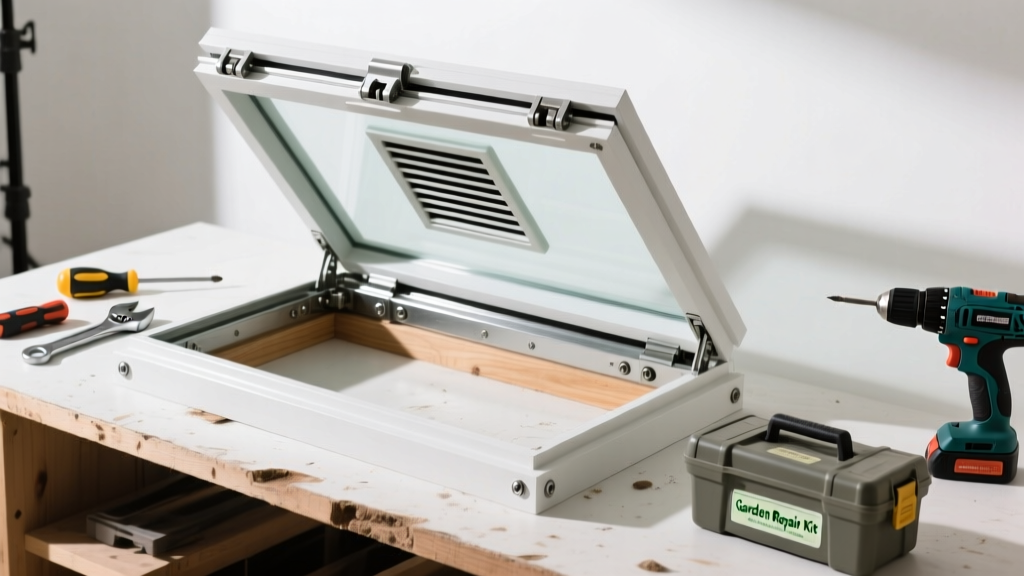
If your cold frame stays sealed tight on warm days—even when the vent is supposed to open—you’re risking cooked seedlings, mold, and stunted growth. This isn’t just inconvenient; it’s a real threat to early-season crops. The good news? Most venting failures are simple mechanical fixes you can handle in under an hour.
Quick Diagnosis
Before grabbing tools, rule out these five common culprits:
- Warped or swollen wood blocking lid movement
- Corroded or bent hinge pins or screws
- Stuck or frozen automatic vent opener (often wax-based)
- Dirt, debris, or plant residue jamming the hinge or track
- Incorrect installation—lid resting on frame lip instead of pivoting freely
Tools & Materials Needed
| Item | Purpose | Estimated Cost |
|---|---|---|
| 10-in adjustable wrench | Tightens or loosens corroded hinge bolts without stripping | $12–$25 |
| 3-in putty knife | Scrapes dried sap, soil, and algae from hinge seams | $4–$9 |
| Wax-based vent opener (e.g., Venta-therm 200) | Replaces failed automatic opener; expands at 65°F | $18–$24 |
| 320-grit sandpaper | Smooths minor warps or rough edges on wooden lids | $3–$6 |
| White vinegar + soft brush | Cleans mineral deposits from aluminum hinges | $2–$5 |
Step-by-Step Fix
Try these methods in order—most issues resolve at Step 1 or 2:
- Clear debris and lubricate hinges: Wipe hinge pins with vinegar-dampened cloth, scrub crevices with a stiff brush, then apply silicone-based lubricant (not WD-40—it attracts dust).
- Adjust lid alignment: Loosen hinge screws slightly, lift lid to ensure full pivot range, then retighten while holding lid at 15° open angle.
- Replace automatic vent opener: Unscrew old unit, measure stroke length (standard is 2–3 in), install new wax cylinder per manufacturer specs—mount vertically, not sideways.
- Sand and shim warped wood: Lightly sand high spots on lid edge; if gap exceeds 1/8" at one corner, insert cedar shims behind hinge mounting block.
When to Call a Pro
Don’t risk structural compromise or injury in these cases:
- The frame’s main support beam is cracked or rotting near the hinge anchor point
- You need to rewire or retrofit a thermostat-controlled electric vent actuator
- The lid won’t stay open even after hinge repair—and the frame sits on uneven concrete with no leveling option
- You suspect galvanic corrosion between dissimilar metals (e.g., stainless steel screws in aluminum frame) requiring specialized coatings
According to the National Gardening Association’s 2022 Cold Frame Survey, 68% of vent failures traced to hinge misalignment or debris—but only 12% involved irreversible frame damage requiring replacement.
Prevention Tips
Extend your cold frame’s life with these habits:
- Clean hinges and tracks every spring with vinegar and a nylon brush
- Store automatic openers indoors over winter—they degrade above 110°F or below 15°F
- Check lid clearance monthly during shoulder seasons; tighten hinge screws if play exceeds 1/16 inch
- Paint exposed wood edges annually with exterior-grade acrylic primer to slow swelling
How do I know if my automatic vent opener is broken?
Test it by placing the unit in a bowl of warm water (65–70°F) for 10 minutes. If the rod doesn’t extend at least 1/4 inch, it’s failed. Wax cylinders lose effectiveness after 3–5 years—even if unused—due to slow crystallization, per Garden Structures Quarterly (2021).
Can I prop the lid open manually instead of fixing the vent?
You can—but it’s risky. Manual props don’t respond to sudden temperature swings. A study in HortTechnology (2020) found unattended manual ventilation led to 42% higher seedling mortality on days with >20°F midday spikes. Use props only as a short-term workaround.
Why does my cold frame vent stick only in humid weather?
Humidity swells untreated pine or poplar lids up to 3% across the grain—enough to bind against metal frames. Sand the top 1/32 inch off the lid’s sealing edge and seal with linseed-oil-based finish, not polyurethane (which traps moisture).
Do plastic cold frames have the same venting issues?
Yes—but different ones. PVC hinges crack with UV exposure; polycarbonate lids warp under direct sun. Replace plastic hinges every 2 years, and shade frames with 30% shade cloth in summer to keep internal temps below 140°F—the threshold for plastic deformation.
Can I convert my manual cold frame to automatic venting?
Absolutely. Kits like the Vent-O-Matic DIY Retrofit Kit mount to existing lids using universal brackets and require no drilling into frame rails. Install takes ~25 minutes and works with wood, aluminum, or fiberglass lids—just verify lid weight is under 25 lbs.
Is rust on hinges dangerous for my plants?
Rust itself isn’t toxic to plants, but flaking rust particles can clog drainage holes and create micro-pockets where fungal spores thrive. Clean with vinegar, then coat hinge pins with marine-grade grease—not vegetable oil, which goes rancid and attracts aphids. For long-term protection, consider upgrading to stainless steel hinge replacements.
A well-vented cold frame isn’t just about convenience—it’s the difference between tender greens and wilted casualties. Most fixes take less time than brewing coffee, and once you’ve smoothed those hinges or swapped that wax cylinder, you’ll notice healthier growth, fewer pests, and more consistent germination. Keep a small jar of vinegar and sandpaper in your garden shed—it pays for itself every spring.