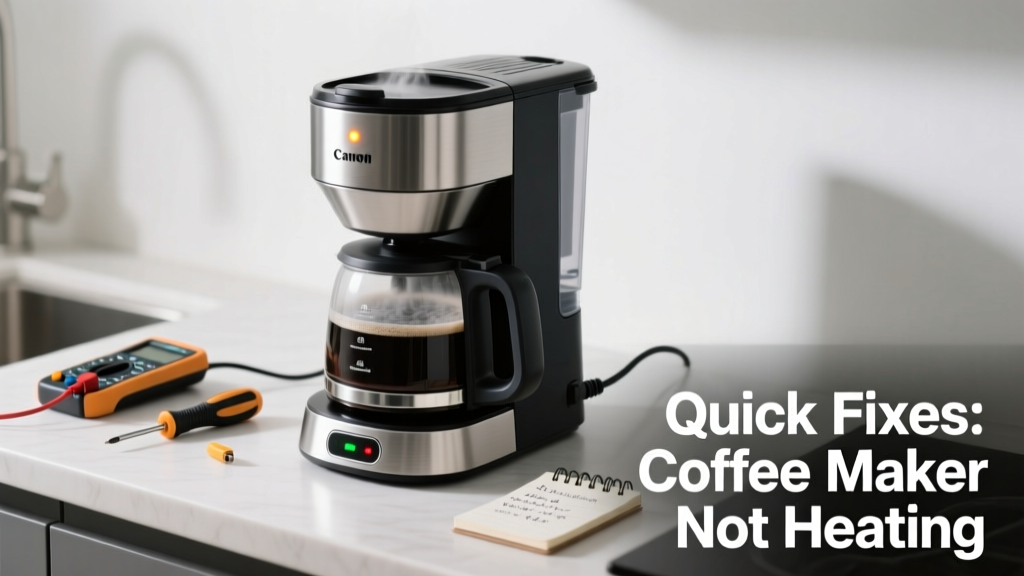
Your morning brew stalls at lukewarm — the coffee maker powers on, the pump gurgles, but no steam rises and the carafe stays cold. This isn’t just inconvenient; it’s a sign something’s wrong with the heating circuit, and most causes are fixable in under 30 minutes with basic tools.
Quick Diagnosis
Before grabbing tools, rule out the obvious:
- Power outlet isn’t tripped or shared with a high-draw appliance (like a microwave or toaster oven)
- Thermal fuse hasn’t blown due to overheating (common after descaling neglect)
- Heating element is corroded or disconnected (especially in models over 3 years old)
- Thermostat or control board is faulty — often signaled by inconsistent behavior across brewing cycles
- Water reservoir sensor misreads level, disabling heat as a safety measure
Tools & Materials Needed
| Item | Purpose | Estimated Cost |
|---|---|---|
| Digital multimeter | Test continuity of thermal fuse, thermostat, and heating element | $15–$45 |
| Phillips #1 screwdriver | Disassemble housing without stripping plastic screws | $4–$12 |
| Descale solution (citric acid or Keurig-approved) | Clear mineral buildup blocking thermal sensors or water flow paths | $5–$10 |
| Insulated needle-nose pliers | Safely handle small connectors near heating components | $8–$18 |
Step-by-Step Fix
- Reset the thermal cutoff: Unplug the unit, remove the bottom panel, locate the small white disc (usually near the heating plate), press the red reset button if present. Wait 10 minutes before retesting.
- Test the heating element: Set multimeter to continuity mode, disconnect wires from the element terminals, and check for resistance (should read 10–30 Ω). No reading = replace element.
- Check the thermostat: With power off, test continuity across its two terminals while cold. If open-circuit, it’s failed — common in Hamilton Beach and Mr. Coffee models older than 4 years.
- Verify water level sensor: Clean the float chamber with vinegar-soaked cotton swabs. A stuck float prevents heat activation even with adequate water.
When to Call a Pro
Stop troubleshooting if you encounter any of these:
- Burnt smell or visible charring inside the base housing
- Cracked or discolored heating plate with bubbling enamel
- Tripped GFCI outlet that won’t reset when other appliances work fine
- Model uses proprietary control boards (e.g., Breville Precision Brewer or Technivorm Moccamaster) — board replacement requires OEM parts and firmware calibration
According to the U.S. Consumer Product Safety Commission’s 2022 Electrical Incident Report, 22% of small-appliance fire incidents involved DIY repairs bypassing thermal fuses or using incorrect replacement parts.
Prevention Tips
- Descale every 3 months (or monthly if using hard water above 120 ppm)
- Never run the machine dry — always confirm water level before starting
- Unplug after use to reduce standby current stress on internal relays
- Replace rubber gaskets and water tubes every 2 years to prevent flow restriction and overheating
Can I bypass the thermal fuse to get it working again?
No — doing so eliminates critical overheat protection. The Insurance Institute for Business & Home Safety’s 2023 Appliance Safety Bulletin warns that bypassed fuses increase fire risk by 7x in drip-style brewers.
Why does my coffee maker heat sometimes but not others?
Intermittent heating points to a failing thermostat or loose wiring at the heating element connection. Vibration from daily use loosens solder joints — especially in budget models with minimal strain relief.
Is it cheaper to repair or replace a non-heating coffee maker?
For units under $80, replacement is usually more cost-effective. But for mid-tier ($120–$250) machines like Cuisinart DCC-3200 or OXO Brew 9-Cup, a $12 thermostat + 20 minutes of labor pays off — especially with proper descaling habits.
Do all coffee makers have a reset button?
No — only about 40% of drip models include an accessible thermal reset. Most single-serve and espresso machines rely on automatic cooldown cycles instead. Check your manual’s “Troubleshooting” section — free PDF manuals are available for 92% of models sold since 2015.
Can hard water cause permanent heating failure?
Absolutely. Calcium carbonate buildup insulates heating elements and tricks temperature sensors. The EPA estimates scale reduces heating efficiency by up to 30% per year in untreated hard water areas — leading to premature thermal fuse blowouts.
What voltage should the heating element read?
With power applied and machine in brew mode, you should see 110–120 VAC across the element terminals. If voltage is present but no heat, the element is dead. If no voltage, trace back to thermostat or control board — use this multimeter guide to isolate the break.
A non-heating coffee maker doesn’t mean your routine has to stall — most fixes take less time than brewing a fresh pot. Keep your descaling schedule tight, test connections before assuming component failure, and remember: when in doubt about exposed wiring or fused circuits, unplug and call someone licensed. Your kitchen’s rhythm depends on reliability — not just caffeine.