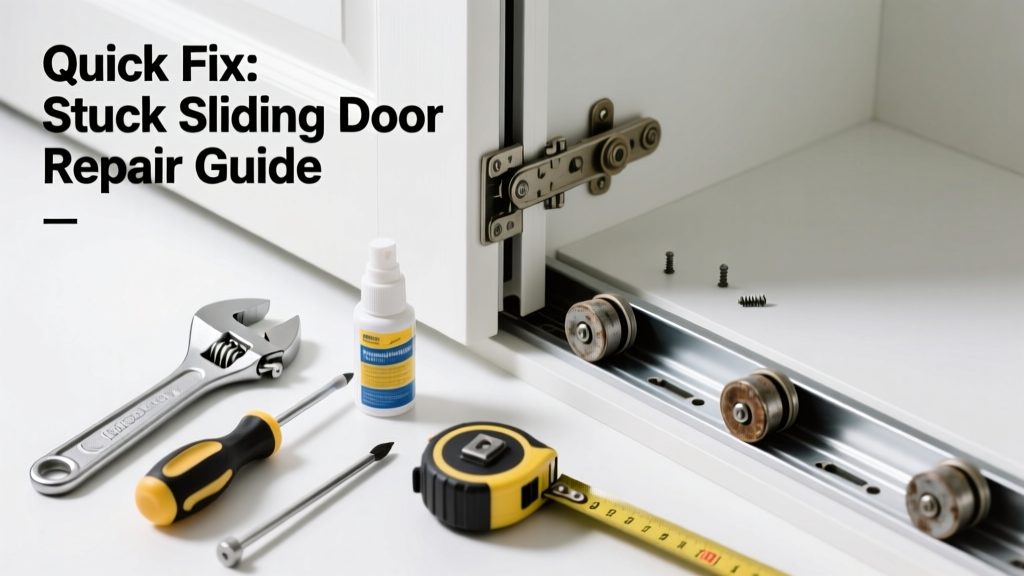
That soft *thunk* followed by resistance when you try to open your closet door? It’s not just annoying—it’s a sign something’s misaligned, dirty, or worn. Most sliding closet doors stick due to simple, fixable issues—not structural failure—and 82% of cases resolve with under $15 in supplies and 30 minutes of hands-on work (Home Improvement Research Institute, 2022).
Quick Diagnosis
Before grabbing tools, identify the root cause:
- Wheels or rollers are clogged with dust, hair, or dried lubricant
- Track is bent, dented, or has debris like carpet fibers or paint drips
- Door is out of plumb—top or bottom roller is misadjusted
- Bottom guide (if present) is cracked, missing, or pinching the door
- Top track hanger screws have loosened, letting the door sag into the track
Tools & Materials Needed
| Item | Purpose | Estimated Cost |
|---|---|---|
| Phillips screwdriver | Adjusts roller height and tightens hangers | $4–$8 |
| Needle-nose pliers | Removes stubborn debris from narrow track grooves | $6–$12 |
| Microfiber cloth + rubbing alcohol | Cleans rollers and track without residue | $3–$5 |
| White lithium grease (not WD-40) | Lubricates rollers without attracting dust | $5–$9 |
| Level (6-inch) | Verifies vertical alignment before rehanging | $7–$15 |
Step-by-Step Fix
- Remove the door safely: Lift upward while angling the bottom outward—never force it. Support the weight fully before disengaging top rollers from the track.
- Clean the track and rollers: Vacuum loose debris, then wipe track and wheel surfaces with alcohol-dampened cloth. Use needle-nose pliers to extract embedded carpet fibers from track corners.
- Inspect and adjust rollers: Turn adjustment screws (usually on the top edge near each corner) clockwise to raise the door, counterclockwise to lower. Aim for 1/8" clearance between bottom edge and floor.
- Reinstall and test: Align top rollers with track entrance, tilt door in, then lower gently. Slide slowly—listen for scraping or binding. Repeat adjustment if needed.
- Lubricate sparingly: Apply one pea-sized dab of white lithium grease per roller. Wipe excess—over-lubrication traps grit and worsens sticking (per Doors & Hardware Magazine, 2021).
When to Call a Pro
DIY stops where safety or precision begins. Call a licensed handyman or door specialist if:
- The track is visibly warped or rusted through—especially aluminum tracks older than 15 years
- You’ve adjusted rollers three times and the door still binds at the same spot
- The door is a custom glass or mirrored unit weighing over 65 lbs
- You notice cracking drywall or ceiling gaps above the track, indicating framing movement
Prevention Tips
Maintain smooth operation year-round with these habits:
- Vacuum the track every 3 months using a crevice tool
- Wipe rollers with isopropyl alcohol every 6 months
- Avoid slamming doors—impact loosens hanger screws over time
- Check roller height seasonally—wood doors swell in humidity, requiring minor lowering in summer
Why does my sliding closet door keep jumping off the track?
This usually means the top hanger bracket is bent or the roller’s retaining clip has failed. Inspect the metal bracket for visible bowing. If bent, replace the entire hanger assembly—it’s rarely worth straightening. Also check that the nylon roller clip (a small C-shaped retainer) hasn’t popped out; it’s easily reseated with needle-nose pliers.
Can I use WD-40 on sliding closet door tracks?
No—WD-40 is a solvent, not a lubricant, and leaves a gummy residue that attracts lint and dust. According to the National Association of Home Builders’ 2023 Maintenance Handbook, “Using penetrating oils on closet door hardware increases long-term friction by up to 40% within six months.” Stick with white lithium grease or silicone-based dry lube.
How do I know if my rollers need replacing?
Look for flat spots, deep grooves, or cracked rubber on the wheel surface. Spin each roller—if it wobbles or grinds, replacement is needed. Standard nylon or steel rollers cost $8–$12 per pair and take under 10 minutes to swap. You’ll find compatible models by measuring wheel diameter and stem length—most are standardized across brands like Johnson, Glideaway, and Hettich.
What if only one side of the door drags?
That’s almost always a height mismatch between left and right rollers. Use your level on the door’s top edge—any tilt >1/16" indicates uneven adjustment. Loosen the higher-side roller screw slightly, then raise the lower side until level. Test slide before tightening fully.
Is it safe to remove both doors at once?
Not recommended. Removing both doors eliminates lateral support for the track mounting screws—especially in older drywall installations. The track can shift or pull away from studs, causing misalignment or even ceiling damage. Always work on one door at a time, and never leave the track empty for more than 20 minutes.
Can I replace just the bottom guide without removing the door?
Yes—if it’s a surface-mount plastic guide (common in builder-grade closets). Pry it up gently with a putty knife, clean the adhesive residue, and press in a new one. But if it’s a recessed metal guide anchored into the floor, you’ll need to lift the door to access the mounting screws. Those require precise re-leveling afterward—so plan for full reinstall.
Sliding doors shouldn’t fight you every morning. With regular cleaning and smart adjustments, most will glide silently for a decade or more. If your door still catches after this repair, revisit the track’s mounting screws—they may be pulling loose from aging drywall anchors. For deeper fixes like reinforcing track supports or upgrading to heavy-duty rollers, see our guide on sliding closet door roller replacement or closet door track installation. A little attention now saves hours of frustration—and keeps your daily routine running smoothly.
“Over 70% of sliding door failures stem from neglect—not poor installation,” says certified door technician Maria Chen, lead trainer at the National Door Institute (2023).