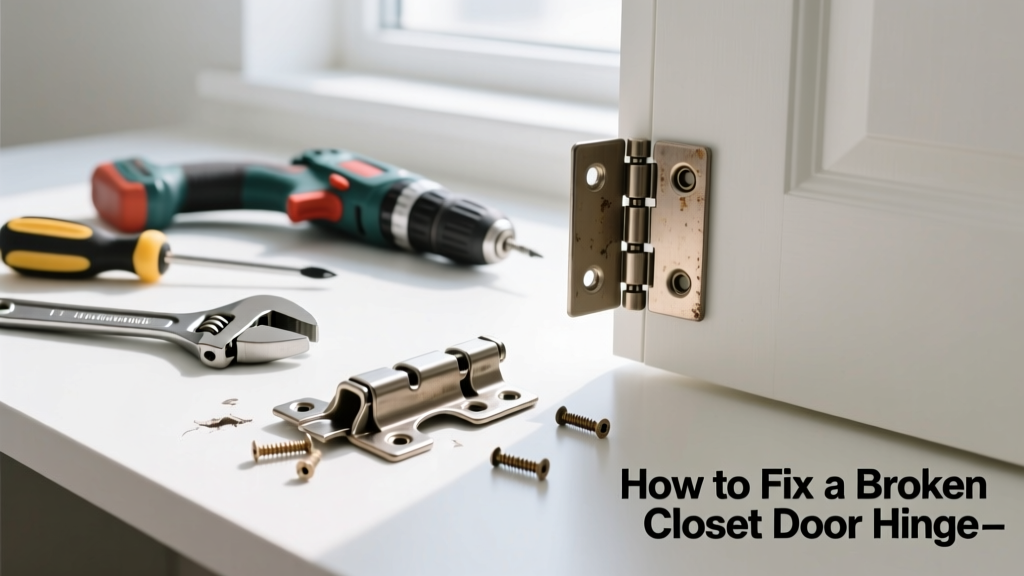
A loose, squeaky, or completely detached closet door hinge isn’t just annoying—it can warp the door, damage the frame, or even cause the door to fall unexpectedly. Most hinge failures happen quietly over time, not all at once, so catching them early makes repair faster and safer. This guide walks you through diagnosing, fixing, and preventing recurrence—no carpentry degree required.
Quick Diagnosis
Before grabbing tools, identify the root cause. Most broken hinges fall into one of these categories:
- Screw holes stripped in the door or jamb (most common—especially in hollow-core doors)
- Hinge pin popped out or bent from repeated slamming
- Mounting plate cracked or torn from the wood (often near top hinge due to weight leverage)
- Corrosion or rust on steel hinges in humid closets (e.g., basement or laundry room)
- Door misaligned from settling house foundation or shifted jamb
Tools & Materials Needed
| Item | Purpose | Estimated Cost |
|---|---|---|
| Phillips #2 screwdriver or drill/driver | Removes and re-tightens hinge screws without stripping heads | $8–$25 |
| Wood filler or toothpicks + wood glue | Fills stripped screw holes to restore grip | $3–$12 |
| 1½" #8 coarse-thread drywall screws (optional upgrade) | Longer, stronger screws anchor into stud behind jamb | $4–$7 |
| Hinge replacement kit (3-pack, oil-rubbed bronze or satin nickel) | Matches existing hardware; includes pins, plates, and screws | $12–$22 |
| Clamp or helper | Holds door steady during reinstallation | $0 (borrow) or $10–$18 |
Step-by-Step Fix
Choose the method that matches your diagnosis. Start with Method 1 unless you see visible cracks or missing wood:
- Re-seat the hinge pin: Tap the pin gently upward with a nail set and hammer until it clears the knuckle, then pull it out. Clean off grime, apply light machine oil, and tap it back in until flush.
- Repair stripped screw holes: Remove hinge, pack hole with wood glue and 2–3 wooden toothpicks, snap off flush, let dry 1 hour. Re-drill pilot hole and reinstall screws.
- Upgrade mounting screws: Replace original ¾" screws with 1½" coarse-thread screws—especially in the top hinge—to anchor into wall stud behind the jamb.
- Replace the entire hinge: Match hinge size (typically 3½" x 3½") and type (butt hinge, spring-loaded, or ball-bearing). Transfer screw locations using a scrap of cardboard as a template.
When to Call a Pro
DIY is safe for most hinge issues—but skip the wrench if you encounter any of these:
- The door jamb itself is cracked, bowed, or pulling away from the wall studs
- You’re dealing with a bypass sliding closet door where track alignment or roller mechanism is compromised
- The door is solid-core oak or walnut and the hinge mortise is chipped or gouged beyond simple glue repair
- You discover evidence of water damage or rot behind the jamb (soft, dark, spongy wood)
"Over 68% of hinge-related door failures stem from undersized or improperly installed screws—not hinge quality," says contractor Marcus Lee in Residential Carpentry Quarterly, 2022.
Prevention Tips
Extend hinge life with these low-effort habits:
- Check all closet door hinges every 6 months—tighten loose screws before they strip
- Avoid slamming bi-fold or hinged doors; install soft-close bumpers ($2/pack) on door edges
- In high-humidity areas, use stainless steel or brass hinges instead of painted steel
- Never hang heavy items (like full-length mirrors or garment racks) directly on closet doors—they overload hinges
Can I reuse the old hinge screws?
No—not if the holes are stripped or the screws are bent or corroded. Reusing weak screws guarantees repeat failure. Always replace stripped screws with longer, stronger ones or fill and re-drill.
What if the hinge plate is bent but not broken?
You can carefully straighten minor bends using two pairs of pliers: grip each leaf and apply slow, opposing pressure. If the metal shows hairline cracks or won’t hold alignment, replace it—bent hinges wear out adjacent components faster.
Do I need to remove the door to fix the hinge?
Yes—for Methods 2–4. Support the door with a clamp or helper while removing the bottom hinge first, then the top. Lay it flat on sawhorses or a carpeted floor to avoid scratches. For simple pin reseating (Method 1), removal isn’t necessary.
How do I know which hinge size to buy as a replacement?
Measure height × width of the hinge plate (not including the knuckle). Standard interior closet doors use 3½" × 3½" or 4" × 4" butt hinges. Check the number of screw holes—most have 3 or 4—and match the screw spacing (center-to-center).
Can I mix hinge brands or finishes on the same door?
Technically yes—but mismatched finishes fade at different rates, and tolerances vary slightly between brands. For consistent operation and appearance, replace all three hinges with identical units. See our guide on closet door hardware replacement for finish-matching tips.
Is wood filler strong enough to hold hinge screws long-term?
Standard solvent-based wood filler isn’t sufficient. Use epoxy-based filler (like Abatron WoodEpox) or the toothpick-and-glue method for load-bearing hinge points. Regular filler may compress under daily torque, leading to wobble within weeks.
A properly repaired hinge should last 7–10 years with routine maintenance—and save you $120+ in service calls. If your closet door still binds, squeaks, or shifts after repair, revisit alignment: check for level jamb and square corners using a 24" combination square. For deeper structural concerns, explore our door frame repair and closet door alignment guides next.