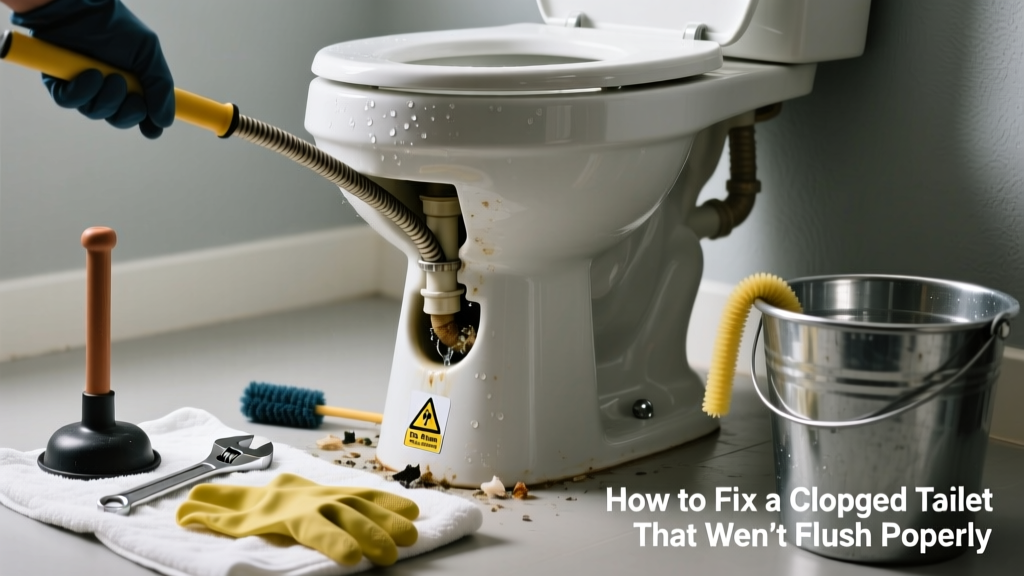
Your toilet gurgles, water rises but won’t drain, or the flush feels weak and sluggish — this isn’t just annoying, it’s a red flag that something’s wrong in your waste line. Ignoring it risks overflow, water damage, or even sewer gas infiltration. Most clogs are fixable in under 30 minutes with the right tools and technique.
Quick Diagnosis
Before grabbing tools, identify what’s really going on. A toilet that’s "not working properly" could mean several things — not all are simple clogs.
- Slow draining: Often a partial blockage in the trap or drain line
- Water rising and not receding: Classic full clog — usually toilet paper, wipes, or foreign objects
- Gurgling sounds from other drains: Indicates a vent stack issue or main line obstruction
- Weak or incomplete flush: May point to low water level in tank, flapper seal failure, or mineral buildup in rim jets
Tools & Materials Needed
| Item | Purpose | Estimated Cost |
|---|---|---|
| Flange plunger | Creates stronger suction than cup plungers; seals better on toilet bowls | $8–$15 |
| Drain snake (toilet auger) | Reaches past the trap into the drain pipe to break up or retrieve clogs | $12–$25 |
| Enzyme-based drain cleaner | Breaks down organic matter safely without corroding pipes | $6–$14 |
| Rubber gloves & old towels | Protect hands and absorb spills during cleanup | $3–$8 |
Step-by-Step Fix
Try these methods in order — start gentle, escalate only if needed.
- Plunge with a flange plunger: Cover the drain fully, create a tight seal, and push down firmly then pull up sharply 15–20 times. Don’t lift the seal mid-cycle — maintain pressure.
- Use a toilet auger: Feed the coiled end into the bowl until resistance is met. Crank clockwise while gently pushing forward to hook or break up the clog. Retract slowly and clean the tip after each pass.
- Try hot water + dish soap: Pour ½ cup liquid dish soap into the bowl, wait 15 minutes, then carefully add 3–4 quarts of hot (not boiling) water. Let sit 20 minutes before flushing.
- Enzyme treatment (for recurring slow drains): Follow label instructions — typically ¼ cup poured at night, left overnight, repeated for 3–5 days. Works best on organic buildup, not solid obstructions.
When to Call a Pro
Stop DIY efforts if any of these apply — continuing can worsen damage or expose you to biohazards.
- Water backs up into the shower, bathtub, or floor drain when you flush
- You suspect a main sewer line clog (multiple fixtures affected simultaneously)
- You smell raw sewage — indicates venting failure or cracked pipe
- After three attempts with auger and plunger, no improvement
- You see black or gray water rising — potential septic or sewer backup requiring EPA-certified cleanup
According to the Insurance Institute for Business & Home Safety's 2023 report, 62% of homeowner sewer backups occur due to delayed response to early warning signs like gurgling drains or slow-flushing toilets.
Prevention Tips
Most clogs are preventable — especially those caused by what people flush or pour down the drain.
- Never flush anything besides toilet paper and human waste — no wipes (even "flushable" ones), cotton balls, dental floss, or feminine products
- Install a toilet tank bank (a sealed plastic bottle filled with water) to reduce flush volume and prevent overuse of water that stresses older pipes
- Flush twice per week with vinegar and baking soda: ½ cup baking soda + ½ cup white vinegar, wait 15 minutes, then flush with hot water to dissolve mineral deposits in rim jets
- Have your main sewer line scoped every 3–5 years if you live in a home built before 1990 or with clay or cast-iron pipes
Can I use bleach to clear a clog?
No. Bleach doesn’t dissolve toilet paper, hair, or grease — it only disinfects. Mixing bleach with other cleaners (like vinegar or ammonia) creates toxic chlorine gas. It also degrades rubber flappers and seals over time, leading to leaks. Stick to mechanical methods first, then enzyme treatments.
Why does my toilet bubble when the washing machine runs?
This points to a shared drain line or blocked vent stack. When the washer pumps wastewater quickly, air gets forced back through the toilet’s trap if the vent can’t equalize pressure. Check your roof vent for bird nests or ice buildup — a simple wire hanger can often clear minor obstructions. If persistent, schedule a sewer line inspection.
Is it safe to use Drano in a toilet?
Avoid chemical drain cleaners like Drano in toilets. They generate heat and pressure that can crack porcelain or soften PVC joints. The U.S. EPA estimates that 14% of household water usage is from leaks — many triggered by corrosion from harsh chemicals. Safer alternatives include enzyme-based cleaners or mechanical removal.
What if water overflows while I’m plunging?
Stop immediately. Turn off the toilet’s shut-off valve (usually located on the wall behind the base). Use towels or a wet-dry vacuum to remove standing water. Never let contaminated water sit — it carries E. coli and other pathogens. Once dry, inspect the flapper and fill valve; a faulty flapper can cause constant refilling that mimics a clog.
How do I know if it’s a septic issue vs. a clog?
If your home uses a septic system and you notice slow drains *plus* pooling water near the tank or leach field, foul odors outdoors, or gurgling when running appliances, it’s likely septic-related. Unlike a simple clog, septic issues require pumping or professional evaluation — don’t attempt to snake beyond the tank inlet. Learn more in our septic troubleshooting guide.
Can a clogged toilet cause damage to other plumbing?
Yes — especially if ignored. Pressure builds upstream, stressing pipe joints and seals. Over time, this leads to leaks behind walls or under floors. A backed-up sewer line can also force gases into your home through dry P-traps, exposing occupants to hydrogen sulfide. That’s why prompt action matters — and why knowing when to call a licensed plumber is as important as knowing how to plunge.
A clogged toilet isn’t just an inconvenience — it’s your plumbing system sounding an alarm. With the right diagnosis and tools, most blockages yield quickly. But respect the limits of DIY: when water rises, smells linger, or multiple fixtures act up, it’s time to bring in someone with a camera scope and a license. Stay proactive, flush responsibly, and keep your bathroom running smoothly — not silently.