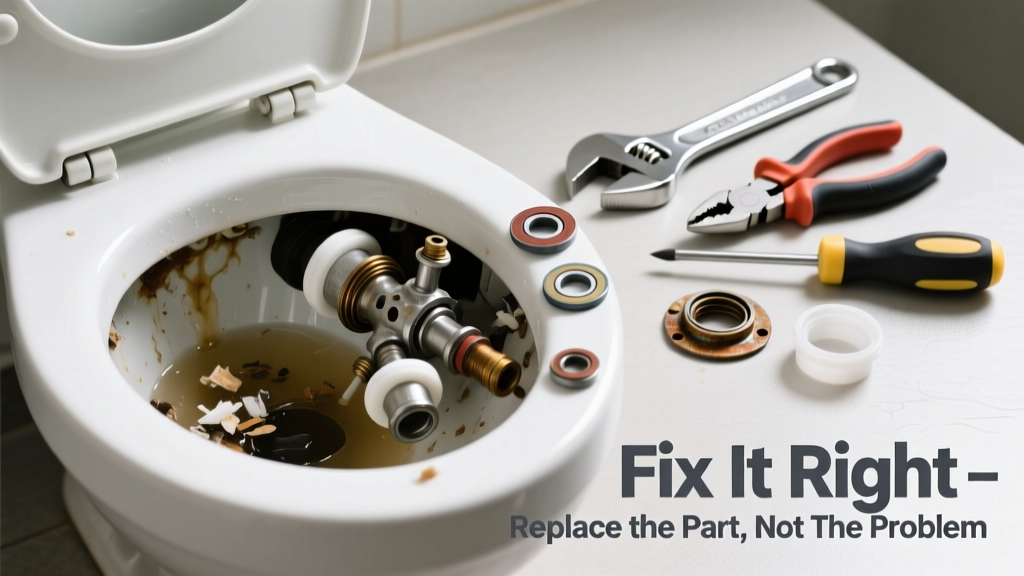
A clogged toilet that keeps backing up—even after plunging or using a snake—often isn’t blocked by debris at all. It’s usually a failing internal component like the flapper, fill valve, or flush valve seal. Replacing that single part takes under 30 minutes and costs less than $25.
Quick Diagnosis
Before grabbing tools, confirm which part is failing. Most persistent clogs trace back to these four internal failures:
- Flapper not sealing properly (water trickles into bowl between flushes)
- Worn-out flush valve seat (causes slow draining and gurgling)
- Collapsed or mineral-clogged overflow tube
- Cracked or warped tank-to-bowl gasket (leaks at base or causes weak flush)
Tools & Materials Needed
| Item | Purpose | Estimated Cost |
|---|---|---|
| Adjustable wrench | Tightens/loosens nuts on fill valve and flush valve assembly | $12–$24 |
| Replacement flapper (universal or model-specific) | Replaces worn rubber seal that fails to hold water in tank | $4–$12 |
| White vinegar + soft brush | Cleans mineral deposits from flush valve seat and overflow tube | $3–$6 |
| Plumber’s grease (silicone-based) | Lubricates new flapper chain and gasket surfaces for smooth operation | $5–$9 |
Step-by-Step Fix
Most clogs caused by internal failure respond to one of these targeted repairs. Start with the simplest first:
- Test the flapper: Turn off water supply, flush to drain tank, inspect flapper for warping or cracking. Replace if discolored or stiff. Attach new flapper using existing chain length—adjust so it lifts fully but seals without tension.
- Inspect the flush valve seat: Shine a flashlight into the drain opening at the bottom of the tank. Look for pitting, cracks, or calcium buildup. If present, use vinegar-soaked cloth and soft brush to clean. If damage is deep, replace entire flush valve kit ($18–$28).
- Check the fill valve: If tank refills too slowly or overflows, the fill valve may be clogged or failing. Shut off water, disconnect supply line, remove old valve, and install a Fluidmaster 400A (fits 95% of toilets) per manufacturer instructions.
When to Call a Pro
Don’t risk flooding or pipe damage—call a licensed plumber if you encounter any of these:
- Water pooling around base of toilet after flushing (indicates cracked bowl or failed wax ring)
- Corroded brass bolts or rusted tank mounting hardware that won’t budge
- Older toilets (pre-1994) with non-standard flush mechanisms or integral traps
- Multiple fixtures backing up simultaneously—points to main sewer line blockage, not a toilet part
Prevention Tips
Extend your repair’s lifespan with routine maintenance:
- Flush vinegar through the overflow tube every 3 months to dissolve mineral buildup
- Replace flappers every 4–5 years—even if they seem fine (rubber degrades silently)
- Avoid chemical drain cleaners; they corrode rubber parts and PVC traps
- Install a toilet tank bank (e.g., toilet tank bank installation) to reduce water volume and strain on seals
Can I use bleach tablets in my toilet tank?
No. According to the American Society of Home Inspectors’ 2022 Plumbing Standards Guide, chlorine-based tablets degrade flappers, gaskets, and fill valves within 6–12 months—leading directly to premature clogs and leaks.
How do I know if my flapper is the right size?
Measure the flush valve opening: 2-inch openings need standard flappers; 3-inch openings require larger-diameter models (like Korky 100BP). Using the wrong size causes incomplete sealing and phantom flushes.
Why does my toilet gurgle when other drains are used?
Gurgling signals vent stack obstruction or partial main line clog—not a toilet part issue. This requires a roof vent inspection or sewer camera check, not a flapper swap.
Is it safe to tighten tank bolts myself?
Yes—but only until snug. Overtightening cracks porcelain. Use a torque wrench set to 12–15 in-lbs, or stop when resistance increases sharply. For cracked tanks, see our guide on toilet tank crack repair.
Do dual-flush toilets have different replacement parts?
Yes. Dual-flush mechanisms use proprietary cartridges (e.g., Caroma, Toto G-Max). Always match the exact model number—generic flappers won’t seal correctly. Check inside tank lid or consult manufacturer’s online parts diagram.
How long should a flush valve seal last?
According to the Plumbing Manufacturers Institute’s 2023 Product Lifespan Report, rubber flush valve seals average 7–10 years in hard water areas—but drop to 3–5 years where water hardness exceeds 12 grains per gallon.
The U.S. EPA estimates that 14% of household water usage is from leaks—including silent toilet flapper failures that waste up to 200 gallons per day.
Replacing the right part isn’t about luck—it’s about matching symptoms to components. A slow refill? Focus on the fill valve. Constant running? It’s almost always the flapper or flush valve seat. Once you’ve ruled out external clogs and confirmed internal wear, this fix pays for itself in saved water bills and avoided service calls. Keep a spare flapper and silicone grease in your utility closet—you’ll use them more often than you think.