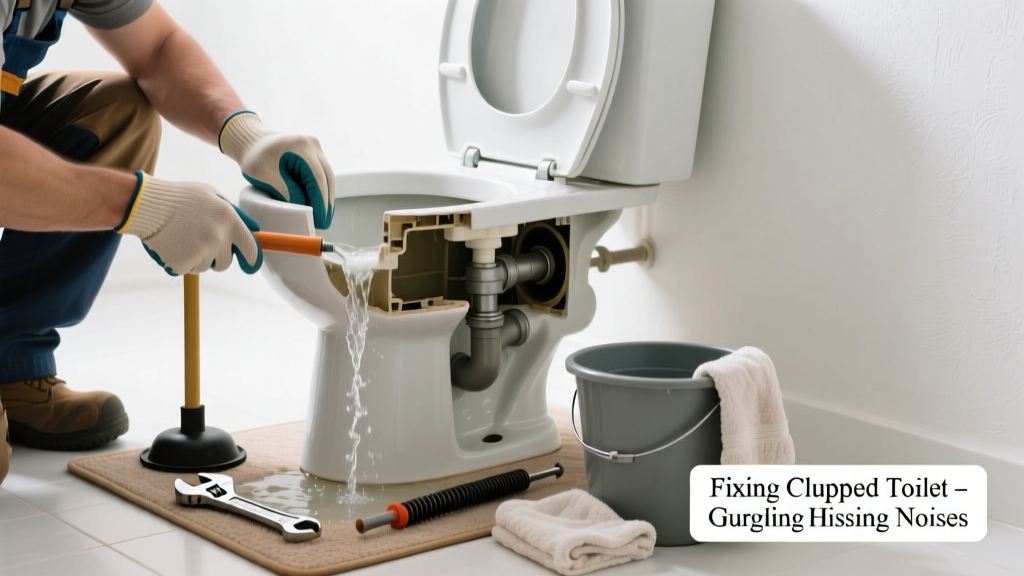
That sudden gurgle when you flush—or the low hiss that seems to come from nowhere—means your toilet isn’t just clogged; it’s signaling pressure imbalances in your drain or vent system. Ignoring it risks overflow, sewer gas leaks, or even pipe damage. Most noisy clogs can be resolved in under an hour with the right approach.
Quick Diagnosis
Unusual noises point to specific issues—not just blockage. Here are the most common culprits:
- Gurgling from the toilet or nearby sink: blocked vent stack or main drain line
- Hissing or whistling during refill: faulty fill valve or mineral buildup in the inlet screen
- Bubbling or "glugging" sounds: partial clog combined with air trapped in pipes
- Repeated flushing noise without full evacuation: foreign object (e.g., toy, sanitary product) lodged in trap or S-bend
- Knocking or banging after flush: water hammer due to worn shut-off valve or loose supply line
Tools & Materials Needed
| Item | Purpose | Estimated Cost |
|---|---|---|
| Heavy-duty plunger (flange type) | Creates strong suction to dislodge partial clogs affecting airflow | $8–$15 |
| Drain snake (1/4" x 25 ft) | Reaches past the trap into the waste arm to remove obstructions causing vent disruption | $12–$22 |
| Vinegar + baking soda | Natural reaction helps dissolve organic debris and mild mineral deposits in fill valve | $3–$5 |
| Adjustable wrench | Tightens loose supply lines or replaces worn shut-off valve to stop knocking | $10–$18 |
| Flashlight & mirror | Inspects inside tank and bowl for foreign objects or corroded parts | $5–$12 |
Step-by-Step Fix
Start with the least invasive method and escalate only if needed:
- Shut off water: Turn the wall-mounted shut-off valve clockwise until snug. Flush once to empty tank and bowl.
- Try the flange plunger: Seal the bowl fully, push down firmly, then pull up sharply 15–20 times. Listen for improved drainage and quieter flushes.
- Snake the trap and waste arm: Feed the auger slowly past the curve of the trap. Rotate while advancing 3–4 inches at a time. Retract slowly—if resistance eases, you’ve hit the obstruction.
- Clean the fill valve inlet screen: Unscrew the fill valve cap, remove the small brass screen, soak in vinegar for 10 minutes, rinse, and reinstall.
- Check the vent stack: Climb onto the roof (safely) and inspect the vent pipe opening for bird nests, leaves, or ice. Use a garden hose on gentle spray to flush debris downward.
When to Call a Pro
Stop DIY efforts and call a licensed plumber if:
- The gurgling persists across multiple fixtures (sink, shower, tub)—this signals a main sewer line issue
- You detect sewage odor near floor drains or basement walls, indicating a cracked or collapsed pipe
- Water backs up into other drains when you flush, especially after snaking
- Your home has cast iron or clay pipes built before 1970—these require specialized camera inspection
According to the Insurance Institute for Business & Home Safety's 2023 report, 68% of sewer backups linked to venting failures go undetected until structural damage occurs—making early professional assessment critical.
Prevention Tips
Prevent recurrence with these simple habits:
- Never flush wipes—even those labeled "flushable"—they account for 92% of reported toilet clogs in municipal wastewater studies (American Society of Civil Engineers, 2022)
- Install a vent filter cap (like Oatey® Roof Vent Cap) to keep out debris without restricting airflow
- Flush hot water (not boiling) down the toilet weekly to loosen biofilm buildup
- Replace rubber flapper every 3–5 years—cracked flappers cause inconsistent refills and pressure fluctuations
- Use a toilet brush with stiff nylon bristles weekly to scrub under the rim and prevent mineral ring buildup that disrupts siphon action
Can I use bleach on this?
No. Bleach won’t clear a physical clog or vent blockage—and it degrades rubber flappers and seals over time. It also reacts dangerously with ammonia-based cleaners sometimes left in bowls. Stick to mechanical methods or enzymatic drain openers like Green Gobbler for organic buildup.
Why does my toilet hiss only when the tank is refilling?
This points directly to the fill valve. Mineral deposits clog its internal screen or diaphragm, forcing water through narrow passages at high velocity. Replace the screen first; if hissing continues, upgrade to a Fluidmaster 400A fill valve—it’s adjustable, quiet, and widely compatible.
Will a plunger fix gurgling in the sink too?
Not reliably. If gurgling happens in both toilet and sink, the issue is likely in the shared vent or main drain—not the toilet alone. A plunger may temporarily relieve pressure but won’t resolve the root cause. Try snaking the sink’s P-trap first, then check the roof vent.
Is it safe to pour boiling water down the toilet?
No. Boiling water can crack porcelain bowls and soften PVC drain lines. Use hot tap water (140°F max) instead—it’s effective for grease or soap scum without risk. For stubborn buildup, try how to clean toilet fill valve components with white vinegar.
How do I know if the vent pipe is frozen?
In cold climates, look for frost around the roof vent opening or listen for a faint "ping" sound when flushing—caused by steam hitting ice. You’ll also notice slow draining and repeated gurgles. Use a steamer wand or heat tape rated for plumbing vents—not open flame—to thaw safely.
What if the noise stops after flushing but returns in 10 minutes?
This suggests a slow leak or airlock forming as water level drops in the trap. Check the flapper seal for warping or mineral deposits using food coloring in the tank—if color seeps into the bowl in under 15 minutes, replace the flapper. Also inspect the toilet flapper replacement guide for proper alignment tips.
A noisy toilet isn’t just annoying—it’s your plumbing system’s distress signal. Addressing the cause early prevents bigger headaches like sewer gas infiltration or emergency overflow. Keep your tools handy, test each fix methodically, and don’t hesitate to bring in a pro when symptoms cross into multi-fixture territory. Consistent maintenance beats crisis repair every time.