That gurgle followed by rising water is every homeowner’s bathroom panic trigger. A clogged toilet isn’t just inconvenient — it’s a hygiene hazard and potential water damage risk if ignored. The good news? Most bathroom toilet clogs clear in under 15 minutes with the right tools and technique.
Quick Diagnosis
Before grabbing tools, identify what’s likely causing the blockage. Most bathroom toilet clogs fall into these categories:
- Toilet paper overload (especially thick or quilted brands)
- Flushed non-flushable items: wipes, cotton pads, dental floss, or small toys
- Mineral buildup in older cast-iron or low-flow toilets
- Partial blockage downstream in the trap or drain line (often signaled by slow draining in nearby sinks or showers)
Tools & Materials Needed
| Item | Purpose | Estimated Cost |
|---|---|---|
| Flange plunger | Creates superior suction on toilet bowls vs. cup plungers | $8–$15 |
| Toilet auger (closet auger) | Reaches 3–6 ft into drain line to break up or retrieve obstructions | $22–$40 |
| Rubber gloves & old towels | Protect hands and absorb spills during unclogging attempts | $5–$12 |
| Baking soda & white vinegar | Natural reaction helps loosen organic debris; safe for pipes | $3–$6 |
Step-by-Step Fix
Try these methods in order — start simple, escalate only if needed:
- Plunge with purpose: Seal the flange plunger fully over the drain hole. Push down slowly, then pull up sharply — repeat 15–20 times without breaking the seal. Stop if water level drops quickly.
- Try baking soda + vinegar: Pour ½ cup baking soda, wait 5 minutes, then add 1 cup white vinegar. Let fizz for 20 minutes, then flush with hot (not boiling) water.
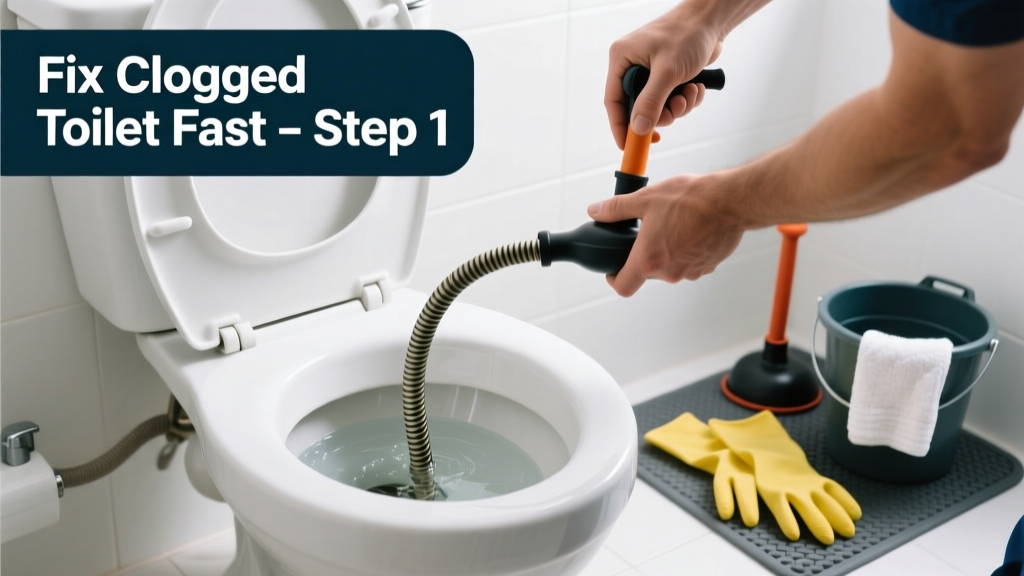
- Use a toilet auger: Feed the coiled end into the bowl until resistance is felt. Rotate clockwise while gently pushing forward. When you hit the clog, crank 5–10 full turns, then retract slowly — you may pull out hair, wipes, or debris.
- Check the overflow tube: If the tank fills but doesn’t flush, the issue may be in the tank’s internal mechanism — not the drain. Inspect the flapper chain, fill valve, and overflow tube alignment.
When to Call a Pro
Stop DIY efforts and call a licensed plumber if:
- Water rises dangerously high or overflows despite plunging
- You hear gurgling in other drains (sink, shower, tub) — indicates main sewer line blockage
- Multiple fixtures back up simultaneously
- You suspect tree roots in older clay or cast-iron lines (common in homes built before 1980)
- The toilet rocks or leaks at the base — could signal a broken wax ring or floor damage
According to the Insurance Institute for Business & Home Safety's 2023 report, 27% of emergency plumbing calls stem from delayed response to early clog symptoms — don’t wait until water reaches the floor.
Prevention Tips
Small habits prevent most bathroom toilet clogs:
- Use only 1–2 squares of single-ply or septic-safe toilet paper per wipe
- Keep a lined trash can beside the toilet for feminine products, wipes, and cotton swabs
- Flush twice for large loads — especially after shaving or hair removal
- Install a toilet with a 2-inch trapway (not 1.5-inch) for better flow — like many Toto Drake II or Kohler Wellworth models
- Run hot water down the toilet once weekly to help dissolve minor buildup
Can I use bleach on this?
No. Bleach won’t dissolve organic clogs like toilet paper or wipes — and it can react dangerously with ammonia-based cleaners if previously used. It also corrodes seals and gaskets over time. Stick to mechanical methods or enzymatic drain cleaners like Green Gobbler for recurring organic buildup.
What if my toilet is still slow after clearing the clog?
A lingering slow flush often means residual debris or mineral scale remains in the rim jets or siphon jet. Use a wire coat hanger (unbent tip) to gently clear each rim hole, then pour 1 cup white vinegar into the overflow tube and let sit overnight. For stubborn lime scale, try CLR Bath & Kitchen Cleaner applied directly to the jet openings.
Is it okay to use a chemical drain cleaner?
Avoid caustic or acid-based drain openers (like Drano Max Build-Up Remover) in toilets. They generate heat that can crack porcelain and fail to reach deep clogs. Enzymatic cleaners are safer but take 6–12 hours to work — not ideal for urgent clogs. Reserve them for maintenance, not emergencies.
Why does my toilet gurgle when the shower runs?
This points to a partial blockage in the shared vent stack or main drain line. Air is being pulled through the toilet’s trap as water flows elsewhere — a red flag for a deeper issue. Check your roof vent for bird nests or ice dams first; if clear, call a plumber for a camera inspection.
Can a clogged toilet cause a leak at the base?
Yes — prolonged pressure from a severe clog can compromise the wax ring seal, especially in older toilets or those with slight floor movement. If you see water pooling around the base after repeated plunging, shut off the water supply and plan for a wax ring replacement.
How do I know if it’s a septic system issue?
If your home uses a septic tank and multiple drains back up (not just the toilet), or you smell sewage near the tank or drainfield, the problem may be a full tank or failing leach field. The U.S. EPA estimates that 14% of household water usage is from leaks — but septic backups require professional pumping, not plunging. Contact a septic service immediately.
A clogged toilet in the bathroom is rarely a catastrophe — it’s a solvable moment that rewards calm action and the right tool. Keep a flange plunger and closet auger under the sink, test your flush monthly, and treat your toilet like the precision fixture it is. With these steps, you’ll spend less time worrying and more time enjoying a quiet, working bathroom.