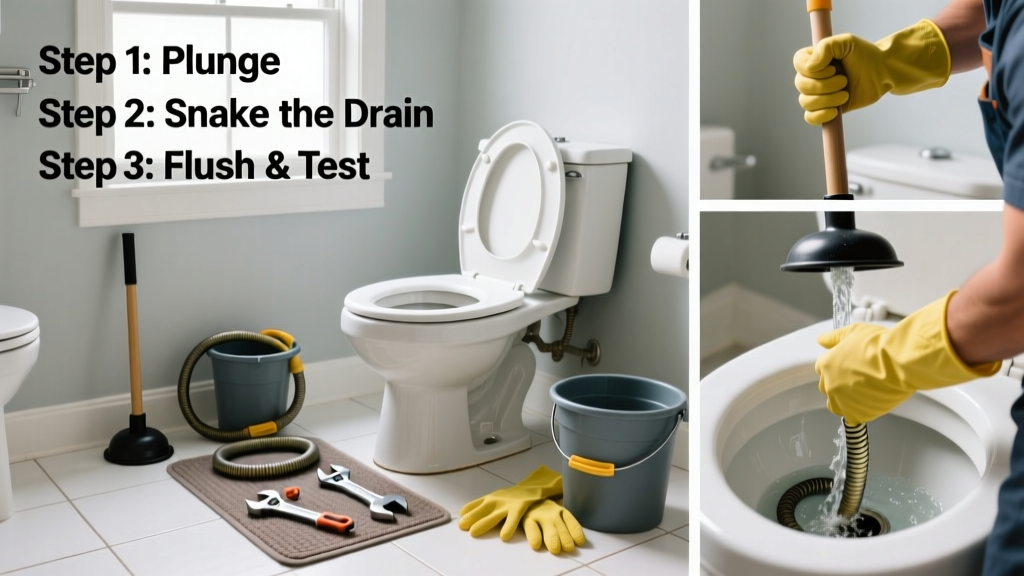
That gurgle followed by rising water is never good news — especially when it’s your toilet backing up. A clog isn’t just inconvenient; if ignored, it can overflow, damage flooring, or expose your home to sewage. The good news? Most clogs resolve in under 15 minutes with the right approach and tools you probably already have.
Quick Diagnosis
Before grabbing tools, identify what’s likely causing the blockage. Common culprits include:
- Excessive toilet paper (especially thick or quilted brands)
- Non-flushable wipes — even those labeled "flushable" jam pipes
- Feminine hygiene products or cotton swabs
- Accidental drops: toys, hair ties, or small bathroom items
- Hard water mineral buildup narrowing the trap or drain line over time
Tools & Materials Needed
| Item | Purpose | Estimated Cost |
|---|---|---|
| Plunger (flange-type) | Creates suction and pressure to dislodge soft clogs in the trap | $8–$15 |
| Toilet auger (closet auger) | Reaches 3–6 feet into the drain to break up or retrieve stubborn clogs past the trap | $18–$35 |
| Baking soda & white vinegar | Natural reaction helps dissolve organic matter; safe for pipes and septic systems | $4–$7 |
| Rubber gloves & old towels | Protect hands and absorb spills during cleanup | $3–$10 |
Step-by-Step Fix
Start simple and escalate only if needed. Never use chemical drain cleaners — they’re corrosive, ineffective on solid clogs, and dangerous if mixed with other substances.
- Try the plunger first: Ensure the bowl has enough water to cover the rubber cup. Seal the flange over the drain hole, then push down firmly and pull up sharply — repeat 15–20 times without breaking the seal.
- If water doesn’t recede, use a toilet auger: Insert the coiled end into the bowl until you feel resistance, crank the handle clockwise while gently pushing forward, then retract to hook and pull out debris.
- For slow or recurring clogs, try baking soda + vinegar: Pour 1 cup baking soda, wait 5 minutes, then add 2 cups white vinegar. Let fizz for 30 minutes before flushing with hot (not boiling) water.
- Check the vent stack: If multiple fixtures back up simultaneously, climb onto your roof and inspect the main vent pipe for bird nests or ice — a blocked vent prevents proper drainage.
When to Call a Pro
DIY stops where safety and system integrity begin. Call a licensed plumber immediately if:
- Water rises dangerously high or overflows despite plunging
- You smell raw sewage — this signals a serious sewer line issue or broken wax ring
- Clogs recur weekly, even with careful usage (suggests tree roots or collapsed pipe)
- Your home uses a septic system and the tank hasn’t been pumped in 3+ years
According to the Insurance Institute for Business & Home Safety's 2023 report, 62% of sewage backups linked to toilet clogs involved either improper DIY attempts or delayed professional intervention — often leading to mold remediation costs averaging $5,200.
Prevention Tips
Stop clogs before they start with habits that protect your plumbing long-term:
- Use only 1–2 squares of single-ply or septic-safe toilet paper per wipe
- Keep a small trash can beside the toilet for wipes, floss, and cotton products
- Flush only human waste and toilet paper — no “flushable” wipes, dental floss, or cat litter
- Run hot water down the toilet monthly to loosen biofilm buildup in the trap
- Install a toilet tank bank (a sealed plastic bottle filled with water) to reduce flush volume and prevent overuse
Can I use bleach on this?
No. Bleach does not dissolve clogs — it only disinfects surface bacteria. It can corrode seals, react dangerously with other cleaners, and worsen pipe degradation. Skip it entirely for blockages.
What if the plunger makes it worse?
That usually means you’re forcing air or water deeper into a partial clog — stop immediately. Switch to an auger, or shut off the toilet’s water supply valve (located behind the base) to prevent overflow while assessing next steps.
Is it okay to flush repeatedly to clear it?
No. Repeated flushing builds pressure behind the clog and risks overflow or cracking the porcelain bowl. Once water rises within 2 inches of the rim, stop flushing and address the blockage manually.
Why does my toilet gurgle when the shower runs?
This points to a shared drain or vent issue — most often a partial blockage in the main stack or lateral line. It’s a red flag that needs inspection before full failure occurs.
Can a clog cause damage beyond the bathroom?
Absolutely. Untreated backups can saturate subflooring, rot framing, promote mold growth behind walls, and contaminate HVAC ductwork. The U.S. EPA estimates that 14% of household water usage is from leaks — many originating from neglected toilet issues.
Do enzyme cleaners really work?
Yes — but only for organic buildup like grease, soap scum, or hair, not for physical obstructions. Products like Green Gobbler Enzyme Drain Cleaner are safe for monthly maintenance, especially in homes with septic systems. They won’t fix an immediate clog, but they help prevent future ones.
Fixing a clogged toilet isn’t about brute force — it’s about understanding your plumbing’s limits and acting with precision. Keep a flange plunger and closet auger in your utility closet, and treat every flush like a contract with your pipes: keep it simple, keep it clean, and respect the system. For deeper issues, don’t hesitate to reach out to a trusted local plumber — here’s how to vet one who shows up with proper licensing and transparent pricing.