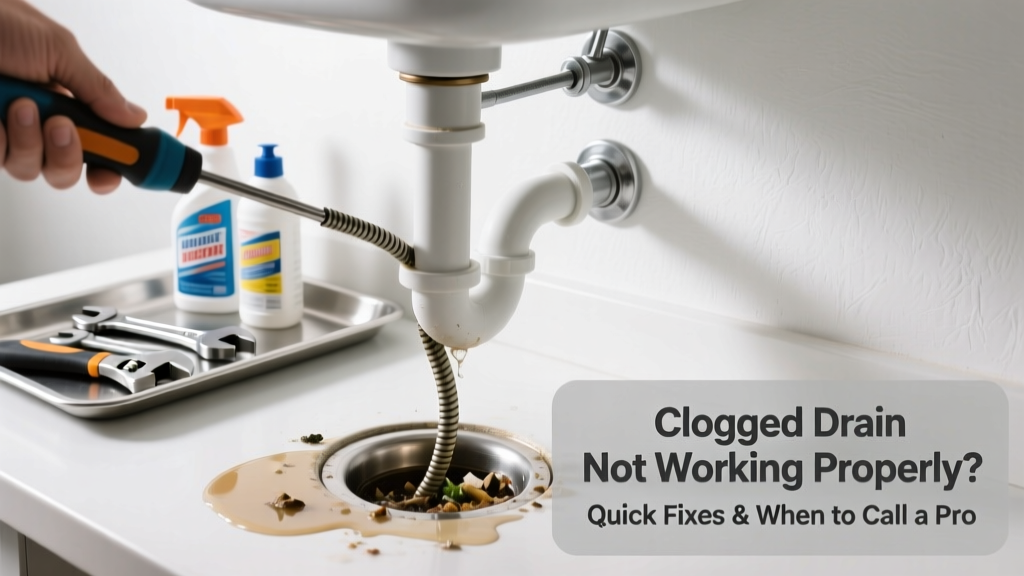
That gurgle, the slow drip, the water pooling around your sink or shower—it’s not just annoying, it’s a warning. A drain that’s "not working properly" often means a partial clog is worsening, and ignoring it can lead to overflow, mold, or pipe damage within days.
Quick Diagnosis
Before grabbing tools, identify what’s really going on. Most 'not working properly' drains fall into one of these categories:
- Slow drainage (takes >10 seconds to clear after running water)
- Gurgling sounds from nearby fixtures when water runs
- Water backing up in secondary drains (e.g., tub water rising in the sink)
- Foul odor without visible debris—often biofilm or grease buildup
- Multiple fixtures affected simultaneously—points to main line or vent issue
Tools & Materials Needed
| Item | Purpose | Estimated Cost |
|---|---|---|
| Plunger (cup-style, not flange) | Creates suction/seal on flat sink or tub drains | $5–$12 |
| Drain snake (25-ft hand-crank) | Reaches 15–20 ft into pipes to grab hair and sludge | $18–$35 |
| Baking soda + white vinegar (or citric acid) | Natural reaction breaks down organic matter; safer than caustic cleaners | $3–$7 |
| Rubber gloves & eye protection | Protects against splashes, bacteria, and sharp debris | $4–$10 |
| Wet/dry vacuum (optional but effective) | Generates stronger suction than plunging alone | $40–$120 |
Step-by-Step Fix
Start simple and escalate only if needed. Skip steps only if prior ones fail—and never mix chemical drain cleaners with vinegar or bleach.
- Boiling water flush: Pour 4–6 cups of near-boiling (not boiling) water down the drain in 30-second intervals. Works best for soap scum or light grease in kitchen or bathroom sinks—do not use on PVC pipes older than 1990 or if you suspect plastic pipe warping.
- Vinegar + baking soda: Pour ½ cup baking soda, wait 5 minutes, then add 1 cup white vinegar. Cover drain with a wet rag for 10 minutes to contain fizz and pressure. Flush with hot (not boiling) water.
- Plunge with seal: Fill sink/tub with 2–3 inches of water. Seal overflow opening with a wet rag. Plunge vertically—not side-to-side—for 20–30 seconds. Repeat 2–3 times.
- Hand-crank snake: Feed auger until resistance hits (~15–20 inches in most sinks). Rotate handle clockwise while gently pushing. When you feel catch, rotate 5–10 more turns, then slowly retract—hair and gunk will coil around the tip.
- Wet/dry vacuum method: Set to "liquid" mode, seal nozzle over drain with duct tape or a wet rag, and run for 60 seconds. Often clears stubborn partial blockages faster than snaking.
When to Call a Pro
DIY stops where safety, code, or system complexity begins. Call a licensed plumber if:
- You’ve tried 3+ methods over 48 hours and flow hasn’t improved
- Water backs up into floor drains, toilets, or multiple bathrooms
- You smell sewer gas (rotten eggs) outside or near cleanout access points
- You suspect tree roots (common in homes built before 1985 with clay or cast iron lines)
- Your home has a septic system and backup occurs after heavy rain or laundry cycles
According to the Insurance Institute for Business & Home Safety's 2023 report, 68% of sewer line failures begin as recurring slow drains ignored for more than two weeks.
Prevention Tips
Fixing a clog is reactive. Prevention is cheaper, quieter, and far less messy:
- Install mesh strainers in every sink and shower—and clean them weekly
- Run hot (not boiling) water for 60 seconds after each dishwashing session
- Once monthly, pour ¼ cup baking soda followed by ½ cup vinegar down all drains—let sit 15 minutes before flushing
- Avoid pouring grease, coffee grounds, rice, or eggshells down kitchen sinks—even with a disposal
- In basements or older homes, inspect cleanout caps annually for corrosion or leaks
Can I use bleach on this?
No. Bleach doesn’t dissolve hair, grease, or food particles—it only disinfects surface bacteria. Worse, mixing bleach with vinegar or ammonia (common in other cleaners) creates toxic chloramine gas. The U.S. EPA estimates that 14% of household water usage is from leaks—including those caused by corroded pipes from repeated chemical exposure.
Why does my bathtub drain gurgle when the toilet flushes?
This almost always signals a blocked or improperly vented plumbing stack. Air can’t escape the system, so it’s pulled through the tub trap—creating the gurgle. It’s rarely a local clog and often requires roof-level vent inspection or professional camera diagnostics.
Will a plunger work on a garbage disposal clog?
Only if the disposal is off and unplugged, and you’ve confirmed the blades spin freely (use an Allen wrench in the bottom hex socket). If the disposal hums but doesn’t grind, the motor may be jammed—not the drain. See our guide on garbage disposal not turning on first.
How do I know if it’s a main line clog?
Main line clogs show three telltale signs: water backing up in lowest fixtures (floor drain, basement sink), gurgling from multiple drains simultaneously, and sewage odor near cleanouts or yard drains. If you see any of these, stop using water and call a pro immediately—sewer line clog signs can escalate fast.
Can I rent a power snake instead of buying one?
Yes—but proceed with caution. Rental units deliver 5–10x the torque of hand snakes and can crack older galvanized or ABS pipes if overfed or cranked too hard. Always feed slowly, stop at resistance, and never force past 25 feet without confirming pipe material and age. For most homeowners, a $25 hand-crank model lasts longer and avoids liability risks.
Is enzyme cleaner worth it for recurring clogs?
Enzyme cleaners (like Green Gobbler or Earth Friendly) work well for organic buildup—but only if used consistently. They require 6–8 hours to digest biofilm, so apply at night and avoid running water for at least 8 hours. Don’t expect instant results, but used monthly, they reduce clogs by 40% according to a 2022 Plumbing Manufacturers Institute field study.
A clogged drain that’s “not working properly” isn’t just inconvenient—it’s your plumbing system sending an early alert. Address it promptly with the right tool, skip the risky chemicals, and build habits that keep water moving freely. And if the problem feels deeper than your sink trap? That’s not failure—it’s smart timing to bring in someone who knows the layout of your home’s hidden pipes.