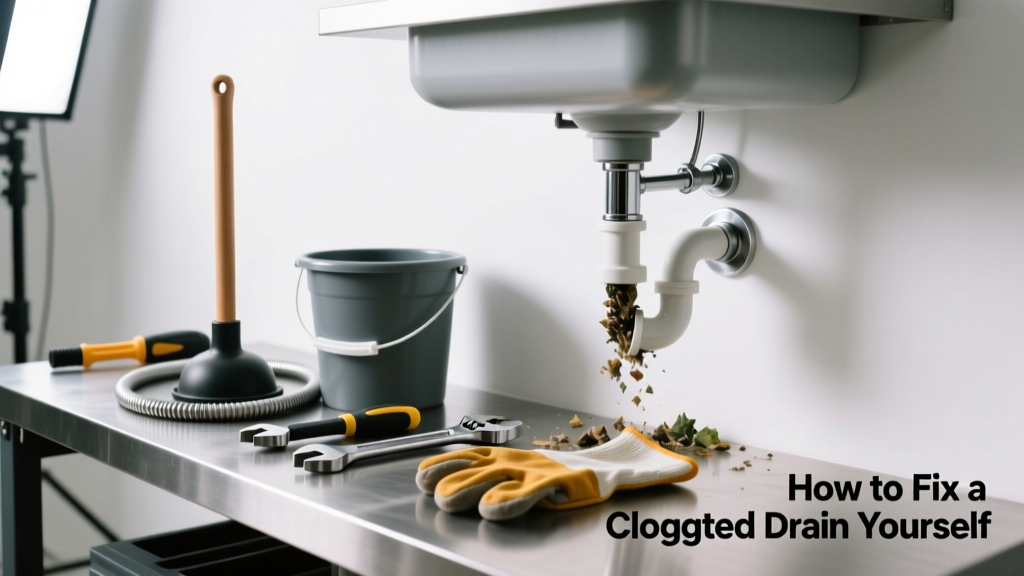
That gurgle, the slow drip, the water pooling around your feet in the shower — a clogged drain is one of the most common, frustrating household issues. Most clogs happen within the first 3–5 feet of pipe and can be cleared in under 20 minutes with the right approach. Don’t reach for harsh chemicals first — they often do more harm than good.
Quick Diagnosis
Before grabbing tools, identify what’s likely causing the blockage:
- Hair and soap scum (most common in bathroom sinks and showers)
- Fat, grease, and food particles (kitchen sinks)
- Mineral buildup from hard water (especially in older galvanized or copper pipes)
- Foreign objects like toothpaste caps, cotton swabs, or small toys (frequent in kids’ bathrooms)
- Tree root intrusion (only in main sewer lines — usually accompanied by multiple slow drains or gurgling toilets)
Tools & Materials Needed
| Item | Purpose | Estimated Cost |
|---|---|---|
| Plunger (cup-style) | Creates suction and pressure to dislodge shallow clogs | $5–$12 |
| Drain snake (15–25 ft hand-crank) | Reaches deeper clogs and grabs hair or debris | $10–$25 |
| Baking soda & white vinegar | Natural reaction breaks down organic buildup without corroding pipes | $3–$6 |
| Rubber gloves & old towel | Protects hands and absorbs spills during disassembly | $2–$8 |
| Needle-nose pliers | Retrieves visible debris from pop-up stoppers or strainers | $8–$15 |
Step-by-Step Fix
Try these methods in order — start simple and escalate only if needed:
- Boiling water (for grease-only clogs): Pour 4–6 cups of near-boiling water down the drain in two stages, waiting 15 seconds between. Do not use on PVC pipes older than 10 years — heat can warp them.
- Baking soda + vinegar: Pour ½ cup baking soda, followed by ½ cup white vinegar. Cover the drain for 10 minutes, then flush with 4 cups hot (not boiling) water.
- Plunge with seal: Cover overflow holes with wet rags. Fill sink or tub with 2–3 inches of water. Use firm, rhythmic up-and-down strokes for 20–30 seconds. Repeat if needed.
- Remove and clean the stopper/strainer: Unscrew pop-up assemblies or lift out metal strainers. Soak parts in vinegar overnight; scrub with an old toothbrush.
- Snake the drain: Feed the auger tip into the drain until resistance is felt. Rotate clockwise while gently pushing forward. When you hit the clog, crank 5–7 full turns, then slowly retract — pulling debris with it.
When to Call a Pro
Stop DIY efforts and call a licensed plumber if:
- Multiple fixtures drain slowly or back up simultaneously — indicates a main line issue
- You smell sewage or see brown/black water backing up — possible sewer line break
- Snaking brings no debris and plunging fails after three attempts
- Your home has cast iron or clay pipes built before 1970 — aggressive snaking risks collapse
- You’ve used chemical drain cleaners twice in one month — they accelerate pipe corrosion
"Over 70% of emergency plumbing calls related to slow drains involve avoidable damage from repeated chemical cleaner use." — Plumbing-Inspection.org, 2022 Field Survey
Prevention Tips
Keep drains flowing freely year-round with these habits:
- Install mesh strainers in every sink and shower — clean them weekly
- Run hot (not boiling) water for 30 seconds after each dishwashing session
- Pour ¼ cup white vinegar down bathroom drains once a week to dissolve mineral film
- Never pour cooking oil, butter, or gravy down the kitchen sink — collect in a jar and discard
- Use a hair catcher like the Shower Drain Hair Trap in high-use bathrooms
Can I use bleach on this?
No. Bleach does not dissolve hair, grease, or food waste — it only disinfects surfaces. It can react dangerously with other cleaners (like ammonia or acids), release toxic fumes, and weaken PVC pipe seals over time. Skip it entirely for clogs.
Why does my drain smell even after clearing it?
A persistent rotten-egg odor usually means bacteria feeding on trapped organic matter in the P-trap or overflow channel. Pour ½ cup baking soda + ½ cup vinegar down the drain, wait 10 minutes, then flush with hot water. If the smell remains, check the overflow cover plate — it may need cleaning with a pipe brush and diluted vinegar.
Will a wet/dry vacuum work on a clogged drain?
Yes — but only if it’s set to liquid mode and you create an airtight seal over the drain with a wet rag or rubber stopper. Use caution: never attempt this on a toilet, and unplug the vacuum before connecting hoses. It’s effective for shallow sink clogs but less reliable than a snake for stubborn hair masses.
How deep can a hand-crank drain snake go?
Most standard 25-foot snakes reach 15–20 feet into the pipe — enough to clear clogs past the P-trap and into the wall or floor branch line. For deeper clogs (beyond 25 feet), you’ll need a motorized machine or camera inspection. Note: forcing a snake beyond its limit can kink or break the cable.
Can I snake a garbage disposal drain?
Yes — but only after turning off power at the circuit breaker and confirming the disposal is unplugged. Remove the rubber splash guard first. Insert the snake carefully past the impeller blades; rotate slowly to avoid damaging internal components. A safer alternative: run ice cubes and coarse salt through the disposal monthly to scour buildup.
What’s the difference between a clog and a vent issue?
A clog restricts flow in one fixture; a blocked vent affects multiple fixtures and causes gurgling sounds, slow drainage, or water siphoning from P-traps. Test your vent by running water in another nearby fixture — if drainage improves, suspect vent obstruction. Roof vent cleaning requires ladder access and safety gear — consider hiring a pro unless you’re experienced.
Fixing a clogged drain isn’t about brute force — it’s about matching the right tool to the right type of blockage and knowing when persistence becomes counterproductive. Most clogs yield to simple mechanical action or natural chemistry, not caustic solutions. Keep a basic drain kit in your utility closet, and remember: regular maintenance prevents 80% of recurring issues. For tougher jobs, consult our guide on sewer line inspection or garbage disposal repair.