A missing chimney cap is more than an eyesore—it’s an open invitation for rain, debris, birds, and even sparks to enter your flue. Left unaddressed, it can cause $500–$2,000 in water damage repairs within a single season (Chimney Safety Institute of America, 2022). Don’t wait for the first storm or nesting squirrel to force your hand.
Quick Diagnosis
Before grabbing tools, confirm why the cap is gone:
- Strong wind events—especially during winter storms with gusts over 50 mph
- Corrosion or rust failure of mounting hardware (common with galvanized steel caps older than 8 years)
- Poor initial installation—loose lag bolts, no silicone sealant, or undersized base plate
- Animal interference—raccoons or squirrels dislodging lightweight caps while nesting
- Impact damage from falling branches or hail
Tools & Materials Needed
| Item | Purpose | Estimated Cost |
|---|---|---|
| Stainless steel chimney cap (4″–12″ flue size) | Weatherproof, corrosion-resistant replacement; must match flue dimensions | $45–$120 |
| 1/4″ x 3″ stainless steel lag bolts with washers | Secure cap to crown without rusting or stripping | $8–$15 |
| High-temp silicone sealant (ASTM C920) | Seals base plate edge to prevent water infiltration under cap | $12–$18 |
| Roof harness & anchor point | OSHA-compliant fall protection for steep or tall roofs | $75–$220 |
| Flue measuring tape & level | Ensures correct cap sizing and even mounting surface | $6–$22 |
Step-by-Step Fix
Choose the method that matches your roof pitch, chimney height, and comfort level:
- Measure and order the right cap: Use a tape measure to record inner flue dimensions (square, rectangular, or round), then add 2″ to each side for proper coverage. Confirm flue height—caps for Class A insulated chimneys differ from masonry units.
- Clean and prep the crown: Remove old caulk, rust flakes, and mortar debris with a wire brush. Let surface dry fully—moisture trapped under sealant causes premature failure.
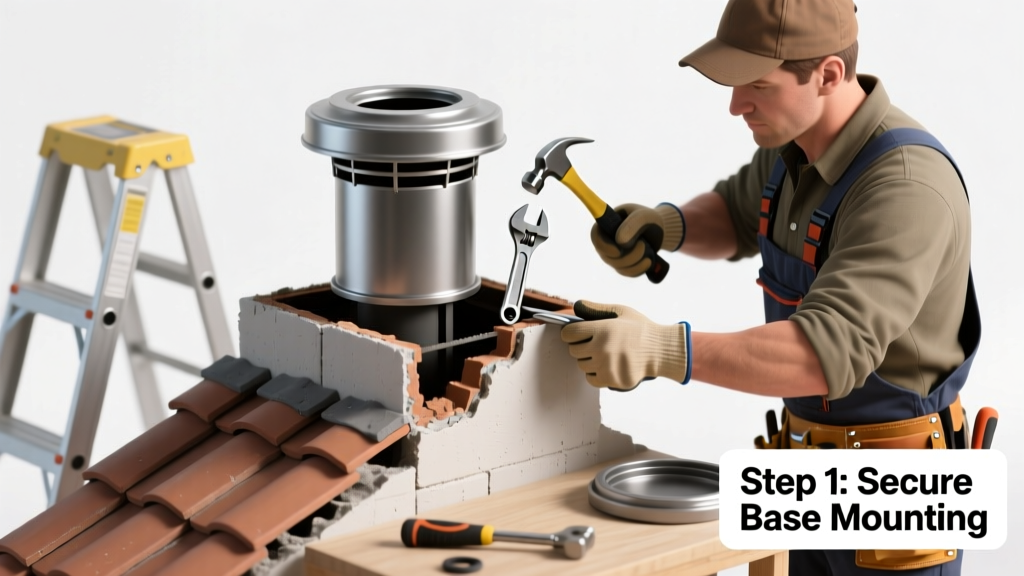
- Mount and seal: Position cap centered over flue opening. Drill pilot holes through base plate into chimney crown (not brick!). Insert lag bolts with stainless washers, tighten evenly in crisscross pattern, then apply continuous bead of high-temp silicone around full perimeter.
- Verify clearance and airflow: Ensure minimum 5″ vertical clearance between cap top and any combustible roof material per NFPA 211 (2023). Test draft by lighting a small paper fire below the damper—smoke should rise cleanly without hesitation.
When to Call a Pro
DIY isn’t safe or effective in these scenarios:
- Your chimney crown shows cracks wider than 1/8″ or spalling mortar—this indicates structural decay requiring repointing or resurfacing before cap installation
- You’re working on a roof with pitch steeper than 6:12 or height above 20 feet without certified fall protection
- The flue liner is cracked, offset, or missing—visible via mirror inspection or confirmed by smoke test
- Local building codes require permits for chimney modifications (e.g., Chicago, Boston, and most CA municipalities)
Prevention Tips
Extend your cap’s lifespan with proactive habits:
- Inspect annually in late summer—before fall rains and nesting season
- Retorque lag bolts every 2 years (vibration loosens them over time)
- Apply fresh silicone sealant every 3–5 years—look for cracking or separation at the base
- Choose caps with built-in spark arrestors and mesh sides rated for local wind zones (ASCE 7-22 maps help)
Can I reuse my old chimney cap if it’s bent but not broken?
No. Even minor bending compromises wind resistance and rain shedding. A deformed cap creates turbulence that increases backdraft risk and accelerates corrosion at stress points. Replacement is safer and costs less than fire department response.
Will a missing cap void my homeowner’s insurance claim after water damage?
Yes—many insurers deny claims citing “lack of routine maintenance” if evidence shows the cap was missing for over 30 days. According to State Farm’s 2023 Underwriting Bulletin, unsecured or absent chimney caps are classified as “preventable exposure.”
Do I need a permit to install a chimney cap in Texas?
Generally no—but check your city. Austin and Dallas require permits for any chimney modification affecting fire safety. San Antonio exempts caps unless paired with liner repair. Always verify with your local building department before ordering materials.
Can I install a chimney cap in the rain?
Absolutely not. Silicone sealant requires surface temps above 40°F and zero moisture for adhesion. Rain or dew causes bond failure, leading to leaks within weeks. Wait for two consecutive dry days with low humidity.
What’s the average lifespan of a stainless steel chimney cap?
Properly installed 304 stainless steel caps last 15–25 years; 316-grade (marine-grade) lasts 25–40 years in coastal or high-salt environments (CSIA Certified Chimney Sweep Survey, 2021). Avoid cheaper aluminum or painted steel—they corrode in under 5 years.
Is a chimney cap the same as a chase cover?
No. Caps fit over individual flues on masonry or Class A chimneys. Chase covers are larger, flat metal panels that seal the entire top of a prefabricated chimney enclosure—common on factory-built wood stoves. Using one in place of the other creates dangerous drafting issues.
"Over 68% of chimney-related water intrusion cases we see stem from missing or improperly sealed caps—not cracked crowns." — Certified Chimney Professional, National Chimney Sweep Guild, 2023
A properly installed chimney cap pays for itself fast—not just in avoided repair bills, but in peace of mind during thunderstorms and nesting season. If you’ve tackled the fix yourself, take a photo of the finished cap and set a calendar reminder for next year’s inspection. For deeper issues like chimney crown repair or flue liner cracks, don’t guess—get a CSIA-certified sweep on-site. And if your cap went missing after high winds, consider upgrading to a wind-resistant model with aerodynamic baffles and reinforced anchoring.