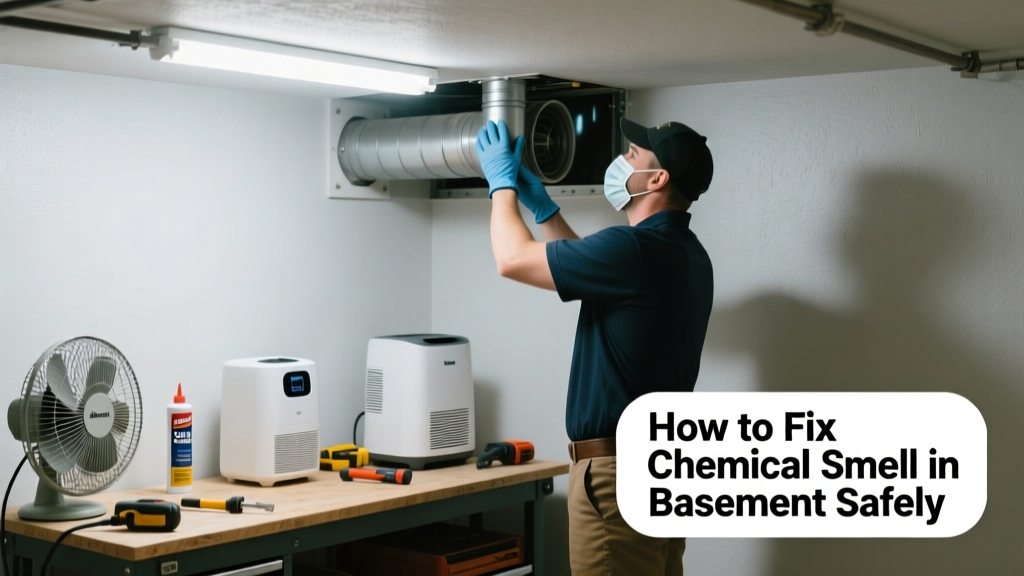
That sharp, acrid, or sweetly synthetic odor wafting up from your basement isn’t just annoying—it could signal something hazardous, like solvent vapors, off-gassing insulation, or even sewer gas mixing with cleaning chemicals. Unlike musty mold smells, chemical odors often mean volatile organic compounds (VOCs) are present at levels that can irritate eyes, throats, and lungs—especially in poorly ventilated spaces. Don’t ignore it: early action protects your family’s health and home’s structural integrity.
Quick Diagnosis
Start by narrowing down the source before grabbing tools. Most chemical basement smells fall into these categories:
- Solvent or paint thinner smell — often from stored cans of paint, adhesives, or degreasers left open or improperly sealed
- Bleach or ammonia odor — typically from mixing cleaners near floor drains or sump pits
- Formaldehyde or plastic-like scent — common with new PVC pipes, foam insulation (like spray polyurethane), or pressed-wood shelving
- Sewer-gas-plus-chemical combo — hydrogen sulfide reacting with chlorine bleach creates chloramine gas (a known respiratory irritant)
- Pesticide or rodent-control residue — especially if you recently treated for insects or rodents using foggers or granules
Tools & Materials Needed
| Item | Purpose | Estimated Cost |
|---|---|---|
| N95 respirator mask (not cloth or surgical) | Blocks inhalation of VOCs and fine particulates during inspection and cleanup | $12–$25 |
| Non-contact infrared thermometer | Detects overheating electrical components or hot spots near wiring that may be melting insulation | $35–$65 |
| VOC meter (e.g., Airthings View Plus) | Measures real-time airborne volatile organic compounds; critical for confirming elimination | $249–$299 |
| Activated charcoal air purifier (HEPA + carbon filter) | Adsorbs gaseous chemicals—not just particles—unlike standard HEPA-only units | $180–$320 |
| pH test strips (0–14 range) | Tests standing water or drain residue for acidity/alkalinity clues (e.g., bleach = high pH, acid drain cleaner = low pH) | $8–$15 |
Step-by-Step Fix
Work methodically—and always ventilate first. Open windows and run fans *outward* to create negative pressure before entering.
- Isolate and remove obvious sources: Check storage shelves, utility closets, and behind water heaters for open or leaking containers of paint thinner, mineral spirits, adhesives, or pesticides. Seal or discard properly per local hazardous waste rules.
- Test drains and traps: Pour ½ cup of water down every floor drain and sink in the basement. Gurgling or slow drainage suggests dry P-traps—letting sewer gas (which reacts with household chemicals) rise. Refill traps and consider installing trap primers if dryness recurs.
- Inspect insulation and building materials: Look for discolored or crumbling spray foam, especially near joists or rim joists. According to the U.S. EPA’s 2022 Indoor Air Quality Guide, improperly cured spray foam can off-gas formaldehyde and isocyanates for up to 30 days post-installation.
- Neutralize residual residues: For surfaces exposed to bleach-ammonia reactions, wipe with diluted white vinegar (1:1 with water), then rinse and dry. Never mix vinegar with bleach—it creates chlorine gas.
When to Call a Pro
Stop DIY immediately if you observe any of these red flags:
- You detect a faint but persistent chlorinated odor *after* turning off all water and stopping cleaning activity—this may indicate a hidden leak in a chlorine-treated municipal line or cross-connection
- Your VOC meter reads above 500 ppb consistently—even after ventilation and source removal
- You find corroded copper piping near PVC joints (galvanic corrosion can release metallic fumes mistaken for chemical smells)
- The smell intensifies near electrical panels, outlets, or HVAC ductwork—suggesting overheated wire insulation or contaminated duct lining
"More than 60% of basement VOC complaints we investigate trace back to unvented dryer exhaust combined with stored solvents—a preventable but dangerously synergistic setup." — Dr. Lena Cho, Indoor Environmental Consultant, Building Health Institute, 2023
Prevention Tips
Long-term solutions beat constant masking. Integrate these habits now:
- Store all solvents, paints, and cleaners in a detached shed or garage—not the basement—even if labeled "low-VOC"
- Install a dedicated exhaust fan tied to a humidity sensor (set to trigger at 50% RH) to flush stale air before VOCs accumulate
- Replace rubber-washer floor drains with brass or stainless-steel models—they resist degradation from chemical exposure longer
- Label every container with purchase date and disposal deadline; most solvents degrade and off-gas more aggressively after 2 years
Can I use bleach to eliminate the chemical smell?
No—bleach reacts with many organic compounds and ammonia-based residues to form chloramines or chlorine gas, both highly irritating and potentially dangerous. It also fails against VOCs embedded in concrete or drywall. Use activated carbon filtration instead.
Will an air purifier alone fix the problem?
Only temporarily. Purifiers treat symptoms, not causes. If your basement ventilation system lacks intake and exhaust balance, even the best carbon filter will saturate in under 72 hours. Always pair with source removal and airflow correction.
Could this smell mean carbon monoxide is present?
Carbon monoxide is odorless—but some CO detectors misfire when exposed to high VOC concentrations, giving false alarms. If your CO alarm chirps *and* you smell chemicals, evacuate and call 911 first. Then contact a licensed HVAC tech to inspect combustion appliances and flue integrity.
Is it safe to stay in the house while investigating?
Short visits (under 10 minutes) with an N95 mask are generally safe for healthy adults—but pregnant individuals, children, and those with asthma or COPD should avoid the space entirely until VOC readings drop below 100 ppb. Monitor symptoms: headaches, dizziness, or burning eyes mean leave immediately.
How long does it take for chemical odors to dissipate after fixing the source?
Most surface-level smells fade within 2–5 days with continuous cross-ventilation and carbon filtration. However, off-gassing from encapsulated spray foam or epoxy-coated floors may persist 2–6 weeks. Track progress with a VOC meter—don’t rely on nose alone.
Do I need to replace drywall if it smells chemical?
Not automatically. First, test the wall surface with a damp cloth and pH strip—if alkaline (pH >9), it’s likely residual cleaner; if acidic (pH <5), suspect drain cleaner splash. Only replace if moisture testing reveals >15% moisture content behind drywall or if visible staining indicates deep penetration. See our guide on basement drywall repair for moisture-safe replacement steps.
A chemical smell in your basement is rarely just an annoyance—it’s your home’s early warning system. Addressing it promptly with targeted diagnostics and material-aware fixes prevents escalation into respiratory issues or costly remediation later. Keep your VOC meter calibrated, store chemicals responsibly, and remember: when in doubt about fumes near wiring or gas lines, pause and phone a certified industrial hygienist or licensed contractor before proceeding.