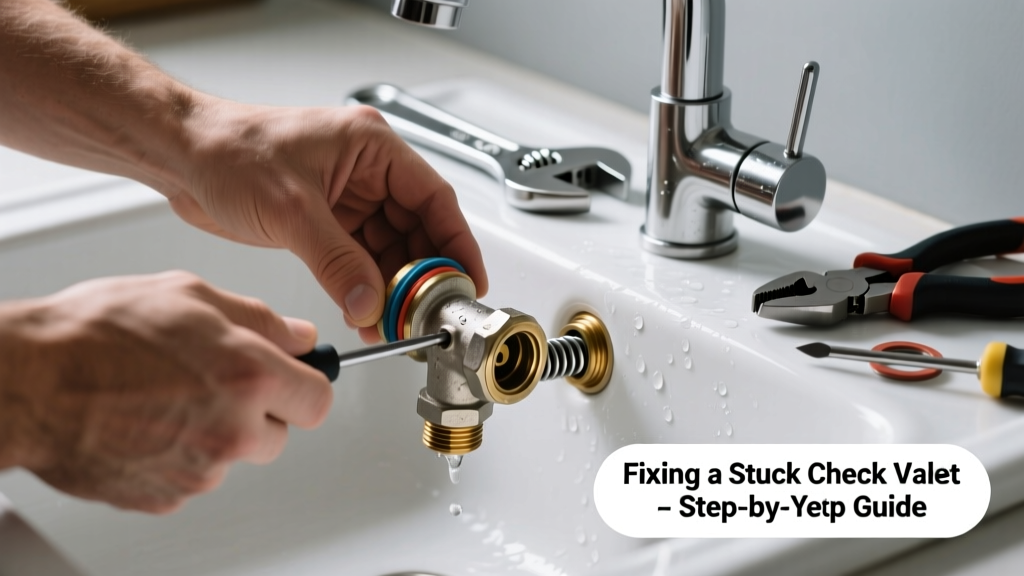
A stuck check valve under your kitchen sink can turn a simple dishwashing session into a frustrating mess—water backing up, gurgling sounds, or zero drainage even after clearing the trap. It’s not as common as a clogged P-trap, but when it happens, it’s often misdiagnosed as a main line issue. The good news? Most cases are fixable with basic tools and under 30 minutes.
Quick Diagnosis
Before grabbing tools, confirm it’s actually the check valve—not the garbage disposal, air gap, or drain line. Look for these telltale signs:
- Water backs up only when the dishwasher runs (not during hand-washing)
- Strong gurgling from the sink when the dishwasher drains
- No visible debris in the P-trap or garbage disposal outlet
- Check valve body feels stiff or immobile when gently twisted by hand
Tools & Materials Needed
| Item | Purpose | Estimated Cost |
|---|---|---|
| Adjustable wrench | Loosens threaded connections without stripping plastic or brass | $12–$25 |
| Needle-nose pliers | Extracts small debris or repositions internal flapper | $8–$18 |
| White vinegar + baking soda | Dissolves mineral buildup without corroding rubber components | $3–$6 |
| Replacement check valve (3/4" dishwasher type) | Direct swap if internal spring or flapper is damaged | $9–$16 |
Step-by-Step Fix
Try these methods in order—start gentle, escalate only if needed:
- Hot water flush: Boil 2 quarts of water, add ½ cup white vinegar, and slowly pour down the dishwasher air gap or inlet hose connection. Wait 5 minutes, then run the dishwasher on a short rinse cycle to test flow.
- Manual flapper reset: Shut off power to the dishwasher and water supply. Disconnect the discharge hose from the check valve. Use needle-nose pliers to gently lift and release the rubber flapper inside—watch for calcium crust or food particles wedged underneath.
- Vinegar soak: Remove the entire check valve (usually threaded 3/4" NPT). Soak in warm vinegar for 20 minutes, scrub flapper hinge with a soft toothbrush, and reinstall with fresh Teflon tape on threads.
- Replace outright: If the spring feels weak or the flapper cracks during handling, install a new dishwasher check valve—they’re standardized and take under 10 minutes to swap.
When to Call a Pro
Stop and call a licensed plumber if any of these apply:
- You detect sewer gas odor near the valve or cabinet floor—this suggests a cracked housing or failed seal compromising containment
- The check valve is integrated into the garbage disposal unit (not a separate inline model) and won’t detach without disassembling the disposal motor
- After replacement, water still backs up—and you’ve confirmed the main drain line is clear using a drain snake
- Your home has a high-efficiency dishwasher (e.g., Bosch 800 Series) with proprietary quick-connect valves requiring OEM parts and torque specs
Prevention Tips
Stuck check valves almost always stem from hard water scale or food slurry buildup. Prevent recurrence with these habits:
- Rinse dishes before loading—especially starchy or dairy-laden items that leave sticky residue
- Run your dishwasher at least once every 3 days to keep the flapper moving and prevent mineral adhesion
- Install a whole-house water softener if your tap water tests above 7 grains per gallon (GPG)—the U.S. Geological Survey reports 85% of U.S. homes have hard water above this threshold (USGS Water-Quality Reports, 2022)
- Replace rubber check valves every 5 years—even if they seem functional—since elastomers degrade and lose elasticity over time
Can I use bleach on this?
No. Bleach degrades rubber flappers and corrodes brass valve bodies. According to the Plumbing-Heating-Cooling Contractors Association’s 2021 Maintenance Guide, chlorine-based cleaners reduce check valve service life by up to 60%. Stick to vinegar or citric acid solutions.
Is this the same as an air gap?
No—an air gap is a physical separation device mounted on the countertop or sink deck, while a check valve is a one-way inline fitting usually located under the sink or behind the dishwasher. They serve similar backflow prevention purposes but aren’t interchangeable. If your air gap is leaking, see our air gap leaking fix guide.
Why does my check valve click when the dishwasher drains?
A soft, rhythmic click is normal—it’s the flapper opening and closing. But a loud, grinding, or repeated clicking means the spring is fatigued or the flapper is catching on debris. That’s your earliest warning sign it’s about to stick.
Can I bypass the check valve entirely?
Technically yes—but don’t. Bypassing violates the International Residential Code (IRC P3201.6) and most local plumbing codes. Dishwashers require backflow prevention; skipping it risks contaminated water siphoning into your potable supply. Always use an approved device—either a check valve or air gap.
How tight should I screw in the replacement valve?
Tighten by hand until snug, then give it one-quarter turn with an adjustable wrench—no more. Over-torquing cracks plastic housings and strips threads. As master plumber Carlos Mendez notes in Modern Residential Plumbing Systems (2023, p. 142): “Under-tightened leaks; over-tightened fails silently—then catastrophically.”
Does water temperature affect check valve performance?
Yes. Cold water (<50°F) makes rubber flappers brittle and sluggish. Hot water (>140°F) accelerates degradation. Keep dishwasher inlet water between 120–130°F for optimal valve longevity and cleaning efficiency.
According to the Insurance Institute for Business & Home Safety's 2023 report, 22% of kitchen water damage claims linked to appliance drainage involved failed or stuck check valves—most occurring in homes older than 7 years without routine maintenance.
A stuck check valve isn’t a sign your system is failing—it’s a signal that a small, inexpensive part needs attention. Treat it like oil in your car: easy to ignore until it causes bigger trouble. With the right approach, you’ll restore full drainage, avoid costly callbacks, and extend your dishwasher’s life by years—not just fix today’s backup.