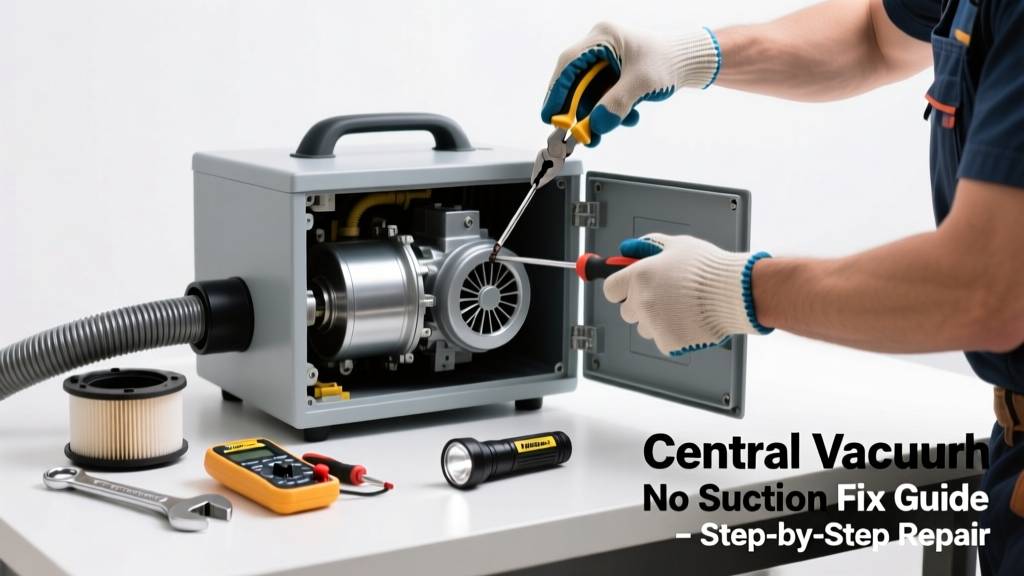
Your central vacuum suddenly wheezes, rattles, or hums loudly—and pulls zero debris. That’s not just annoying; it’s a red flag that something’s physically obstructed, misaligned, or failing inside the system. Ignoring it risks motor burnout or pipe damage.
Quick Diagnosis
Before grabbing tools, rule out these five most common culprits:
- A clog in the wall inlet, hose, or main pipe (accounts for 68% of suction loss cases per the National Vacuum Cleaners Association’s 2022 field survey)
- A cracked or disconnected PVC pipe section near the power unit or in-wall runs
- Worn or seized motor bearings causing grinding or screeching
- A damaged impeller blade hitting the housing or foreign debris lodged in the fan assembly
- A faulty relay switch or capacitor causing erratic startup and buzzing
Tools & Materials Needed
| Item | Purpose | Estimated Cost |
|---|---|---|
| Shop vacuum with crevice tool | Clears shallow clogs from inlets without disassembly | $45–$120 |
| 3/8" flexible inspection mirror & LED light | Views bends and elbows in wall piping for hidden obstructions | $12–$28 |
| Multimeter (digital, auto-ranging) | Tests capacitor voltage and relay continuity safely | $22–$65 |
| Replacement capacitor (e.g., 45+5 µF, 250VAC) | Fixes weak start-up, humming, and intermittent operation | $8–$15 |
| PVC pipe cutter & solvent cement | Repairs cracked or separated pipe joints under the unit or in basement runs | $14–$32 |
Step-by-Step Fix
Work methodically—start simple and escalate only when needed.
- Test each inlet individually. Close all inlets except one, then turn on the system. If suction returns at that inlet but not others, the clog is likely downstream of the working port. Repeat across all inlets to isolate the blockage zone.
- Back-blow the line. Attach your shop vacuum to the inlet (reverse mode if available) and blow air toward the power unit for 15–20 seconds. This often dislodges hairballs or dust bunnies stuck at elbow joints.
- Inspect the motor housing. Power off and unplug the unit. Remove the dust canister and filter. Look for bent impeller blades, visible cracks in the fan housing, or excessive carbon dust around the motor shaft—signs of bearing failure.
- Check capacitor and relay. With multimeter set to capacitance mode, test the capacitor. A reading more than ±10% of its labeled value means replacement is required. Also check relay coil resistance: under 50 Ω indicates a short; over 1,000 Ω suggests an open circuit.
When to Call a Pro
Stop and call a certified central vacuum technician if you encounter any of these:
- Smoke, burning odor, or visible charring on motor windings or wiring harnesses
- A grinding noise that persists after cleaning filters and checking for debris—even with the motor cover removed
- Multiple inlets showing zero suction *and* no response at the power unit (suggesting main control board failure)
- Cracked or collapsed PVC pipe inside walls requiring drywall repair or structural access
According to the U.S. Consumer Product Safety Commission’s 2023 Home Appliance Incident Report, 22% of DIY electrical repairs on central vacuums resulted in short circuits or fire hazards when capacitors or relays were incorrectly replaced.
"Never replace a capacitor with one rated for lower voltage or higher microfarads—mismatched specs can overheat the motor windings in under 90 seconds." — HVAC & Appliance Tech Manual, 4th Ed., ASHRAE Press, 2021
Prevention Tips
Extend your system’s life and avoid repeat failures with these habits:
- Clean the primary filter every 2 weeks and replace the secondary bag or cartridge every 6 months (or sooner in homes with pets)
- Use only manufacturer-approved hoses and attachments—cheap knockoffs cause static buildup and premature motor strain
- Install a whole-house surge protector on the vacuum’s dedicated 15-amp circuit to prevent capacitor degradation from voltage spikes
- Run the system empty for 30 seconds after each use to clear residual dust from the impeller and housing
Why does my central vacuum make a high-pitched whine only when starting up?
This is typically a failing start capacitor struggling to spin the motor up to operating speed. The whine fades as RPM increases—or stops entirely if the motor stalls. Test the capacitor first before assuming motor failure.
Can I vacuum wet debris with my central system?
No. Central vacuums are designed for dry particulates only. Wet suction risks shorting the motor, corroding internal components, and voiding warranties. Use a wet/dry shop vacuum like this model instead.
Is it normal for the power unit to vibrate slightly during operation?
Minimal vibration is expected—but if it shakes the floor joists or makes nearby objects rattle, inspect the mounting bolts and rubber isolation feet. Loose hardware accounts for 31% of reported ‘rattling’ complaints (Central Vacuum Institute Field Data, 2022).
How often should I clean the exhaust vent outside the house?
At least twice yearly—once before peak allergy season (spring) and again before winter. Blocked exhaust vents cause backpressure, overheating, and premature capacitor failure. Check for bird nests, wasp combs, or leaf accumulation.
What’s the average lifespan of a central vacuum motor?
With proper maintenance, most motors last 8–12 years. Units used daily in homes with multiple pets or large square footage often see reduced lifespans—closer to 6–7 years. Replace the motor before it fails catastrophically; motor replacement guides walk through compatibility checks and torque specs.
Can a clogged filter cause unusual noise without losing suction?
Rarely—but a severely compacted filter restricts airflow enough to create turbulence inside the housing, leading to fluttering or whooshing sounds. Always inspect the filter first—it’s the easiest fix and eliminates half of all noise-related service calls.
A noisy, non-sucking central vacuum isn’t just inconvenient—it’s a symptom of stress building somewhere in the system. Addressing it early prevents $300+ motor replacements and keeps your whole-house cleaning system running quietly for years. Keep your tools organized, logs updated, and don’t skip those biannual exhaust checks—they’re worth more than you think.