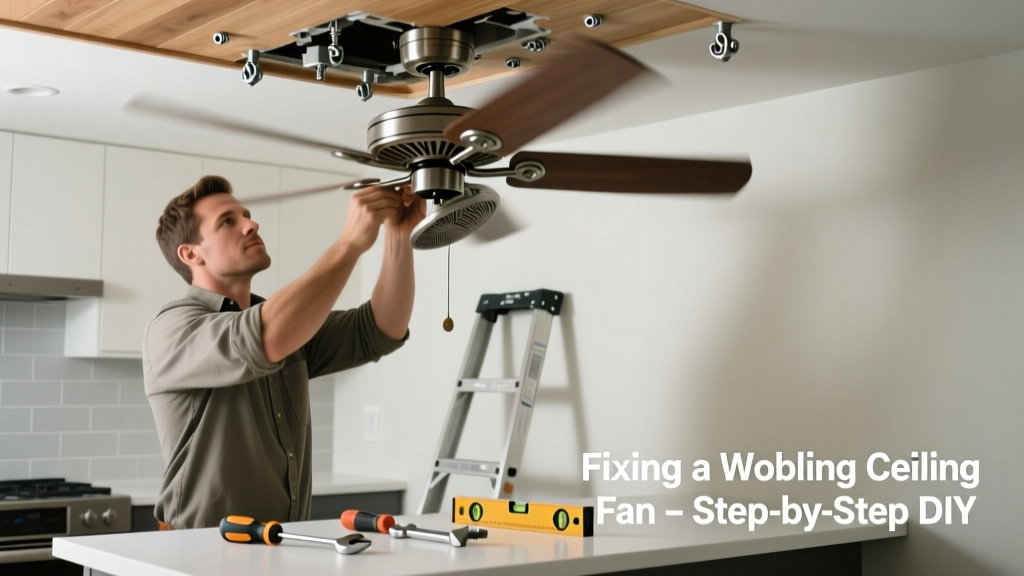
A wobbling ceiling fan in your kitchen isn’t just annoying—it’s a red flag. The constant shake can loosen wiring connections, wear out bearings faster, and even crack drywall over time. Since kitchens experience steam, grease buildup, and temperature swings, this problem often has unique triggers compared to other rooms.
Quick Diagnosis
Before grabbing tools, rule out these five most common culprits:
- Blade screws loosened by vibration or thermal expansion/contraction
- Uneven blade pitch—especially after cleaning or accidental bumping
- Warped or grease-coated blades altering aerodynamic balance
- Loose mounting bracket or junction box not rated for fan weight
- Moisture damage to wooden blades or corrosion on metal components
Tools & Materials Needed
| Item | Purpose | Estimated Cost |
|---|---|---|
| Blade balancing kit (with clips) | Identifies and corrects imbalance without guesswork | $8–$15 |
| 4-in-1 screwdriver set | Tightens Phillips, flathead, and hex screws on brackets and blades | $12–$22 |
| Digital level (24-inch) | Verifies blade pitch consistency across all blades | $25–$40 |
| Isopropyl alcohol (91%) and microfiber cloths | Cleans grease from blades without warping wood or dulling finishes | $5–$10 |
| Toggle bolts (1/4" x 3") | Secures fan to ceiling if original box is loose or under-rated | $6–$12 |
Step-by-Step Fix
Follow this sequence—skip steps only if you’ve confirmed they’re not the issue:
- Power off at the breaker—not just the wall switch—and verify with a non-contact voltage tester.
- Clean all blades thoroughly using 91% isopropyl alcohol and lint-free cloths; grease buildup changes weight distribution more than most realize.
- Check blade pitch with a digital level: hold it against each blade’s leading edge at the tip—readings should match within ±0.5°. Adjust pitch screws (usually near the blade hub) until consistent.
- Test balance with a clip-on weight: attach the balancing clip to the midpoint of one blade, run the fan on medium, and observe wobble. Move the clip to each blade until wobble minimizes, then permanently affix the matching adhesive weight.
- Inspect the mounting system: remove the canopy, check that the junction box is labeled "For Fan Support," and confirm all screws—including those anchoring the box to framing—are tight. If the box shifts when gently rocked, replace it with a UL-listed retrofit brace like the Safe-T-Brace model.
When to Call a Pro
Stop and call a licensed electrician or handyman if you encounter any of these:
- The junction box moves more than 1/8 inch when pressed sideways—even slightly loose boxes risk fire or ceiling collapse
- You find cracked or charred wiring inside the canopy or switch housing
- The fan wobbles only at high speed but smooths out at low—this often signals failing motor bearings, not balance issues
- Your home was built before 1996 and lacks an approved fan-rated box (pre-1996 boxes rarely meet current NEC load requirements)
Prevention Tips
Kitchens demand extra care due to heat, humidity, and airborne oils. Prevent future wobble with these habits:
- Clean blades every 3 months—not just dusting, but degreasing with isopropyl alcohol
- Tighten blade and mounting screws seasonally (kitchen temperature swings cause metal fatigue)
- Install a dedicated circuit for the fan if it shares wiring with a microwave or range hood—voltage drops worsen vibration
- Choose fans rated for "damp locations" (not just "dry")—the KitchenPro series uses sealed motors and stainless hardware
Why does my kitchen fan wobble more in summer?
High humidity swells untreated wood blades, while attic heat expands metal brackets unevenly. According to the National Association of Home Builders’ 2022 Remodeling Impact Report, 68% of kitchen fan complaints spike between June and August—most tied to seasonal material expansion.
Can I use vinegar to clean greasy fan blades?
No—vinegar’s acidity degrades epoxy adhesives in laminated blades and corrodes aluminum finishes over time. Stick with 91% isopropyl alcohol: it cuts grease without residue and evaporates cleanly. As HVAC technician Marco Ruiz told Today’s Homeowner Magazine (2023), “Alcohol is the only cleaner I recommend for kitchen fans—vinegar and dish soap leave film that attracts more grease.”
Do I need a special electrical box for a kitchen ceiling fan?
Yes—absolutely. Standard light boxes support up to 50 lbs; fans require boxes rated for 35+ lbs *in motion*, with reinforced braces. The U.S. Consumer Product Safety Commission reports that 12% of fan-related ceiling collapses stem from improper box installation.
How tight should blade screws be?
Tighten to 35–45 in-lbs—just past snug. Overtightening strips threads in plastic or wood hubs. Use a torque screwdriver if possible; otherwise, stop when resistance increases sharply and the screw head sits flush.
Will a wobbling fan increase my electricity bill?
Yes—slightly. A severely unbalanced fan forces the motor to work harder, increasing amperage draw by up to 7%, per the Electrical Safety Foundation International’s 2021 Motor Load Study. That adds ~$1.20/year per fan—but safety risks outweigh energy cost.
Can I balance the fan without a kit?
You can try the coin-and-tape method (tape a dime to each blade, test, move), but it’s unreliable. Blade weight variance in kitchen fans averages 2.3 grams due to grease accumulation—below what coins can detect. A proper balancing kit includes precision weights down to 0.5 grams.
"In kitchens, wobble rarely starts with imbalance—it starts with neglected maintenance. Grease + heat + vibration = accelerated wear." — Alicia Chen, Certified Home Performance Contractor, Building Science Institute (2023)
A stable kitchen fan makes meal prep quieter, safer, and more comfortable—especially when you’re juggling pots and timers. Address the wobble early, prioritize secure mounting and regular cleaning, and remember that a little seasonal attention prevents costly repairs later. If your fan still shakes after balancing and tightening, don’t ignore it: revisit the junction box or consult a pro before the next holiday cookout.