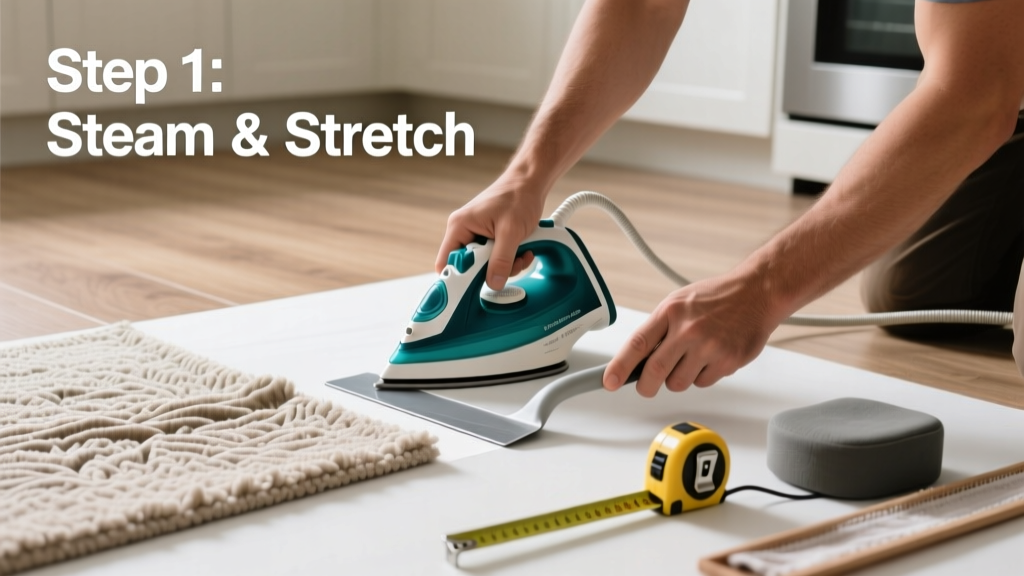
Kitchen carpet wrinkles aren’t just unsightly—they’re a safety hazard near wet floors and high-traffic zones. Unlike living room wrinkles, kitchen ones often stem from moisture exposure, temperature swings, or improper underlayment beneath cabinets or appliances. Ignoring them can lead to accelerated wear, mold risk, or even slips.
Quick Diagnosis
Before grabbing tools, identify the root cause. Most kitchen carpet wrinkles fall into one of these categories:
- Moisture damage from leaks under the sink or dishwasher
- Shrinkage due to steam or humidity from cooking surfaces
- Poor installation—especially if carpet wasn’t power-stretched during initial laydown
- Heavy cabinet or appliance movement compressing padding unevenly
- Subfloor expansion/contraction from temperature shifts (common in slab-on-grade kitchens)
Tools & Materials Needed
| Item | Purpose | Estimated Cost |
|---|---|---|
| Carpet stretcher (knee kicker) | Re-tensions carpet fibers without damaging seams or edges | $45–$85 |
| Carpet seam roller | Secures re-stretched seams and prevents lifting near baseboards | $12–$22 |
| Utility knife with fresh blades | Cuts excess backing or damaged padding; essential for clean edge work | $8–$15 |
| Moisture meter (pin-type) | Verifies subfloor dryness before re-stretching—critical after spills or leaks | $60–$110 |
| Double-sided carpet tape (low-residue) | Temporarily holds edges while adhesive cures; safe for vinyl or tile transitions | $7–$14 |
Step-by-Step Fix
Choose the method that matches your wrinkle’s severity and cause:
- Surface-level ripple (no lifting): Use a knee kicker starting at the most wrinkled area, working toward the nearest wall. Apply firm, controlled kicks every 6 inches—don’t overstretch.
- Wrinkle near cabinet toe-kick: Remove baseboard or toe-kick panel, lift carpet edge, inspect padding for compression or dampness. Replace saturated padding (check carpet padding replacement steps), then re-stretch.
- Wrinkle under appliance (fridge/dishwasher): Pull appliance out, vacuum debris from subfloor, check for warped plywood or cracked concrete. If subfloor is intact, use a power stretcher anchored to adjacent wall—not the appliance—to avoid shifting weight.
- Seam separation + wrinkle: Lift both sides of seam, apply heat-resistant seam sealer (e.g., Roberts 7300), press with seam roller, then stretch outward from seam using knee kicker.
When to Call a Pro
DIY isn’t safe or effective in these cases:
- Wrinkles appear within 6 months of new installation—likely a warranty issue requiring installer review
- Subfloor shows visible cracks, buckling, or >3% moisture reading (per ASTM F2170-23 standards)
- Carpet has been soaked by floodwater or persistent leak—mold risk requires IICRC-certified remediation
- You lack access to a power stretcher and the wrinkle spans >8 ft across open floor space
Prevention Tips
Kitchen carpets face unique stressors. Reduce recurrence with these targeted habits:
- Install moisture barriers under padding—especially over concrete slabs (e.g., Eco Cork Foam with vapor barrier)
- Leave 1/4" gap between carpet edge and cabinet toe-kick to allow for seasonal expansion
- Use rubber-backed mats—not plastic-backed—near sinks to avoid trapped condensation
- Check dishwasher and faucet supply lines quarterly for micro-leaks (the U.S. EPA estimates 14% of household water usage is from leaks… many start small under cabinets)
- Rotate area rugs every 3 months to distribute foot traffic wear evenly
Can I use a steam cleaner on wrinkled kitchen carpet?
No. Steam adds moisture directly to backing and padding—exacerbating shrinkage and delamination. According to the Carpet and Rug Institute’s 2022 Maintenance Guidelines, hot-water extraction should only follow full drying cycles and never be used as a stretching tool.
Will cutting out the wrinkled section and patching work?
Rarely—and not recommended in kitchens. Patch color-matching is nearly impossible with age and UV exposure differences. More critically, patches create trip hazards at transition points where spills occur. Instead, re-seaming with proper tension delivers safer, longer-lasting results.
Is it safe to put furniture back immediately after stretching?
No. Wait at least 24 hours for adhesive and stretched fibers to settle. Heavy items like refrigerators or islands should remain off the area for 48 hours. A rushed return risks immediate re-wrinkling—especially on low-pile nylon or polyester blends.
Do rug pads help prevent kitchen carpet wrinkles?
Yes—but only specific types. Avoid foam-only pads; they compress under cabinets and trap moisture. Opt for 1/4" rebond pad with moisture barrier (e.g., Mohawk SmartCushion) or felt-and-rubber hybrids rated for high-moisture zones.
Why does my kitchen carpet wrinkle more in winter?
Low indoor humidity (<25% RH) causes synthetic fibers to contract, while subfloor cooling creates tension differentials. The National Wood Flooring Association notes that relative humidity below 30% increases carpet movement by up to 40% in slab-based kitchens.
Can I rent a power stretcher instead of buying one?
Yes—and it’s often smarter for one-time fixes. Rental costs run $35–$65/day at major tool outlets. But verify the rental includes a door bar and wall anchor kit; many kitchen stretches require anchoring to adjacent hallway walls or pantry framing—not just the kitchen itself.
"In kitchens, carpet wrinkles are rarely about poor stretching alone—they’re usually the first visual symptom of an underlying moisture or substrate issue." — Sarah Lin, CRI-Certified Installation Inspector, 2023
Once the wrinkle is gone, keep an eye on the area for two weeks—especially after mopping or appliance use. A repeat wrinkle means the root cause wasn’t fully addressed. If you’ve replaced padding and verified subfloor integrity but still see movement, consider switching to a low-pile commercial-grade carpet with tighter twist construction—it handles thermal cycling better than residential plush piles. For long-term durability, many contractors now recommend carpet tiles or hybrid LVT with carpeted zones in high-risk kitchen layouts.