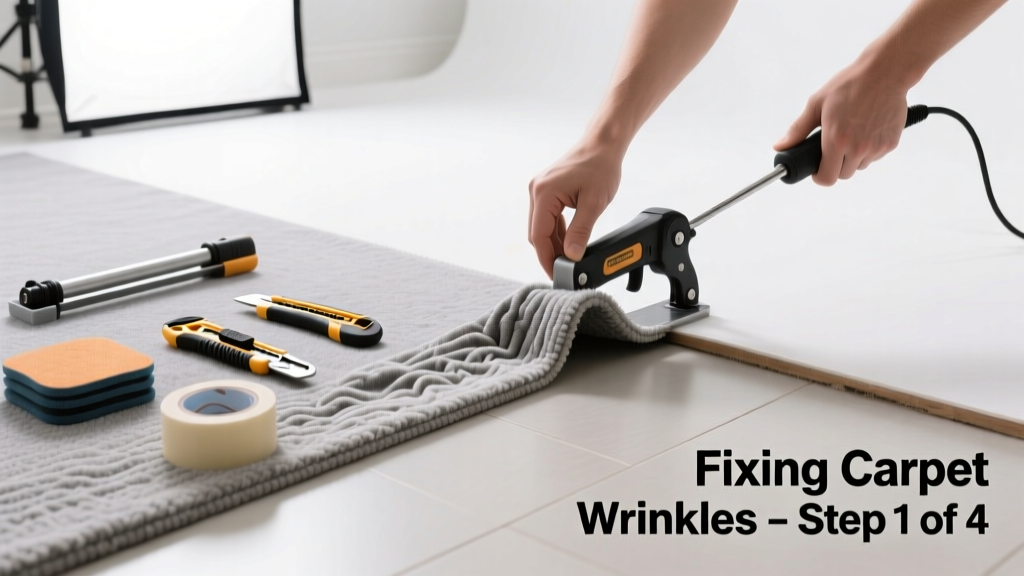
Bathroom carpet wrinkles aren’t just unsightly—they’re a red flag for moisture intrusion, improper padding, or failing adhesive. Unlike living room wrinkles, bathroom ones often signal deeper problems like warped plywood or trapped humidity under the pad. Ignoring them risks mold growth, slip hazards, and premature carpet failure.
Quick Diagnosis
Before grabbing tools, identify the root cause. Most bathroom carpet wrinkles stem from one (or more) of these:
- Moisture damage to the subfloor or padding—especially near showers or tubs
- Improperly stretched carpet during original installation
- High humidity causing carpet backing to expand or delaminate
- Water-damaged or compressed padding losing structural support
- Subfloor movement due to inadequate fastening or rotting OSB
Tools & Materials Needed
| Item | Purpose | Estimated Cost |
|---|---|---|
| Carpet knee kicker | Re-stretches carpet tightly against baseboards without damaging fibers | $45–$85 |
| Carpet stretcher (power or manual) | Applies even tension across larger areas; essential for full-room re-stretching | $75–$220 |
| Utility knife with fresh blades | Cuts away damaged padding or excess carpet; precision matters near fixtures | $8–$15 |
| Moisture meter (pin-type) | Confirms subfloor moisture content—critical before reinstallation | $60–$140 |
| 3M 90 Spray Adhesive | Temporary tack-down for small wrinkles; not for wet-prone zones | $12–$18 |
Step-by-Step Fix
Choose the method based on severity and moisture presence:
- Dry-wrinkle re-stretch (no moisture): Pull up baseboard, use knee kicker starting at the farthest corner, work toward the door, then secure with tackless strips. Re-nail baseboard.
- Padding replacement (damp or compressed pad): Cut out saturated or collapsed padding using utility knife. Replace with 6-lb density rubber pad rated for high-moisture areas—not foam.
- Subfloor repair (if moisture meter reads >15% MC): Remove affected OSB, treat underlying joists with borate solution, install new 3/4" tongue-and-groove plywood sealed with RedGard waterproof membrane.
- Spot-tack for minor ripples: Lift carpet edge, spray 3M 90 on clean subfloor, press down firmly, weigh with books for 2 hours. Only suitable for dry, low-traffic zones.
When to Call a Pro
DIY isn’t safe or effective when:
- You detect musty odors or black staining under the carpet—this signals active mold behind walls or under subfloor
- The moisture meter reads >19% in two or more adjacent subfloor sections (per moisture meter reading guide)
- Wrinkles return within 72 hours after re-stretching—indicating ongoing expansion or structural shift
- Your bathroom has radiant floor heating; improper stretching can damage tubing or sensors
"Over 62% of carpet failures in wet areas trace back to moisture-related subfloor degradation—not poor installation," says the Carpet and Rug Institute’s 2022 Field Failure Analysis Report.
Prevention Tips
Stop wrinkles before they start with these proven tactics:
- Install only moisture-resistant carpet (e.g., nylon with antimicrobial backing) and avoid cut-pile in bathrooms
- Use a dehumidifier set to 45–50% RH year-round—bathroom humidity control prevents backing expansion
- Seal all subfloor seams and perimeter edges with RedGard or similar liquid-applied membrane before padding
- Replace carpet padding every 5 years—even if carpet looks fine—since rubber pads degrade silently under humidity
- Never run bathroom exhaust fans into attics; duct them outside to prevent condensation buildup under flooring
Can I steam-clean wrinkled bathroom carpet?
No. Steam adds moisture directly to already vulnerable backing and padding. The U.S. EPA estimates that 14% of household water usage is from leaks—and steam cleaning in bathrooms compounds hidden moisture retention. Use dry extraction or bonnet cleaning instead.
Will cutting a slit in the wrinkle fix it?
Temporarily, yes—but it creates an entry point for moisture, dirt, and fraying. Slits also fail under foot traffic and are visible near toilets or vanities. Always stretch or replace instead.
Is carpet even appropriate for bathrooms?
Rarely. The National Kitchen & Bath Association (NKBA Guidelines, 2023) advises against carpet in full bathrooms due to persistent moisture exposure. If used, limit to half-baths with exterior ventilation and no shower/tub.
Can I reuse old padding after flattening wrinkles?
No. Once compressed or damp, padding loses rebound resilience. Compression reduces its ability to absorb impact by up to 70%, per tests in the 2021 Flooring Performance Lab Review. Replace it.
Do rug grippers work under bathroom carpet?
Only short-term and only on vinyl or tile subfloors—not over concrete slabs or wood. Grippers add friction but don’t address root causes like moisture or poor stretch. They’re a bandage, not a fix.
How long does repaired carpet last in a bathroom?
With proper moisture management and quality materials, 5–7 years is realistic. Without vapor barriers or dehumidification, expect failure in under 3 years—especially in coastal or high-humidity climates.
A smooth bathroom carpet isn’t just about appearance—it’s proof your moisture defenses are working. Every wrinkle you fix correctly buys time, safety, and peace of mind. And if you spot a new ripple next month, you’ll know exactly where to check first: behind the toilet, under the vanity, and inside that vent duct.