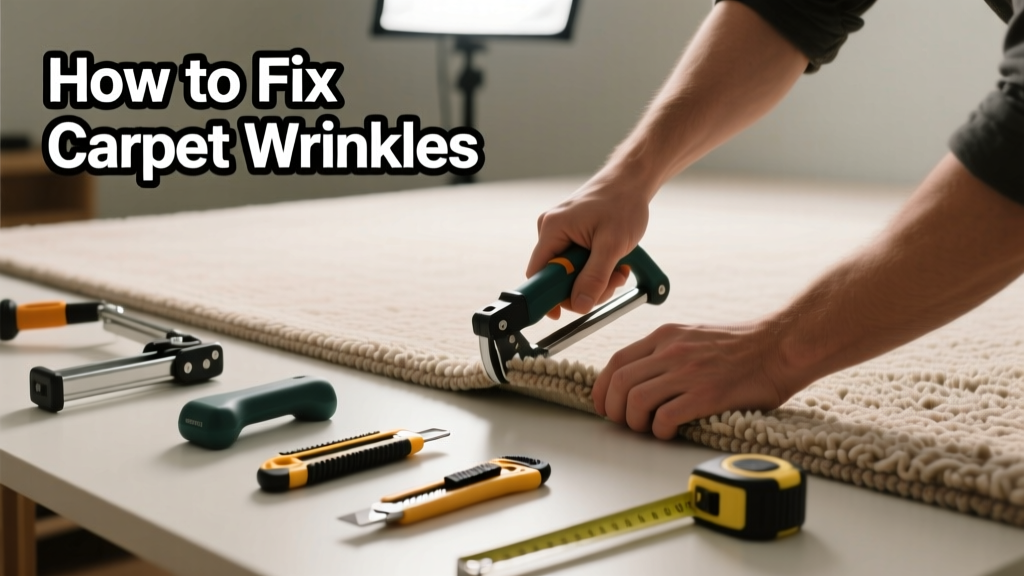
That subtle ripple underfoot? A carpet wrinkle isn’t just unsightly—it’s a trip hazard and a sign your padding or installation is failing. Left unaddressed, small wrinkles grow, snag shoes, and accelerate wear—especially in high-traffic areas like hallways and stairs.
Quick Diagnosis
Wrinkles rarely appear out of nowhere. Here are the most common root causes:
- Improper stretching during original installation (most frequent cause)
- Moisture exposure causing backing shrinkage or pad compression
- Heavy furniture left in one spot for months without rotation
- Aging or degraded foam padding losing resilience
- Seasonal humidity shifts expanding/contracting carpet fibers
Tools & Materials Needed
| Item | Purpose | Estimated Cost |
|---|---|---|
| Carpet stretcher (knee kicker or power stretcher) | Re-tensions carpet by driving it into tack strips | $40–$120 (rental) |
| Carpet knife or utility blade | Cutting excess carpet or trimming frayed edges | $5–$15 |
| Tackless strip pliers | Re-securing loose strips along baseboards | $12–$25 |
| Heavy-duty staple gun + 3/8" staples | Re-anchoring padding or perimeter edges | $25–$65 |
| Carpet seam roller | Flattening seams after stretching and reseaming | $10–$22 |
Step-by-Step Fix
Choose the method based on wrinkle size, location, and carpet age. Always start with the least invasive option.
- Vacuum and inspect: Remove furniture, vacuum thoroughly, and check for moisture damage or pad deterioration beneath the wrinkle.
- Try heat-and-stretch (for minor ripples): Use a steam cleaner or handheld garment steamer on low setting over the wrinkle, then gently pull taut while warm and press with a clean towel. Let dry fully before walking.
- Knee-kicker stretch (moderate wrinkles): Position knee kicker at the wall edge, angled toward the wrinkle. Drive firmly in 6-inch increments, working from wall toward center. Repeat perpendicular passes if needed.
- Power stretcher method (large or stubborn wrinkles): Anchor stretcher against baseboard, hook carpet loop, and crank until taut. Secure with new staples or tack strips. Trim excess if it overlaps baseboard.
- Reseaming (if seam has pulled apart): Lift both sides, apply carpet seam tape, press firmly with seam roller, and weigh down with books for 2 hours.
When to Call a Pro
Some wrinkles signal deeper structural issues—or require equipment most homeowners don’t own or know how to use safely.
- Wrinkles covering more than 10 sq. ft. or spanning multiple rooms
- Visible buckling near doorways or transitions (often indicates subfloor movement)
- Musty odor or discoloration beneath the wrinkle (possible mold or water damage)
- Carpet installed over concrete slab with no vapor barrier (risk of adhesive failure)
- Wrinkles returning within 72 hours of DIY stretching (indicates failed padding or improper tack strip grip)
"Over 68% of carpet failures reported to the Carpet and Rug Institute in 2022 were linked to improper initial stretching or degraded padding—not fiber wear." — Carpet and Rug Institute Annual Failure Report, 2022
Prevention Tips
Long-term smoothness depends on maintenance as much as repair. Follow these habits:
- Rotate area rugs and furniture every 3–6 months to redistribute pressure
- Use felt pads under all furniture legs—even lightweight pieces
- Keep indoor humidity between 30–50% year-round (use a hygrometer)
- Replace foam padding every 7–10 years—even if carpet looks fine
- After moving heavy items, lift (don’t drag) and re-stretch carpet edges with a knee kicker
Can I use a hair dryer instead of a steamer for heat stretching?
Yes—but cautiously. Set it to low heat and hold 6–8 inches away. Overheating melts nylon backing or shrinks polyester fibers. Test on an inconspicuous corner first. For wool or natural-fiber carpets, skip heat entirely—use mechanical stretching only.
Will vacuuming make wrinkles worse?
Not if you use an upright with height adjustment and turn off the beater bar. Aggressive suction + rotating brush on loose carpet can worsen ripples. Switch to a canister vacuum with soft-brush attachment for wrinkled zones.
Do carpet wrinkles affect indoor air quality?
Indirectly—yes. Trapped dust, pet dander, and moisture under wrinkles create micro-environments where allergens accumulate. The U.S. EPA estimates that 14% of household water usage is from leaks, many hidden under flooring; persistent wrinkles near plumbing lines warrant moisture meter testing water damage signs.
Can I stretch carpet myself if it’s glued down?
No—glue-down installations lack stretch tolerance. Attempting to stretch may tear backing or delaminate adhesive. These require professional seam reactivation or full replacement. Check your installer’s warranty documentation or look for glue residue along perimeter edges.
Why does my carpet wrinkle only in winter?
Dry indoor air shrinks carpet backing and compresses padding. Static buildup also makes fibers cling unevenly. Run a humidifier to maintain 35–45% RH—and avoid placing space heaters directly beside carpeted walls.
Is carpet stretching covered by home insurance?
Rarely. Most policies exclude wear-and-tear or gradual deterioration. However, if wrinkles result from sudden water damage (e.g., burst pipe), coverage may extend to remediation—including professional re-stretching—as part of the claim. Document with photos before and after filing a home insurance claim.
A smooth carpet isn’t just about appearance—it’s about safety, longevity, and comfort underfoot. Most wrinkles respond well to targeted stretching and smart maintenance, but knowing when to pause and call in a certified installer saves time, money, and frustration. If your carpet is over 12 years old or shows edge separation beyond simple wrinkles, consider scheduling a carpet replacement cost estimate—sometimes renewal is the smarter long-term fix.