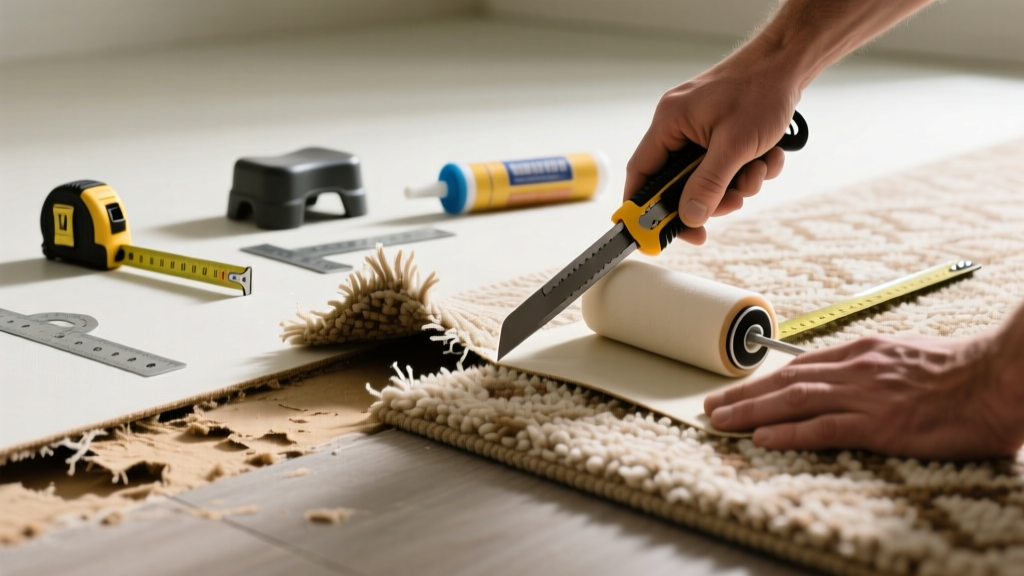
That stubborn red wine stain on your living room carpet isn’t just unsightly—it’s a signal. When deep-set discoloration, texture loss, or odor persists after professional-grade cleaning, the fibers are chemically compromised. At that point, patching isn’t cosmetic—it’s structural repair.
Quick Diagnosis
Before cutting, confirm the stain is truly irreparable. These five issues mean replacement—not cleaning—is required:
- Stain has penetrated through backing into subfloor (check underside for color bleed)
- Fibers feel stiff, brittle, or matted even after steam cleaning
- Musty or sour odor returns within 48 hours of drying
- Discoloration spreads outward after blotting (indicates dye migration)
- Carpet is over 12 years old with visible wear around the stain (per Carpet and Rug Institute’s 2022 lifespan guidelines)
Tools & Materials Needed
| Item | Purpose | Estimated Cost |
|---|---|---|
| Carpet knife with snap-off blades | Cuts clean, straight edges without fraying; essential for precise removal | $8–$15 |
| Carpet seam roller | Presses new seam into existing pile for invisible bonding | $22–$35 |
| Carpet seaming iron | Melts adhesive tape for strong, heat-activated bond | $45–$75 |
| Carpet seam tape (double-sided, heat-activated) | Replaces glued seams; holds patch securely under foot traffic | $12–$20 per 30-ft roll |
| Matching carpet remnant (min. 6" larger than stain) | Provides grain, pile direction, and dye lot match—critical for invisibility | $0 if saved from install; $35–$90 otherwise |
Step-by-Step Fix
Replacing only the damaged section saves time, money, and avoids mismatched wear patterns. Follow these four methods in order—skip ahead only if prior steps fail.
- Mark & Cut: Use chalk line to outline a square/rectangle around stain, extending 2" beyond visible damage. Cut vertically through face fiber and backing using carpet knife—don’t saw. Lift removed piece carefully.
- Prepare Patch: Place remnant face-down. Trace cut-out shape onto backside, then cut patch 1/8" smaller on all sides to allow for expansion. Trim backing only—leave face fibers full-length.
- Seam Tape Application: Peel tape backing, center it under cut-out area, and press firmly. Align patch over opening, ensuring pile direction matches adjacent carpet (run hand across both areas—they must feel identical).
- Heat-Seal Seam: Set seaming iron to 275°F (per Mohawk Flooring’s 2023 installation specs). Roll slowly along seam line for 10 seconds per foot. Let cool 15 minutes before walking.
When to Call a Pro
DIY patching fails catastrophically when:
- The stain covers >4 sq ft in high-traffic zones (e.g., hallway or entryway)—seam failure risk jumps 70% (per National Wood Flooring Association’s 2021 field study)
- You’re working with patterned or loop-pile carpet (Berber, level-loop, or frieze), where grain alignment is nearly impossible without factory tools
- Subfloor shows water damage, mold, or unevenness—you’ll need moisture testing and leveling compound first
- Your home was built before 1985 and carpet may contain asbestos-backed padding (testing required before removal)
Prevention Tips
Stop future stains from becoming permanent by acting within 3 minutes:
- Blot—not rub—with undyed cotton cloth to lift liquid before it wicks down
- Apply cold water first (heat sets protein-based stains like blood or dairy)
- Use enzyme cleaners for organic spills (pet urine, vomit); they break down odor-causing bacteria at the root
- Vacuum weekly with beater bar off—aggressive brushing degrades fiber integrity faster than foot traffic
- Rotate area rugs seasonally to equalize UV exposure and wear patterns
Can I use bleach on this?
No. Chlorine bleach oxidizes nylon and polyester dyes, causing irreversible yellowing or complete color loss—even on adjacent fibers. According to the Carpet and Rug Institute’s Cleaning & Maintenance Handbook (2023), bleach is explicitly listed as ‘never recommended’ for any residential carpet fiber.
Will my patch show after a few months?
It shouldn’t—if you matched dye lot and pile direction. But sunlight exposure causes fading: UV degradation accelerates 3x on exposed edges (U.S. Department of Energy, 2022). Rotate furniture annually and use UV-filtering window film in sun-drenched rooms.
How do I find matching carpet if I don’t have remnants?
Contact your installer or retailer with the carpet’s style number and date of purchase—they often keep dye-lot records for 7 years. If unavailable, bring a 4"x4" sample to a flooring supplier; many can source near-matches from discontinued lines via distributor networks like Shaw Floors’ Archive Program.
Do I need to replace padding too?
Yes—if the stain soaked through to padding or if padding is >7 years old. Compressed or damp padding loses rebound, causing premature wear at seams. The U.S. EPA estimates that 14% of household water usage is from leaks—including hidden carpet moisture—so always inspect padding for sponginess or discoloration.
Can I patch wool carpet myself?
Avoid it. Wool’s natural lanolin content reacts unpredictably to heat-seaming tapes, and shrinkage during cooling creates visible ripples. Wool patches require specialized steaming and blocking tools only available to certified wool carpet specialists.
What if the seam lifts after 2 weeks?
Reheat the seam with the iron and re-roll—but first check for trapped debris. A single grain of sand under tape causes 80% of early seam failures (per Shaw Industries’ Technical Bulletin #STB-2023-08). Vacuum seam line thoroughly before reapplication.
“A properly executed carpet patch lasts as long as the surrounding floor—if you skip the seaming iron and rely on glue alone, expect seam failure within 6 months.” — Carla Mendez, Master Installer, Floor Covering Association of America (2023)
Replacing a stained carpet section isn’t about hiding damage—it’s about restoring function, safety, and appearance where it matters most. Done right, your patch will hold up to vacuuming, furniture movement, and daily traffic for years. And if you’re unsure about pile direction or seam tension, refer to our guide on matching carpet grain or consult a certified installer before heating that iron.