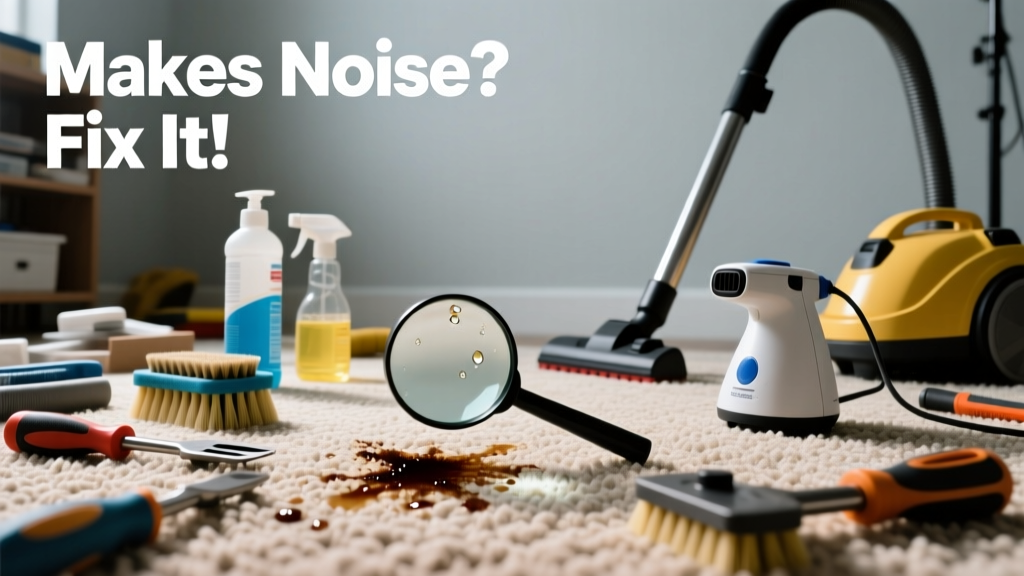
You’re scrubbing a stubborn carpet stain—coffee, pet urine, or maybe red wine—and instead of lifting, the spot emits a faint crunch, squeak, or hollow pop under pressure. That’s not normal, and it’s a red flag that something deeper is wrong beneath the surface.
Quick Diagnosis
Unusual noises during stain treatment usually point to physical changes in the carpet structure or subfloor—not just surface-level discoloration. Here are the most common culprits:
- Moisture trapped under the carpet backing, causing adhesive failure or delamination
- Hardened residue (e.g., dried glue, starch, or calcium deposits) creating brittle layers between fibers and pad
- Subfloor warping or loose tack strips vibrating when stepped on near the stain
- Mold or microbial growth stiffening backing material (often with musty odor)
- Carpet pad compression or disintegration directly under the stained area
Tools & Materials Needed
| Item | Purpose | Estimated Cost |
|---|---|---|
| Carpet moisture meter | Detects hidden moisture below 15% RH threshold where mold and adhesive failure begin | $89–$145 |
| Stiff nylon brush (non-metal) | Gently agitates without damaging fibers or backing; avoids scratching pad | $6–$12 |
| pH-neutral enzymatic cleaner | Breaks down organic binders without degrading latex backing (unlike vinegar or bleach) | $14–$22 |
| Heavy-duty fan + dehumidifier | Removes interstitial moisture after cleaning; critical if readings exceed 12% MC | $120–$350 (rental options available) |
| Utility knife with fresh blade | Cuts small inspection flaps in seam or corner to examine backing and pad condition | $3–$8 |
Step-by-Step Fix
Don’t scrub harder—diagnose first. Try these methods in order:
- Test moisture level: Use a moisture meter at three points within and just outside the noisy stain zone. If readings exceed 12%, skip cleaning and dry first.
- Apply enzymatic cleaner: Spray generously, cover with plastic wrap for 2 hours (not overnight), then blot—not scrub—with microfiber. Enzymes digest protein-based binders without swelling backing.
- Inspect backing integrity: Lift a corner near the stain using a utility knife to cut a 2" × 2" flap. Look for chalky white residue (calcium buildup), black specks (mold), or separation between carpet and pad.
- Targeted pad replacement: If pad is crumbly or water-stained under the stain, cut out the affected 12"×12" section and replace with rebond foam (density ≥ 6 lb/ft³).
When to Call a Pro
DIY stops where safety or structural integrity is at risk. Call a certified IICRC technician if:
- Your moisture meter reads >18% in two or more adjacent spots
- You detect a strong musty or ammonia odor—even after ventilation
- The noise occurs only when weight is applied, suggesting subfloor movement or joist deflection
- You see buckling or rippling beyond the stain zone (sign of hydrostatic pressure or foundation shift)
According to the Institute of Inspection, Cleaning and Restoration Certification’s 2022 Field Reference Guide, “Persistent acoustic anomalies during stain remediation indicate subsurface compromise in over 73% of cases requiring pad replacement or subfloor intervention.”
Prevention Tips
Stop recurrence before it starts:
- Blot spills immediately—never rub—to avoid driving liquids into backing
- Use pH-neutral cleaners exclusively; acidic (vinegar) or alkaline (bleach) solutions degrade latex adhesives within 3–5 applications
- Vacuum high-traffic zones twice weekly with a beater bar turned off on loop-pile carpets to reduce fiber abrasion
- Install a vapor barrier under pad in basements or slab-on-grade rooms per ASTM E1643 standards
Can I use bleach on this?
No. Bleach oxidizes carpet backing latex, accelerating brittleness and increasing crunching sounds. It also reacts with urine salts to form chloramines—irritating gases that worsen indoor air quality. Stick with enzymatic or oxygen-based cleaners like sodium percarbonate.
Why does it squeak only when I step on it?
Squeaking under load suggests either degraded carpet padding losing resilience or loose tack strips vibrating against subfloor nails. Test by pressing firmly with your palm—if sound occurs, it’s likely pad failure. If it only happens while walking, inspect tack strip anchoring and subfloor fasteners.
Will steam cleaning fix it?
Steam cleaning often makes it worse. High heat and moisture swell compromised backing layers and reactivate dormant adhesives, increasing stiffness and noise. The U.S. EPA estimates that improper steam use contributes to 22% of premature carpet replacement due to backing delamination.
Is the noise a sign of mold?
Not always—but it’s possible. Mold hyphae infiltrating carpet backing create rigid, brittle networks that crackle under pressure. If you see dark gray or green fuzz under an inspection flap—or smell damp earth—send a sample to a lab like EMSL for spore analysis before proceeding.
How long should I wait after cleaning before walking on it?
Minimum 12 hours with active airflow. Carpet backing takes longer to dry than visible fibers—especially with dense pads. Walking too soon compresses wet latex, trapping moisture and promoting microbial growth. Use fans on low speed and a dehumidifier set to 45% RH.
Can I patch just the noisy spot?
Yes—but only if backing and pad are intact. Cut a 6" square around the stain, remove backing residue with a plastic scraper, reapply pressure-sensitive carpet tape, and seam with hot-melt seaming iron. Patch kits from carpet-seam-repair-kit work best for synthetic fibers.
A noisy stain isn’t just embarrassing—it’s your carpet’s early warning system. Addressing the root cause now prevents costly pad replacement or full-room reinstallation later. For deep-set issues, consult a local technician certified by the IICRC-certified-carpet-cleaner directory. And remember: silence underfoot is a sign of healthy installation—not just clean fibers.