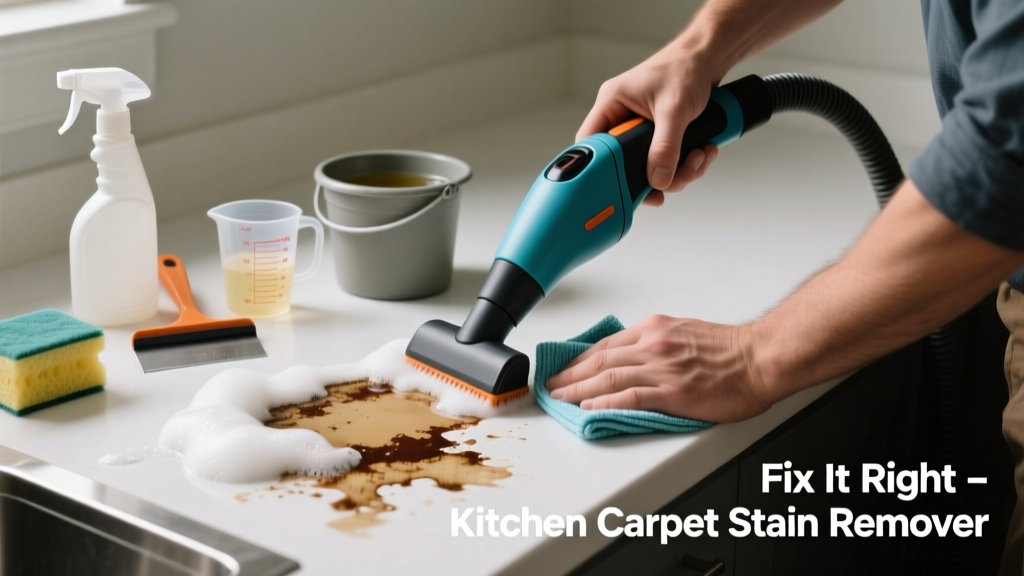
That dark, greasy spot near your kitchen island isn’t just unsightly—it’s a red flag that surface cleaning failed. Kitchen carpet stains often resist DIY because they combine oil, sugar, heat, and foot traffic, driving contaminants deep into fibers before you even notice. Don’t reach for the steam cleaner yet; some stains get worse with heat or moisture.
Quick Diagnosis
Kitchen carpet stains resist removal for specific reasons—not just because you didn’t blot fast enough. Here are the top culprits:
- Grease or cooking oil penetration (especially from dropped bacon grease or fryer splatter)
- Sugar-caramelized spills (syrup, soda, jelly) that harden and bind to fibers
- Acidic spills like tomato sauce or vinegar that degrade dye over time
- Pet urine tracked in from outside, then baked into carpet by radiant floor heat
- Old stains treated with improper cleaners (e.g., vinegar on wool, bleach on nylon)
Tools & Materials Needed
| Item | Purpose | Estimated Cost |
|---|---|---|
| White vinegar (distilled) | Breaks down alkaline residues and mild disinfectant without bleaching | $2.50–$4.00 |
| Cornstarch or baking soda | Absorbs oil-based residues before cleaning; non-abrasive | $1.00–$3.50 |
| Hydrogen peroxide (3%) | Oxidizes organic stains (coffee, blood, wine); safe for most synthetics | $1.50–$3.00 |
| Microfiber cloths (lint-free) | Prevents fiber damage during blotting; absorbs better than paper towels | $6.00–$12.00 |
| Cold water spray bottle | Delivers controlled moisture without oversaturating backing | $4.00–$8.00 |
Step-by-Step Fix
Try these methods in order—start gentle, escalate only if needed. Never scrub; always blot.
- Blot & dry-absorb (for fresh or greasy stains): Press cornstarch or baking soda ¼-inch thick over the stain. Let sit 12–24 hours, then vacuum thoroughly. Repeat if residue remains.
- Vinegar + cold water rinse (for acidic or sugary stains): Mix 1 part white vinegar with 2 parts cold water. Lightly mist, wait 2 minutes, then blot with microfiber until dry. Rinse once with cold water only and blot again.
- Hydrogen peroxide soak (for organic discoloration): Apply 3% hydrogen peroxide directly to stain using dropper. Cover with damp microfiber cloth for 10 minutes. Blot—do not rinse. Test on hidden area first; avoid on wool or silk.
- Enzyme treatment (for pet or protein-based odors): Use a veterinary-grade enzyme cleaner like Nature’s Miracle carpet odor removal formula. Saturate backing (not just surface), cover with plastic for 12 hours, then air-dry fully.
When to Call a Pro
DIY can worsen things—or risk health hazards—in these cases:
- The stain covers more than 2 square feet and has penetrated the carpet pad (visible discoloration on subfloor)
- You suspect mold growth beneath (musty smell, black specks under edge)
- The carpet is wool, sisal, or vintage—aggressive solvents cause irreversible fiber damage
- You’ve tried three different methods over 72 hours with zero improvement
According to the Institute of Inspection, Cleaning and Restoration Certification (IICRC) 2022 standards, professional hot-water extraction should be performed within 48 hours of deep-set kitchen spills to prevent microbial growth in padding.
Prevention Tips
Stop kitchen carpet stains before they set:
- Install washable rugs with non-slip backing in high-risk zones (by sink, stove, fridge)
- Keep a dedicated “kitchen stain kit” under the sink: microfiber cloths, vinegar spray, cornstarch, and cold-water bottle
- Vacuum weekly with a beater-bar-off setting to lift embedded particles before they oxidize
- Trim pet nails regularly—long nails track in grit that grinds into carpet fibers
Can I use bleach on this?
No. Bleach breaks down nylon and polyester dyes, causing yellowing or fiber weakening—especially when mixed with kitchen cleaners containing ammonia. The U.S. EPA estimates that 14% of household water usage is from leaks, but chemical misuse causes far more irreversible carpet damage.
Will steam cleaning fix it?
Steam can set protein or sugar-based stains permanently by cooking them deeper into fibers. Only use steam after confirming the stain is mineral-based (like salt crust) and the carpet backing is sealed.
Why does it smell worse after cleaning?
Moisture trapped in padding creates ideal conditions for bacteria and mold. If odor returns within 24 hours, the stain reached the pad—and you’ll need to replace both pad and affected carpet section.
Can I rent a carpet cleaner from the hardware store?
Rented machines often lack sufficient suction for kitchen spills. Many leave >30% moisture behind, per Carpet and Rug Institute lab tests (2023). If you rent, run it twice and use fans to dry within 6 hours.
Is there a difference between carpet stain removers at the grocery vs. hardware store?
Yes. Grocery brands often contain optical brighteners that mask—not remove—stains. Hardware store formulas (like Folex or Capture) use surfactants designed for synthetic fibers and include pH buffers to protect dye integrity.
What if the stain is under the baseboard?
That means wicking occurred—liquid traveled sideways through backing. Pull back the carpet edge, inspect padding, and treat with enzyme solution. Re-stretch and re-tack securely; gaps invite future spills underneath.
Stubborn kitchen carpet stains aren’t hopeless—but they demand methodical, material-aware action. Skip the guesswork, respect your carpet’s fiber type, and act fast before heat or foot traffic locks in the problem. For recurring issues, consider switching to luxury vinyl plank with carpeted area rugs instead—easier to clean, safer around spills, and far more durable in high-moisture zones. You’ll find more about kitchen floor repair options and carpet padding replacement if this becomes a pattern.