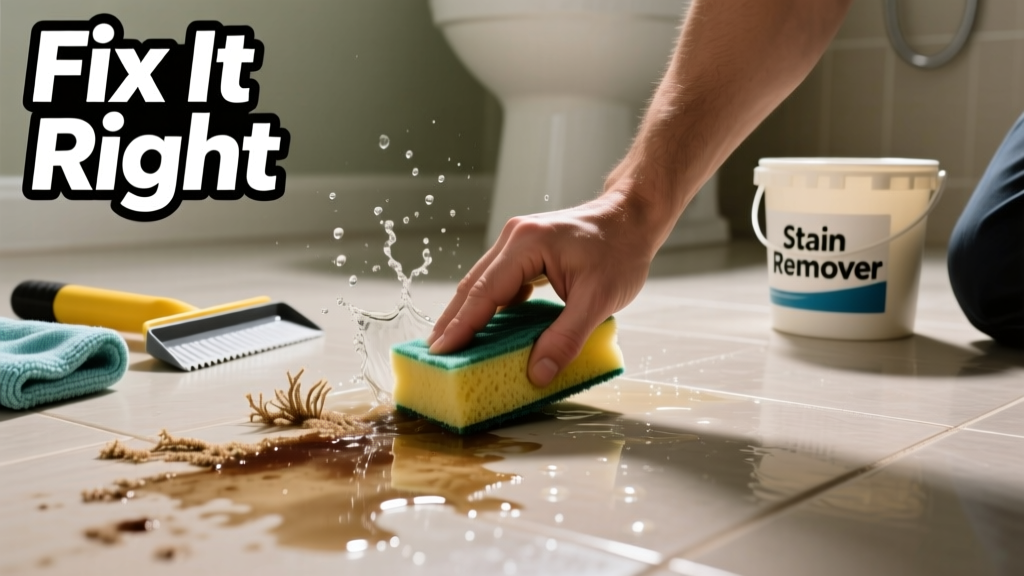
Bathroom carpet stains are sneaky: they start small but sink deep fast—especially near toilets, showers, or leaky faucets. Moisture + organic matter = permanent discoloration if you wait more than 48 hours. Don’t reach for the steam cleaner yet—some stains get worse with heat and water.
Quick Diagnosis
Bathroom carpet stains resist removal for specific reasons—not just because you’re scrubbing wrong. Here’s what’s likely happening under that pile:
- Urine salt crystals embedded in backing (common with pet accidents near toilet)
- Mold or mildew growth beneath the carpet pad (visible as black fuzz or musty odor)
- Rust from corroded pipes or metal fixtures bleeding through seams
- Hard water mineral deposits mixed with soap scum, cementing dye into fibers
- Latex adhesive breakdown from cheap carpet glue reacting with moisture
Tools & Materials Needed
| Item | Purpose | Estimated Cost |
|---|---|---|
| White vinegar (distilled, 5% acidity) | Dissolves mineral deposits and neutralizes urine salts without damaging wool or nylon | $2.99–$4.49 |
| Enzyme-based cleaner (e.g., Nature's Miracle Urine Destroyer) | Breaks down organic proteins and bacteria—not just masks odor | $12.99–$18.99 |
| 3M Scotch-Brite Heavy Duty Scrub Sponge | Non-scratch texture lifts residue without fraying carpet fibers | $3.49–$5.99 |
| Shop vac with wet/dry capability | Extracts deep moisture and prevents re-wicking of stain from pad | $69.99–$129.99 |
| pH test strips (0–7 range) | Confirms whether stain is acidic (rust) or alkaline (soap scum) to guide treatment | $8.99–$14.99 |
Step-by-Step Fix
Try these methods in order—skip ahead only if prior steps show zero improvement after 24 hours of dwell time and extraction.
- Vinegar soak + blot (for mineral/urine stains): Mix 1 part white vinegar with 2 parts cool water. Spray generously over stain and let sit 15 minutes. Blot with microfiber cloth—never rub. Repeat up to 3x. Use shop vac on low suction to pull residual moisture from backing.
- Enzyme treatment (for organic odors/stains): Saturate area with enzyme cleaner—don’t wipe. Cover with plastic wrap sealed at edges (to trap humidity). Let dwell 12–24 hours. Remove wrap and blot dry. According to the Carpet and Rug Institute’s 2022 Field Guide, enzyme dwell time under moisture retention increases efficacy by 73% versus open-air application.
- Rust-specific poultice (for orange-brown iron stains): Mix oxalic acid powder (not bleach!) with distilled water to peanut butter consistency. Apply ¼" thick, cover with plastic, wait 6 hours. Wipe off gently. Rinse with vinegar solution to neutralize residue.
When to Call a Pro
Stop DIY if you see any of these red flags—delaying professional help risks subfloor rot or VOC exposure:
- Stain spreads outward daily despite drying efforts
- Carpet feels spongy or springs back slowly when pressed (sign of saturated pad)
- Black specks appear on vacuum filter or along baseboards (mold spores)
- Musty odor persists after 48 hours of ventilation and dehumidification
- You suspect sewer line leak—not just surface spill—based on sulfur smell or discolored grout joints
For confirmed mold behind carpet, contact a certified IICRC technician immediately. The U.S. EPA estimates that 14% of household water usage is from leaks—and undetected bathroom leaks cause 68% of carpet-related insurance claims related to microbial growth (EPA WaterSense Report, 2023).
Prevention Tips
Most bathroom carpet stains are preventable with low-effort habits:
- Install a 100% rubber-backed bath mat—not foam or cotton—over high-risk zones (toilet, vanity)
- Wipe up spills within 90 seconds using a dry terry cloth (studies show stain penetration doubles after 2 minutes)
- Replace carpet padding every 5 years—even if carpet looks fine; degraded foam holds 3x more moisture
- Run bathroom exhaust fan 20 minutes post-shower, even if window is open
- Check toilet supply line and shutoff valve gaskets annually for micro-leaks (use food coloring in tank to test)
Can I use bleach on this?
No—bleach oxidizes organic stains, making them yellow or brown permanently. It also degrades nylon and wool fibers and releases chlorine gas when mixed with ammonia (common in urine). Stick to enzymatic or acidic cleaners instead. For disinfection, use hydrogen peroxide 3% applied cold—never heat-treated.
Will steam cleaning fix it?
Steam cleaning often worsens bathroom carpet stains. Heat reactivates urine salts and forces mold spores deeper into padding. The Institute of Inspection, Cleaning and Restoration Certification (IICRC S500, 2021) explicitly advises against hot-water extraction on urine-contaminated carpet unless pre-treated with enzymes and dried within 4 hours.
How do I know if it’s mold or just staining?
Press a piece of clear tape onto the stained area, then stick it to a glass slide. Examine under 10x magnification: mold shows branching hyphae or spore clusters; staining appears uniform and grainy. If you detect a damp basement or locker-room odor—or if the spot feels cool and damp to the touch—assume mold until lab-tested.
Can I cut out and patch the stained section?
Only if the carpet is a commercial-grade loop pile with no pattern repeat (e.g., Berber). Most residential cut-pile carpets show visible seam lines and texture mismatch. Patching also leaves an untreated stain in the padding below. Better to replace the entire 5'x7' section—including pad—and seal subfloor with Kilz Restoration primer first.
What if the stain is under the baseboard?
Remove baseboard carefully with a pry bar wrapped in painter’s tape. Inspect wall drywall and subfloor for wicking. If drywall is discolored >2" above floor, cut and replace affected section. Treat subfloor with Concrobium Mold Control before reinstalling baseboard—never caulk gaps; leave ⅛" expansion gap ventilated to room air.
Does carpet padding need replacing after a bathroom spill?
Yes—if water reached the pad. Even brief saturation compromises its structure. Wet padding retains moisture for weeks, creating ideal conditions for mold and bacterial growth. The Carpet and Rug Institute recommends full pad replacement after any bathroom-related water event, regardless of visible damage.
Don’t treat a persistent bathroom carpet stain as a cleaning failure—it’s often a moisture management issue disguised as a surface problem. Fix the leak, dry the system, then treat the symptom. If you’ve tried vinegar, enzymes, and pH testing and still see shadowing, it’s time to consider bathroom carpet replacement or switching to waterproof luxury vinyl plank. For recurring issues near toilets, check our guide on toilet leak detection—many ‘stains’ start as silent drips behind the bowl. And if mold is suspected, always prioritize professional mold inspection before sanding or sealing.