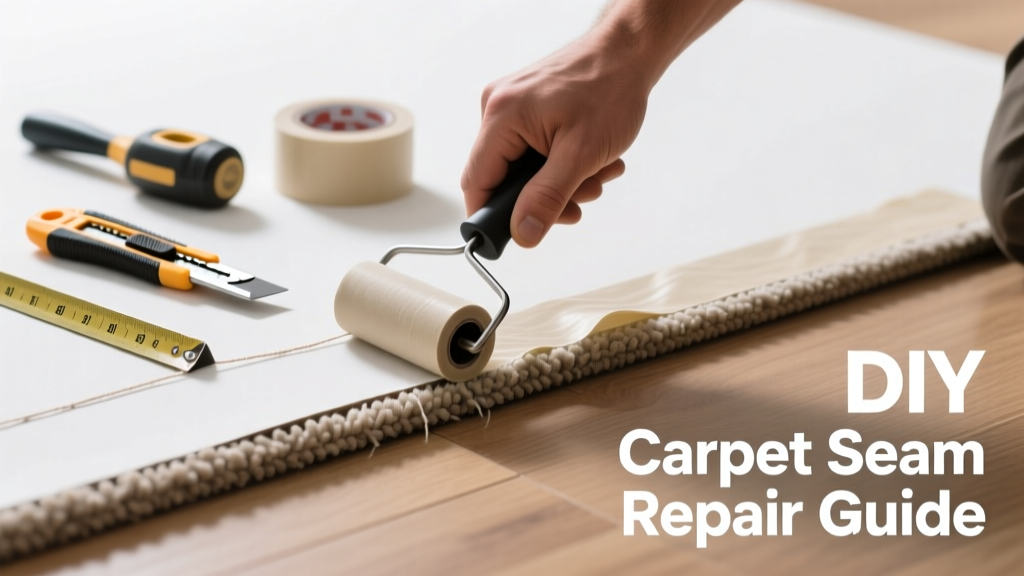
That unsightly line where two carpet pieces meet—especially when it’s bulging, separating, or revealing the backing—is more than an eyesore. It’s a sign your seam is failing, which can worsen fast under foot traffic or furniture movement. Ignoring it invites fraying, tripping hazards, and moisture trapping beneath.
Quick Diagnosis
Before grabbing tools, identify the root cause. Most seam failures stem from one (or more) of these:
- Insufficient or degraded seam tape adhesive (common in homes over 5 years old)
- Poor initial installation—carpet stretched too tightly or not enough on one side
- Moisture exposure weakening glue or causing backing delamination
- Heavy furniture dragging across the seam, stretching fibers apart
- Temperature/humidity swings causing carpet backing to contract unevenly
Tools & Materials Needed
| Item | Purpose | Estimated Cost |
|---|---|---|
| Carpet seam roller (10–12 lb) | Recompresses tape and bonds fibers after reactivation | $28–$45 |
| Seam sealer (water-based acrylic) | Reactivates old tape or bonds new tape without toxic fumes | $12–$22 |
| Utility knife with fresh blades | Cleans frayed edges and trims excess backing | $5–$15 |
| Heat gun (600–1,000°F) | Softens aged tape adhesive for repositioning | $35–$75 |
| Carpet knee kicker | Provides localized stretch if seam gap exceeds 1/8 inch | $40–$95 |
Step-by-Step Fix
Choose the method based on severity. Start with the least invasive:
- Reactivate & re-roll (minor lifting): Lightly mist seam sealer along the exposed edge, wait 60 seconds, then press firmly with seam roller using 10 slow, overlapping passes. Let cure 24 hours before walking.
- Trim & reseal (frayed or curled edges): Use a utility knife to cut away loose backing fibers at a 45° angle. Apply seam sealer to clean edge, press down, then roll.
- Heat-assisted re-bond (gaps >1/8″): Heat tape area to 180°F (use infrared thermometer), gently lift seam, apply fresh seam tape, reposition, then roll while warm.
- Knee-kicker stretch (tension loss): Anchor carpet on one side, use knee kicker every 6 inches along seam to reintroduce 1–2% stretch before resealing and rolling.
When to Call a Pro
DIY stops being safe or effective in these scenarios:
- Seam separation exceeds 3/8 inch across more than 2 feet of length
- Backing shows signs of rot, mold, or water damage (must test with moisture meter per ASTM F2170-23)
- Carpet has been glued directly to concrete subfloor—heat or sealer may fail unpredictably
- You’re dealing with wool or specialty loop-pile carpet; improper tension risks permanent distortion
According to the Carpet and Rug Institute’s 2022 Installation Standards Handbook, seams over 12 feet long require professional-grade power stretchers—not knee kickers—to maintain uniform tension and prevent future failure.
Prevention Tips
Extend your carpet’s seam life with these habits:
- Rotate area rugs every 3 months to distribute wear evenly across seams
- Use felt pads under all furniture legs—never rubber or plastic that traps moisture
- Maintain indoor humidity between 35–55% year-round (U.S. EPA recommends this range to reduce backing shrinkage)
- Have seams inspected during professional deep cleaning—most certified cleaners include seam integrity checks
Can I use regular wood glue on my carpet seam?
No. Wood glue contains solvents that degrade latex backing and cause yellowing or fiber stiffening within weeks. Only use products tested and approved by the Carpet and Rug Institute (CRI Sealant Standard 105-2021).
How long does seam sealer take to dry completely?
Surface dry time is 2–4 hours, but full bond strength develops after 24 hours. Avoid vacuuming or moving furniture until then—early pressure disrupts polymer cross-linking.
Will steam cleaning reopen a repaired seam?
Yes—if done improperly. High-pressure steam (>120 PSI) or excessive dwell time softens seam tape. Always use low-moisture extraction (like carpet cleaning machine rental units with dual-tank recovery) and avoid direct nozzle contact with seams.
Can I hide a bad seam with transition strips?
Only as a last resort—and only if the seam is fully stable. Transition strips don’t fix underlying issues; they mask them. If the seam moves under the strip, you’ll get buckling or loud creaking. Better options include carpet seam replacement cost analysis or partial re-stretching.
Does pet urine damage carpet seams permanently?
Yes. Urine’s urea breaks down latex backing adhesives and promotes microbial growth in the seam channel. The U.S. EPA estimates that 14% of household water usage is from leaks—including pet accidents—that go unaddressed beneath carpets. Always blot (don’t scrub), then treat with enzyme cleaner before seam repair.
Is it normal for new carpet seams to show slightly?
A faint line is typical for up to 30 days as fibers relax—but no lifting, gapping, or backing exposure. If visible texture remains past 6 weeks, the installer likely used mismatched pile direction or insufficient stretch. Review your warranty: most manufacturers void coverage if seams exceed 1/16-inch visibility after 90 days.
A well-executed seam repair doesn’t just restore appearance—it restores safety, comfort, and longevity. Take your time, match materials to your carpet type, and don’t hesitate to bring in help when the subfloor or backing tells a story you can’t read. Your carpet’s performance starts at the seam, and now you know exactly how to keep it sealed tight.