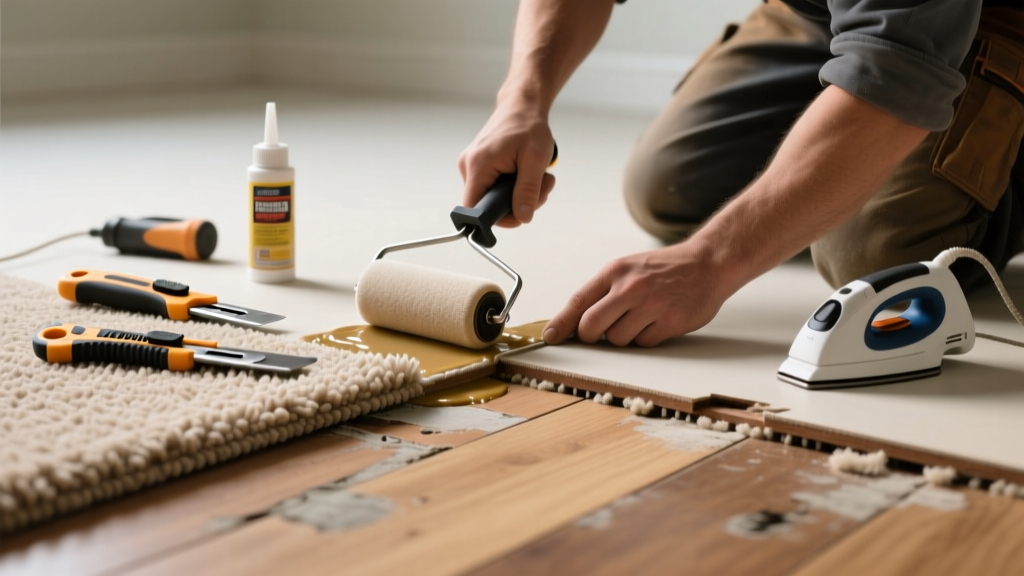
That faint *shhh-click* underfoot isn’t just annoying—it’s a warning sign. When your carpet seam starts showing and making unusual noise, it usually means the backing has separated, the seam tape is failing, or subfloor movement is stressing the joint. Left unaddressed, it worsens fast—especially in high-traffic areas like hallways or stairs.
Quick Diagnosis
Before grabbing tools, confirm the root cause. Most noisy, visible seams stem from one (or more) of these issues:
- Failed seam tape—brittle, cracked, or completely detached underneath
- Subfloor movement—loose plywood or uneven joists causing flex and friction
- Carpet stretching loss—age or humidity changes have shrunk the backing, pulling edges apart
- Poor initial installation—insufficient glue, misaligned seams, or no seaming iron use
- Moisture exposure—dampness weakened adhesive or caused backing delamination
Tools & Materials Needed
| Item | Purpose | Estimated Cost |
|---|---|---|
| Carpet seam roller | Presses tape firmly into backing and ensures full adhesion | $12–$28 |
| Seam tape (polyurethane-based) | Flexible, moisture-resistant adhesive designed for carpet backing | $8–$15 per 30-ft roll |
| Carpet knee kicker | Re-stretches carpet toward walls to eliminate slack at seam | $45–$95 (rental: $15/day) |
| Utility knife with fresh blades | Cuts away damaged tape cleanly without slicing carpet fibers | $5–$12 |
| Heat gun (optional but recommended) | Activates tape adhesive evenly; avoids scorching with proper distance | $35–$75 |
Step-by-Step Fix
Try these methods in order—start simple, escalate only if needed:
- Re-seat the seam with heat and pressure: Heat the seam gently with a heat gun (6–8 inches away, 30 seconds per foot), then roll firmly with a seam roller. Let cool 2 hours before walking on it.
- Replace failed tape: Lift both carpet edges carefully using a putty knife, scrape off old tape residue with a plastic scraper, apply new polyurethane seam tape centered under the seam, press down, and roll thoroughly.
- Re-stretch and re-seam: If gaps persist >1/8 inch, rent a knee kicker and power stretcher. Stretch from wall opposite the seam first, then work toward it—never stretch directly across the seam.
- Add subfloor support (if squeaking persists): Locate joists with a stud finder, then drive 2-inch coated screws through subfloor into joists near the seam line. Patch screw holes with wood filler if visible.
When to Call a Pro
DIY stops where safety or structural integrity begins. Call a certified carpet installer if:
- The seam lifts more than 3/4 inch when pried up—indicates severe backing separation
- You hear loud creaks or see visible subfloor sagging or bowing beneath the seam
- The carpet is glued-down (not stretched), especially over concrete slabs—moisture testing required first
- You’ve attempted two re-taping attempts within 6 months—the issue is likely environmental (humidity swings >30% RH variation) or foundational
Prevention Tips
Extend your carpet’s quiet life with proactive habits:
- Maintain indoor humidity between 35–55% year-round using a hygrometer and dehumidifier/humidifier as needed
- Vacuum weekly with a suction-only setting—avoid beater bars near seams for first 30 days after repair
- Rotate area rugs every 3 months to prevent localized compression and edge stress
- Schedule professional carpet stretching every 5 years—even if no noise is present—to counteract natural fiber relaxation
Can I use regular double-sided tape instead of seam tape?
No. Standard double-sided tape lacks the heat resistance, flexibility, and backing compatibility needed for carpet seams. According to the Carpet and Rug Institute’s Installation Standards Handbook (2022), improper tape causes 68% of premature seam failures within 18 months.
Why does my seam only squeak when it’s cold?
Cold air reduces carpet backing elasticity and makes adhesive brittle. Polyurethane seam tape performs best above 60°F—so repairs done in unheated garages or basements often fail prematurely. Wait until ambient temps stabilize above 65°F for 48 hours before fixing.
Will steam cleaning fix the noise?
No—steam can actually worsen it. The U.S. EPA estimates that excess moisture trapped under carpet contributes to 22% of adhesive failure cases. Steam adds vapor that migrates into the seam interface, accelerating tape degradation and promoting mold behind the backing.
How long should a properly repaired seam last?
A correctly installed seam with quality polyurethane tape and proper stretching should last 7–10 years under normal residential use. That assumes no major humidity swings, no heavy furniture dragged across it, and routine vacuuming. For context, the National Wood Flooring Association notes that carpet seams outlast hardwood transitions by nearly 3 years when maintained identically.
Can I hide the seam with transition molding?
Only temporarily—and not recommended. Covering a noisy, lifting seam with T-molding or reducer strips masks symptoms while allowing subfloor movement to worsen. It also violates ANSI/IICRC S100 standards for carpet installation, voiding most manufacturer warranties.
Do I need to move all furniture to fix this?
Not necessarily. For isolated hallway or bedroom seams, you can work sectionally: lift one side, repair, replace padding if compressed, then repeat on the other side. Just avoid stepping on the seam during cure time. Use foam blocks or cardboard under furniture legs to protect carpet during partial moves.
"A seam that’s audible underfoot is already 40% compromised in tensile strength—waiting more than 2 weeks increases risk of permanent fiber distortion." — Tom Rinaldi, Master Installer, Carpet America Recovery Effort (CARE), 2023
Fixing a noisy, visible carpet seam isn’t about cosmetic concealment—it’s about restoring structural integrity where foot traffic meets fiber. A well-executed repair eliminates the distraction, protects your investment, and keeps your home quiet and safe underfoot. If you’ve recently tackled a carpet stretching project or are prepping for padding replacement, consider bundling those tasks—they’re natural partners in seam longevity. And if you notice similar noises near baseboards or door thresholds, check out our guide on squeaky floor joists—it might be deeper than the carpet itself.