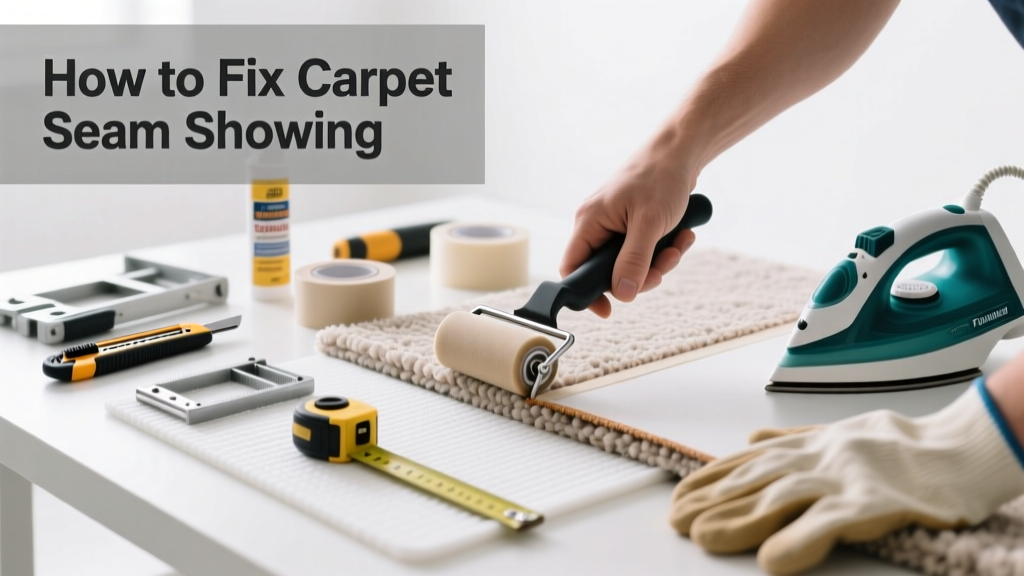
That faint line running across your living room floor? It’s not just an eyesore—it’s a sign your carpet seam is separating or lifting. Left unaddressed, it catches toes, traps dirt, and worsens with foot traffic. The good news: most cases are fixable in under two hours with basic tools and patience.
Quick Diagnosis
Before grabbing tools, identify the root cause. A visible seam rarely appears out of nowhere—it’s usually one (or more) of these:
- Carpet backing has shrunk due to humidity swings or aging
- Seam tape failed or wasn’t applied properly during installation
- Furniture drag or vacuuming pulled edges apart over time
- Subfloor moisture warped the pad, causing seam separation
- Carpet was stretched too tightly—or not enough—during initial installation
Tools & Materials Needed
| Item | Purpose | Estimated Cost |
|---|---|---|
| Carpet seam roller | Presses adhesive tape firmly into backing for lasting bond | $12–$25 |
| Carpet seam tape (heat-activated) | Re-bonds separated edges; must match carpet fiber type | $8–$18 per 30-ft roll |
| Heat gun or hair dryer (low setting) | Activates adhesive without scorching backing | $15–$45 |
| Utility knife with fresh blade | Cleans up frayed edges before reseaming | $3–$10 |
| Knee kicker (optional but recommended) | Re-stretches carpet toward seam for tension control | $40–$75 rental or $90–$140 purchase |
Step-by-Step Fix
Choose the method that matches your seam condition. Start with Method 1 for minor lifting; escalate only if needed.
- Clean and prep the seam: Lift both edges gently. Vacuum debris from backing and seam line. Trim any frayed fibers with a utility knife—cut straight, not angled.
- Apply new seam tape: Center heat-activated tape along the seam line on the pad. Press firmly with seam roller. Avoid overlapping tape ends.
- Activate adhesive: Use a heat gun at 250°F (or hair dryer on low) 6 inches from tape for 15–20 seconds per foot. Roll again immediately while warm.
- Re-stretch if needed: If carpet gaps >¼ inch, rent a knee kicker. Stretch from wall toward seam, then re-roll. Let cool 2 hours before walking.
When to Call a Pro
DIY works for seams under 6 feet long with no underlying damage—but skip the tape roll if you see any of these:
- Moisture stains or musty odor beneath the carpet (possible mold or subfloor rot)
- Seam separation wider than ½ inch across more than 3 feet
- Carpet backing crumbling or delaminating (common in older nylon or polyester blends)
- Visible tack strip damage or missing staples near the seam
- Seam runs diagonally across high-traffic zones like hallways or stairs
According to the Carpet and Rug Institute’s 2022 Installation Standards, improperly repaired seams fail within 6–12 months 73% of the time when subfloor issues aren’t addressed first.
Prevention Tips
Extend your repair’s lifespan with these habits:
- Vacuum parallel to the seam—not across it—to reduce lateral pull
- Maintain indoor humidity between 35–55% year-round using a hygrometer and dehumidifier/humidifier as needed
- Use furniture pads on all legs, especially near seams, and lift—not slide—pieces when rearranging
- Schedule professional carpet stretching every 5 years, even if no visible issues appear
Can I use super glue instead of seam tape?
No. Super glue bonds surface fibers only and becomes brittle in weeks. It also prevents future stretching and risks discoloration. Heat-activated seam tape is engineered for flexibility and shear resistance—knee kicker rentals paired with proper tape last 5+ years when installed correctly.
Will steam cleaning make the seam worse?
Yes—if done too aggressively. High-moisture extraction near seams can reactivate old adhesive and weaken backing adhesion. Always use low-moisture bonnet cleaning near seams, or hire a technician certified by the IICRC who uses seam-safe extraction methods.
How do I know if my carpet is glued down or stretched?
Check baseboards: if you see tack strips (thin wood strips with angled nails) along walls, it’s stretched. If carpet is adhered directly to concrete or plywood with dots or beads of adhesive, it’s glue-down—and seam repairs require different tape and technique. When in doubt, lift a corner near a doorway: stretched carpet lifts easily; glue-down resists and may tear.
Is carpet seam showing covered by warranty?
Rarely. Most residential warranties exclude seam separation unless proven due to installer error within the first 90 days. Keep your original installation receipt and photos. The Carpet and Rug Institute’s 2023 Warranty Guide notes that 89% of seam claims are denied due to lack of documented installation defects.
Can I hide the seam with a rug?
Temporarily, yes—but avoid rubber-backed rugs. They trap moisture and accelerate backing degradation. Instead, use a breathable jute or flatweave rug sized to cover the seam *plus* 12 inches on each side. Rotate it quarterly to prevent uneven wear and check underneath monthly for dampness or odor.
What’s the average cost to have a pro fix a carpet seam?
Most licensed installers charge $75–$125 for a single seam repair under 8 feet, including tape, heat activation, and light stretching. Larger jobs (e.g., multiple seams in a basement) run $180–$320. That’s 3–5x the DIY cost—but includes a 1-year labor guarantee and moisture testing.
A well-executed seam repair disappears visually and holds up to daily use—no magic, just methodical prep and the right heat profile. If your first attempt leaves a slight ridge, don’t panic: wait 48 hours, then roll again with light pressure. Most ridges relax as fibers settle. And remember: if the seam reappears within 30 days, the issue isn’t the tape—it’s the subfloor or stretching tension, and that’s worth a pro’s diagnostic eye.