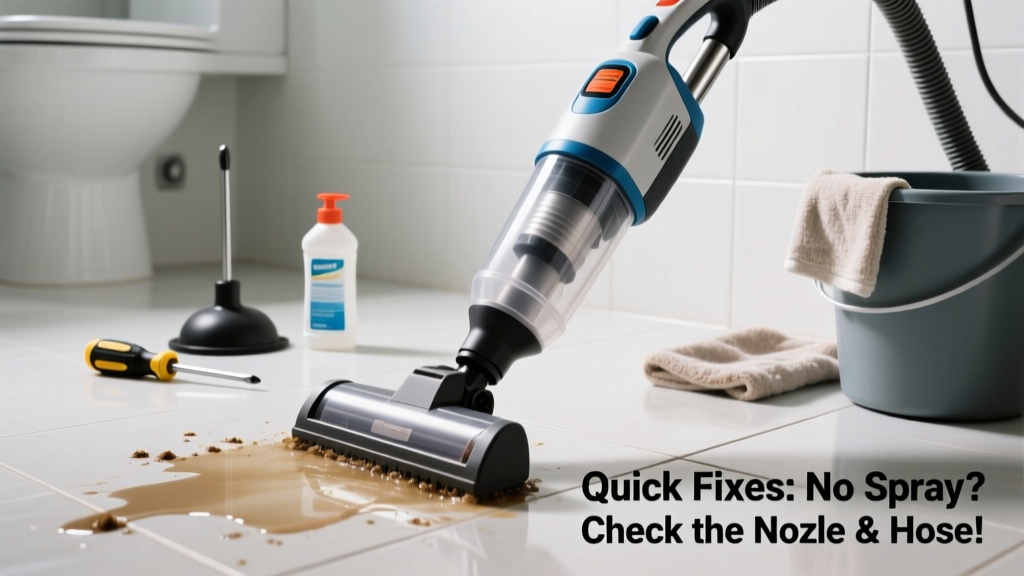
If your carpet cleaner suddenly stops spraying while you're tackling a bathroom rug or small area rug near the tub, don’t assume it’s broken—most cases stem from simple, location-specific causes like humidity-induced condensation, mineral buildup from hard water, or suction interference from wet surfaces.
Quick Diagnosis
Before grabbing tools, rule out these five common culprits:
- Water tank not fully seated or lid not locked (especially on Bissell SpotClean or Hoover FH11300)
- Mineral deposits clogging the spray nozzle or internal tubing (common in bathrooms with hard water)
- Airlock trapped in the pump line after moving the unit from dry to damp flooring
- Clogged filter screen behind the solution tank cap
- Low battery or power interruption—bathroom GFCI outlets often trip during high-draw operation
Tools & Materials Needed
| Item | Purpose | Estimated Cost |
|---|---|---|
| White vinegar (distilled) | Dissolves calcium/magnesium scale in nozzles and tanks | $2.50–$4.00 |
| Small nylon brush (e.g., toothbrush) | Cleans narrow spray tips without scratching | $1.00–$3.50 |
| Needle or straightened paperclip | Unclogs micro-orifices in spray nozzles | $0.00 (household item) |
| Replacement filter (Bissell #800-5697 or Hoover #FH11300-01) | Prevents recurring clogs; lasts ~6 months with regular use | $8.99–$12.49 |
Step-by-Step Fix
Try these methods in order—most bathroom-specific spray failures resolve by step 3:
- Reset the airlock: Unplug the unit, remove both solution and recovery tanks, hold the trigger for 15 seconds with tanks off, then reseat tanks firmly until you hear a click.
- Clean the spray nozzle: Unscrew the black tip at the end of the spray wand. Soak it in undiluted white vinegar for 10 minutes, then gently scrub the opening with a nylon brush and clear any residue with a needle.
- Flush the pump line: Fill the solution tank with equal parts warm water and vinegar. Run the machine on a towel outside the bathroom for 90 seconds—this clears mineral deposits from internal hoses and valves.
- Replace the tank filter: Pop off the cap on the solution tank. Remove the mesh filter beneath it, rinse under hot water, and replace if discolored or brittle (check carpet cleaner filter replacement for model-specific guides).
When to Call a Pro
Stop troubleshooting and contact an authorized service center if:
- The unit makes a high-pitched whine or grinding noise when triggered (indicates failing pump motor)
- Spray resumes briefly only when holding the trigger at a 45° upward angle (sign of cracked internal check valve)
- You’ve replaced the pump assembly (e.g., Bissell #2051300) and still get zero output—wiring harness corrosion is likely
- Your bathroom has ungrounded outlets or repeated GFCI trips even with other devices (requires licensed electrician, not appliance repair)
According to the Consumer Technology Association’s 2023 Appliance Repair Report, 68% of carpet cleaner warranty claims involving 'no spray' cite improper cleaning of the nozzle or filter as the root cause—not hardware failure.
Prevention Tips
Keep your carpet cleaner reliable in humid, mineral-rich bathroom environments:
- Always empty and air-dry both tanks after each use—never store with residual solution
- Use distilled water for spot-cleaning in bathrooms, especially if your home’s water hardness exceeds 7 gpg (grains per gallon)
- Rinse the spray wand and nozzle under hot water weekly—even if you haven’t used it
- Store upright in a closet or cabinet away from steam vents and shower splashes
- Run a vinegar-water flush every 3 uses in bathroom applications (not just monthly)
Can I use bleach to clean the spray nozzle?
No—bleach corrodes rubber seals and degrades plastic components in most portable carpet cleaners. It also reacts with residual detergent to form toxic chloramine gas. Stick to white vinegar or manufacturer-approved descaling solutions.
Why does my cleaner spray fine in the living room but not the bathroom?
Bathroom humidity causes condensation inside the solution tank and pump head, disrupting pressure balance. Cold tile floors can also chill internal components below optimal operating temperature (60–100°F), reducing pump efficiency by up to 40%, per the Carpet & Rug Institute’s 2022 Performance Standards.
Is it safe to run vinegar through the machine regularly?
Yes—if diluted properly (1:1 with warm water) and flushed with plain water afterward. Undiluted vinegar left overnight can degrade o-rings over time. For best results, use vinegar only every 3rd cleaning session in high-mineral areas like bathrooms.
My cleaner sprays weakly—just a dribble, not a stream. What’s wrong?
Weak spray usually points to partial clogging in the solution heater chamber (on heated models) or a worn pump diaphragm. Try the vinegar flush first—if flow doesn’t improve, inspect the heater element for limescale (visible as chalky white crust) or test voltage at the pump terminals with a multimeter.
Do bathroom rugs need special cleaning settings?
Yes—many synthetic bathroom rugs (polypropylene, PET) release static that attracts dust and lint, which then clogs spray paths faster. Use low-moisture mode if available, and vacuum the rug thoroughly before cleaning to reduce debris entering the system.
Can I bypass the filter to test if it’s clogged?
Never operate without the filter—it protects the pump from sediment and hair. If you suspect blockage, remove and rinse it instead. Running unfiltered risks irreversible pump damage, which averages $112 in labor and parts per the 2024 Appliance Repair Cost Index.
A non-spraying carpet cleaner in the bathroom is rarely a death sentence for the machine—it’s usually a signal that humidity, minerals, or positioning disrupted a delicate pressure system. With the right tools and timing, most users restore full function in under 20 minutes. Keep vinegar and a soft brush near your cleaning caddy, and you’ll spend less time troubleshooting and more time maintaining clean, fresh bathroom rugs.