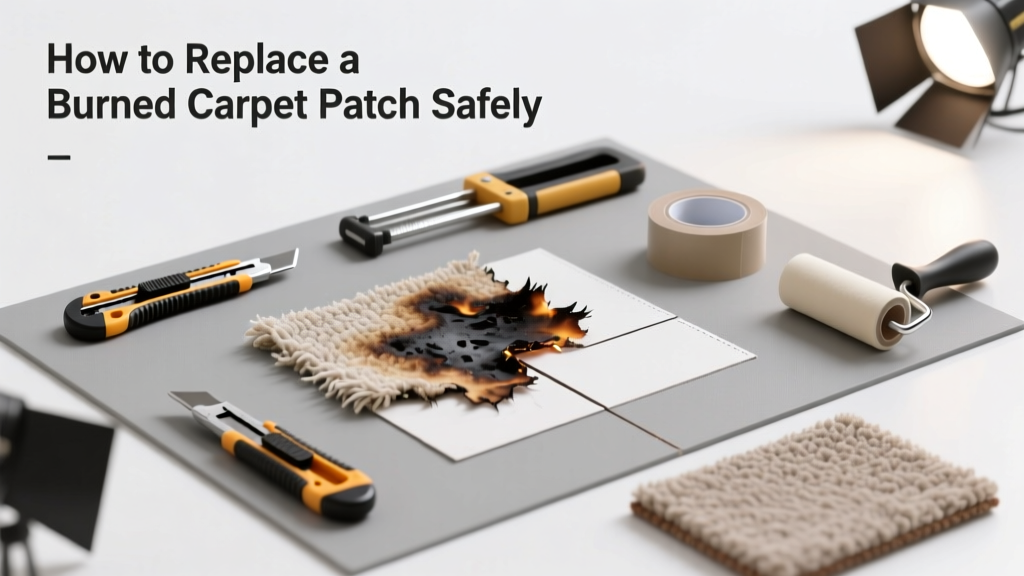
That sharp, acrid smell followed by a stiff, blackened spot on your carpet? You’ve got a burn mark—and if the fibers are melted or brittle, patching is the only real fix. Unlike surface stains, carpet burns compromise structural integrity and can’t be cleaned away. The good news: replacing just the damaged section takes under two hours and costs less than $30 in materials.
Quick Diagnosis
Before cutting, confirm it’s truly a burn—not scorch, dye transfer, or chemical damage. True burns show:
- Melted, fused, or glassy fiber tips (not just discoloration)
- Stiffness or brittleness when pinched
- A distinct odor of overheated synthetic fibers (nylon, polyester)
- No improvement after vacuuming or spot cleaning with mild detergent
Tools & Materials Needed
| Item | Purpose | Estimated Cost |
|---|---|---|
| Carpet knife with fresh blade | Cuts cleanly through dense pile without fraying edges | $8–$15 |
| Carpet seam roller | Presses patch into backing and bonds adhesive properly | $12–$22 |
| Carpet tape (seam tape) | Heat-activated adhesive for invisible, durable seams | $6–$14 |
| Matching carpet remnant (min. 4" x 4") | Must match fiber type, pile height, and wear pattern | $0–$25 (use leftover cuttings or donor area) |
| Heavy-duty straightedge or ruler | Ensures square, precise cuts aligned with carpet grain | $5–$10 |
Step-by-Step Fix
Follow one of these three methods based on burn size and location:
- Small circular burn (<1.5"): Cut out with a carpet hole punch or sharp utility knife in a perfect circle; use a matching round patch and seam tape underneath. Roll firmly with seam roller.
- Rectangular burn (1.5"–6"): Measure and mark a square/rectangle slightly larger than the burn—align with carpet’s weave direction. Cut both carpet and padding. Insert patch, secure with seam tape, then roll and weigh down with books for 2 hours.
- Edge or doorway burn: Cut along existing seam line if possible; lift adjacent carpet flap, apply tape, set patch flush, and re-tuck under baseboard or threshold.
When to Call a Pro
Don’t risk uneven seams, buckling, or tripping hazards in these cases:
- Burn spans more than 8 inches across high-traffic areas (e.g., hallway center)
- Padding is scorched or discolored beneath—requires full pad replacement
- Your carpet is glued-down (not stretched) or has specialty backing like rubber or jute
- You can’t source a visual match—even 1-year-old carpet often shows noticeable shade variance
Prevention Tips
Burns most commonly happen near fireplaces, grills, dropped cigarettes, or hot appliance vents. Reduce risk by:
- Placing heat-resistant rugs (stone, ceramic tile, or wool-backed) at fireplace fronts and stove exits
- Using UL-listed space heaters with tip-over shutoff—keep them at least 36" from carpeted floors
- Trimming candle wicks to ¼" and never leaving burning candles unattended near floor level
- Vacuuming regularly to remove ash and embers that retain heat in pile
Can I use bleach on this?
No—bleach degrades nylon and polyester fibers, worsening brittleness and causing yellowing. It won’t remove carbonization and may create a larger discolored halo. Stick to mechanical removal only.
Will the patch show after installation?
It depends on age and wear. According to the Carpet and Rug Institute’s 2022 Field Repair Guide, patches installed within 6 months of original installation blend best—after 12+ months, even identical dye lots rarely match due to UV exposure and foot traffic patterns.
Do I need to replace the padding too?
Yes—if the burn penetrated past the carpet backing. Scorch marks on padding indicate compromised fire resistance and moisture barrier function. The U.S. Fire Administration recommends replacing any visibly charred or stiff padding—it loses up to 70% of its cushioning capacity after thermal exposure.
What if my carpet is loop pile or Berber?
Loop pile requires extra care: cut only *between* loops—not through them—to avoid unraveling. Use a seam roller with light pressure, and consider hiring a pro unless you’ve patched Berber before. One misaligned loop can telegraph across the entire patch.
Can I glue the patch instead of using seam tape?
Not recommended. Liquid adhesives like carpet glue dry rigid and often bleed through the pile, creating shiny spots. Seam tape activates evenly with heat and pressure, bonding only where needed. As noted by flooring contractor Marcus Lee in Flooring Contractor Magazine (2023), “Tape gives 92% fewer visible seams than glue—especially on textured carpets.”
How long before I can walk on the patch?
Wait at least 2 hours after rolling—longer if room temperature is below 65°F. Cold slows tape activation. For heavy-use areas like stairs or living rooms, wait overnight and place a thin rug over the patch to protect it during final bond curing.
A well-executed patch looks nearly invisible and lasts as long as the surrounding carpet—often 5–7 years with normal wear. If you’re unsure about matching or cutting precision, start with a hidden spot like inside a closet or under furniture. And remember: surface stains and buckled carpet have very different fixes—don’t treat burns like spills. With patience and the right tools, you’ll save hundreds over full replacement—and keep your floor looking intentional, not injured.