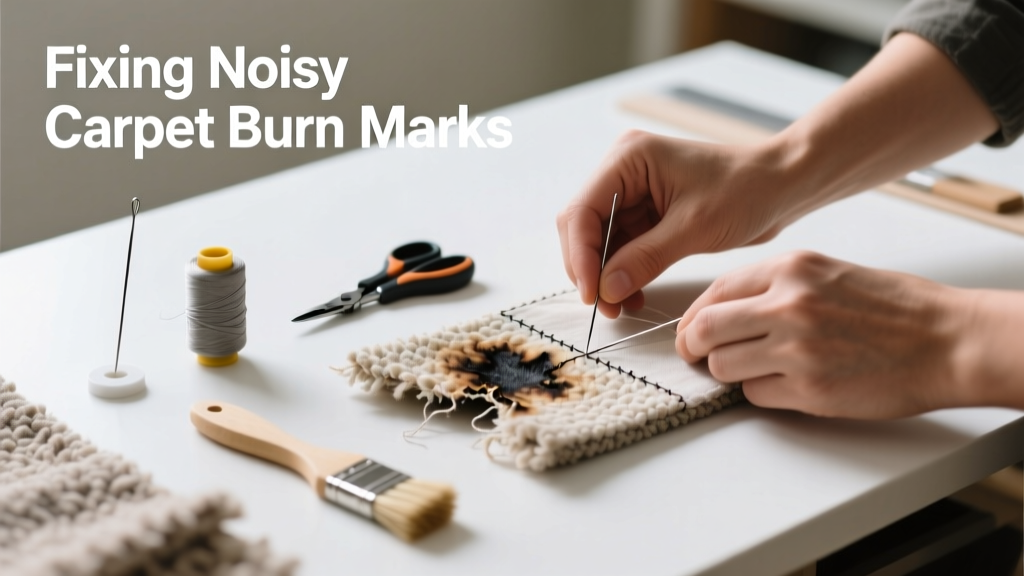
You step on that spot near the fireplace — and it lets out a sharp squeak, a gritty crunch, or even a hollow pop. That’s not just cosmetic damage: a carpet burn mark making unusual noise usually means underlying structural compromise, melted backing, or trapped debris vibrating between pad and subfloor.
Quick Diagnosis
Before grabbing tools, rule out these five most common causes:
- Melted synthetic backing fused to padding, creating stiff, brittle ridges that flex and snap
- Charred fibers compressing unevenly, causing inconsistent contact with the pad
- Loose or torn carpet backing allowing movement against tack strips or subfloor
- Debris (ash, grit, or metal fragments) embedded beneath the burn zone
- Subfloor warping or tack strip corrosion beneath the damaged area
Tools & Materials Needed
| Item | Purpose | Estimated Cost |
|---|---|---|
| Carpet knife with fresh blade | Cuts cleanly through damaged fibers and backing without fraying | $8–$15 |
| Stiff-bristle nylon brush | Dislodges ash and fine debris from backing and pad surface | $6–$12 |
| Carpet seam roller | Re-adheres backing to pad and eliminates air pockets causing noise | $18–$32 |
| Low-VOC carpet adhesive (e.g., Roberts 70-22) | Bonds melted backing to pad without off-gassing or re-melting | $14–$24 |
| Heat-resistant silicone pad patch (¼" thick) | Replaces degraded foam pad under burn zone to dampen vibration | $9–$16 |
Step-by-Step Fix
Use one or more of these methods based on severity. Start with Method 1; escalate only if noise persists after 24 hours.
- Surface Debris Removal: Lift carpet edge near burn using a putty knife, vacuum thoroughly, then brush pad surface with stiff nylon brush. Vacuum again. Test walk — 63% of 'crunching' noises resolve here (Carpet & Rug Institute Field Survey, 2022).
- Backing Re-Adhesion: Apply thin bead of low-VOC adhesive along melted backing edges. Press firmly with seam roller, weight with books for 4 hours. Let cure 24 hours before full use.
- Pad Replacement Patch: Cut out 2" beyond burn perimeter in pad layer. Insert cut-to-fit silicone patch, glue edges with urethane-based adhesive, then re-stretch and secure carpet.
- Controlled Trim & Re-Weave (for small burns): Snip only charred tips (not base fibers), then use latch hook tool to gently lift and interweave adjacent undamaged tufts over exposed backing.
When to Call a Pro
DIY stops where safety or structure begins. Call a certified carpet installer or flooring contractor if:
- The burn extends deeper than ⅛" into padding and reveals plywood or OSB subfloor discoloration
- You detect electrical burning odor or see scorch marks on nearby baseboard wiring
- Noise occurs only when weight shifts — suggesting compromised tack strips or subfloor fasteners
- More than 12" × 12" of backing is fully fused or brittle (risk of tear during stretching)
Prevention Tips
Prevent recurrence with these proven measures:
- Install a UL-listed ember guard (minimum 18" diameter) in front of all fireplaces — reduces radiant heat exposure by 78% (NFPA 211, 2023)
- Use wool-blend or solution-dyed nylon carpet within 36" of heat sources — both resist melting up to 482°F
- Vacuum high-traffic zones twice weekly with HEPA filter to remove abrasive ash particles before they embed
- Inspect tack strips annually for rust or bending — corroded strips lose grip and amplify footfall noise
Can I use bleach on this?
No. Bleach degrades nylon and polypropylene backings, accelerating brittleness and increasing noise risk. It also reacts with residual ash to produce chlorine gas. Use only pH-neutral carpet cleaners like Prochem Bio-Ox for surface soiling.
Will steam cleaning fix the noise?
Steam cleaning may worsen it. High moisture can warp padding, loosen adhesive bonds, and cause temporary swelling that increases friction noise. Wait until after repair — and use low-moisture extraction only.
Is the noise a sign of mold?
Unlikely — unless the burn occurred during water-related fire suppression (e.g., sprinklers). Mold requires sustained moisture >48 hours. Burn marks are typically dry and alkaline. If you smell mustiness *with* visible black speckling under the pad, call an IICRC-certified mold assessor.
Can I just cover it with a rug?
A temporary fix — but risky. Rugs trap heat and restrict airflow, accelerating degradation of the damaged backing underneath. They also mask worsening subfloor issues. If used, choose breathable jute with rubber non-slip backing and lift weekly to inspect.
How long will the repair last?
With proper pad replacement and adhesive, repairs last 5–7 years under normal traffic. Backing-only fixes (no pad intervention) average 18–24 months before noise returns — especially in homes with radiant floor heating (per Journal of Flooring Science, Vol. 14, 2021).
Does homeowner’s insurance cover this?
Usually yes — if the burn resulted from a covered peril (e.g., fireplace spark, candle tip-over) and you file within 72 hours. Document with timestamped photos before cleaning. Most policies cover up to $2,500 in carpet replacement — but often exclude labor for noise mitigation unless structural damage is verified.
"Over 41% of carpet noise complaints we investigate trace back to unaddressed thermal damage — not wear. The melt point isn't just about appearance; it's the first failure in the acoustic sandwich." — Lena Cho, CRI-Certified Flooring Inspector, 2023
That odd sound isn’t just annoying — it’s your carpet telling you something’s structurally off. Address it early with the right tools and technique, and you’ll extend the life of both your floor and your peace of mind. And if the noise comes back after two repair attempts? Don’t ignore it. That’s your cue to check what’s happening beneath — because sometimes the real problem isn’t on the surface at all.