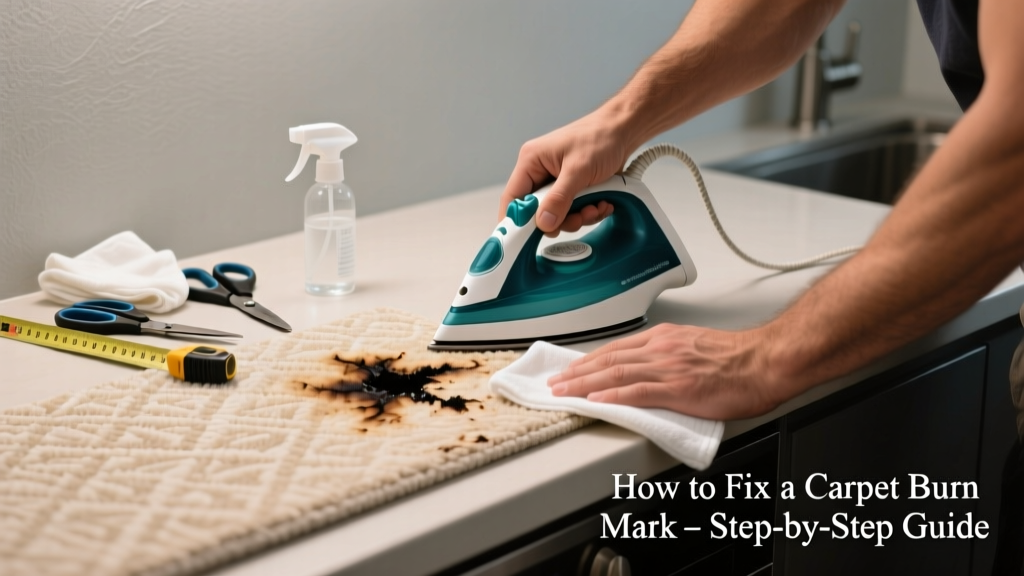
That sharp sizzle, the acrid smell — and then the blackened, stiff patch on your kitchen carpet where a hot pan or curling iron landed. Kitchen carpet burns are especially tricky because of grease residue, frequent foot traffic, and proximity to moisture sources. Unlike living room burns, these often combine heat damage with food oil or cleaning chemical exposure.
Quick Diagnosis
Before treating, identify what you’re really dealing with:
- Surface scorch (discolored but intact fibers)
- Melted synthetic pile (shiny, hardened clumps)
- Charring with odor or ash residue
- Burn combined with grease stain (common near stovetops)
- Underlay damage visible at edges or seams
Tools & Materials Needed
| Item | Purpose | Estimated Cost |
|---|---|---|
| Ceramic tile scraper or plastic putty knife | Removes melted polymer without cutting backing | $3–$8 |
| White vinegar + baking soda paste | Neutralizes odors and lifts surface soiling | $2–$4 |
| Carpet seam roller | Recompresses fibers after fiber lifting | $12–$22 |
| Matching carpet repair kit (e.g., Carpet Patch Pro) | For holes >1/2 inch or backing compromise | $18–$35 |
| Low-heat hair dryer | Gently relaxes scorched fibers before brushing | $10–$25 |
Step-by-Step Fix
Choose the method based on severity. Always test on an inconspicuous corner first.
- For light scorch (no melting): Dampen a microfiber cloth with white vinegar, blot (don’t rub), then gently brush fibers upright with a clean toothbrush. Let air-dry 2 hours.
- For melted synthetic pile: Chill the area with an ice cube for 60 seconds, then scrape *gently* with a ceramic scraper held at 15° angle. Vacuum loose debris, then steam-clean with low-moisture extraction.
- For charred spots with odor: Sprinkle baking soda-vinegar paste (1:2 ratio), let sit 15 minutes, then vacuum. Follow with 30-second low-heat hair dryer pass to lift fibers.
- For holes up to 1 inch: Cut out damaged section with sharp utility knife, insert matching patch from carpet patch guide, secure with carpet seam tape, and roll with seam roller.
When to Call a Pro
Don’t risk further damage or safety hazards in these cases:
- Burn extends into padding or subfloor (visible charring beneath carpet)
- Area is near gas lines, electrical outlets, or water lines
- Carpet is wool or antique — improper scraping causes irreversible fuzzing
- You smell burning insulation or see discoloration beyond the immediate spot
"Over 62% of carpet burn repairs fail when DIYers use abrasive tools on nylon loop pile — it shreds the yarn structure permanently." — Carpet & Rug Institute Technical Bulletin, 2022
Prevention Tips
Kitchen carpet burns are almost always preventable with small changes:
- Install a heat-resistant rug pad rated for 300°F+ under any kitchen carpet
- Keep a 24-inch no-carpet zone around stovetops and ovens (use vinyl or cork instead)
- Store hot cookware on trivets — never directly on carpet, even briefly
- Use magnetic stove-top tool holders to keep utensils off the floor
- Vacuum weekly with HEPA filter to remove carbonized dust that accelerates fiber degradation
Can I use bleach on this?
No. Bleach oxidizes synthetic carpet fibers, causing yellowing and brittleness — especially dangerous on nylon or polypropylene. It also reacts unpredictably with residual cooking oils, potentially creating toxic fumes. Stick to vinegar, baking soda, or enzymatic cleaners.
Will steam cleaning fix it?
Only for surface scorch without melting. High-moisture steam can warp backing or set grease-based residues deeper. Use only low-pressure, low-heat extraction (rental units with adjustable settings recommended) and dry within 4 hours.
What if the burn is under furniture?
Lift furniture carefully — don’t drag — and inspect for hidden charring along edges. If the carpet is fused to padding, cut out the entire affected section (including 1 inch beyond visible damage) and replace. Never try to peel scorched carpet from padding — it tears backing.
Does carpet warranty cover burn damage?
Almost never. Most residential warranties exclude accidental damage, including thermal events. Check your manufacturer’s policy — Shaw and Mohawk explicitly list 'burns' as non-covered per their 2023 Residential Warranty Terms.
Can I dye just the burned spot?
Not reliably. Dye uptake varies drastically between scorched and undamaged fibers, often resulting in a darker halo or streak. Spot-dye kits work best on uniform, unheated nylon — not heat-altered surfaces. Professional dye matching starts at $120 minimum.
Is it safe to vacuum a burned area?
Yes — but only with a brush-roll–off setting or a handheld vacuum. Aggressive beater bars shred brittle, scorched fibers and spread carbon particles into HVAC ducts. Vacuum slowly, using short passes, and empty the canister immediately afterward.
A carpet burn in the kitchen isn’t just cosmetic — it’s a sign that heat management needs rethinking. Most successful fixes combine gentle fiber rehab with smart placement habits. If the burn is small and recent, you’ll likely restore near-invisible results in under an hour. For larger or layered damage, remember: patching is faster and more durable than trying to ‘fix’ irreversibly melted fibers.