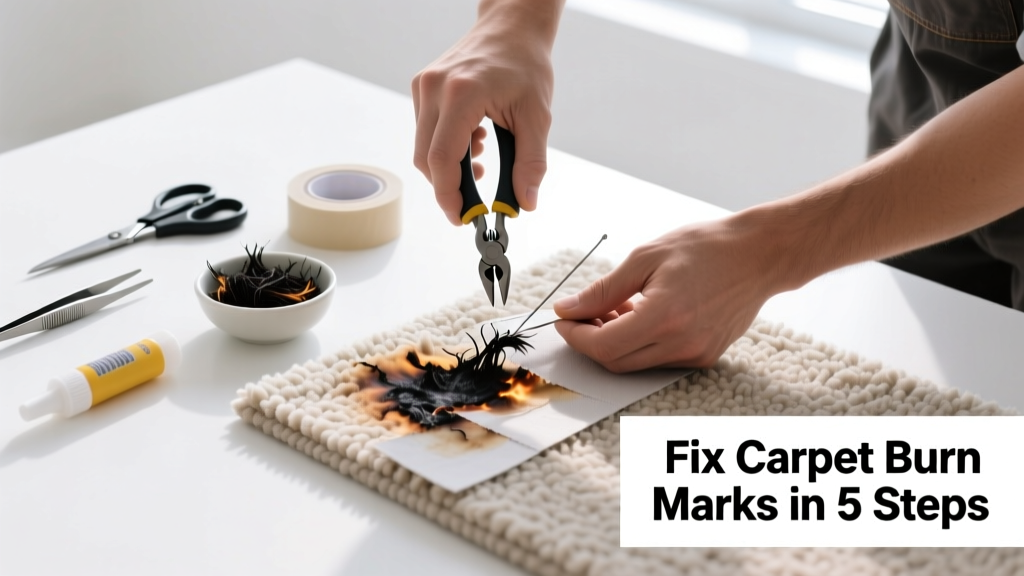
That sharp smell, the blackened fibers, the sinking feeling — a carpet burn mark is both unsightly and stressful. Whether it’s from a dropped cigarette, a hot curling iron, or a forgotten space heater, quick action can mean the difference between repair and replacement. Most minor burns are fixable in under an hour with household items and basic tools.
Quick Diagnosis
Burn marks on carpet vary by heat source and exposure time. Identifying the cause helps choose the right fix:
- Cigarette or cigar ash — small, circular, surface-level charring with brittle fibers
- Curling iron or flat iron — elongated, shiny, melted synthetic fibers (common in polyester or nylon)
- Space heater or stove burner — large, irregular scorch with fused or discolored backing
- Fireplace ember or spark — scattered black specks with surrounding discoloration
Tools & Materials Needed
| Item | Purpose | Estimated Cost |
|---|---|---|
| Razor blade or utility knife | Cuts away charred fibers without damaging surrounding pile | $3–$8 |
| Fine-grit sandpaper (220+) | Gently abrades melted residue and smooths edges | $2–$5 |
| Carpet adhesive (e.g., Roberts 3030) | Bonds replacement fibers or patches securely | $8–$12 |
| Matching carpet scrap (1″×1″ minimum) | Source for invisible patching; must match fiber type and dye lot | Free (from closet edge) or $0–$25 |
| White vinegar + water (1:1) | Neutralizes alkaline soot residue and deodorizes | $1–$3 |
Step-by-Step Fix
Choose the method based on severity. Always test on an inconspicuous area first:
- Surface Char Removal: Use tweezers to gently pluck loose blackened tips. Then scrape lightly with a razor held at a 15° angle — never press down hard.
- Melted Fiber Smoothing: Rub the affected spot with fine sandpaper in circular motions until the glossy melt layer dulls. Vacuum thoroughly afterward.
- Patch Method (for holes or deep burns): Cut out the damaged section with a straight-edge ruler and utility knife. Cut a matching scrap slightly larger, then trim it flush using the removed piece as a template. Apply adhesive to the backing, press firmly, and weigh down with books for 4 hours.
- Steam & Brush Revival (nylon only): Hold a garment steamer 2 inches above the area for 10 seconds, then brush upright with a stiff-bristled carpet brush. Repeat twice — this reorients heat-damaged fibers.
When to Call a Pro
DIY isn’t safe or effective in these scenarios:
- The burn penetrates through the carpet backing into the padding or subfloor
- You see bubbling, warping, or smoke residue beyond the visible mark — possible hidden fire damage
- The carpet is wool or high-end solution-dyed nylon; improper treatment causes irreversible color shift
- More than 6 inches of carpet is compromised — patching becomes visibly obvious
According to the Insurance Institute for Business & Home Safety's 2023 report, 22% of residential carpet replacements stem from mismanaged thermal damage repairs — often due to aggressive scraping or solvent use.
Prevention Tips
- Keep curling irons and soldering tools on ceramic or metal stands — never on carpet or rugs
- Use flame-retardant rug pads under area rugs near fireplaces or heaters
- Install outlet covers with auto-shutoff timers for space heaters
- Vacuum weekly with a low-suction setting to remove embedded ash before it heats up
Can I use bleach on this?
No. Bleach oxidizes synthetic fibers and accelerates yellowing, especially in nylon and polypropylene. It also weakens the backing adhesive. Stick to white vinegar for odor control — it’s pH-balanced and non-corrosive.
Will a carpet cleaner machine fix it?
No. Hot-water extraction machines don’t reverse thermal damage — they may even set melted polymers deeper into the backing. These units are designed for soil removal, not fiber restoration.
What if the burn smells like plastic?
That indicates melted synthetic backing (often latex or styrene-butadiene). Ventilate the room, then vacuum with a HEPA filter. Avoid solvents — they’ll dissolve the glue holding your carpet together. Patching is the only reliable fix.
Can I dye over the burn mark?
Rarely. Carpet dyes require precise pH, temperature, and fiber compatibility. Over-the-counter kits rarely match factory dye lots and often bleed or fade unevenly. A professional dye technician charges $150–$300 — usually more than a small patch.
Is burnt carpet a fire hazard after repair?
Not if fully repaired. But if charring extends into padding, that foam layer can reignite from residual embers or static discharge. The U.S. Fire Administration recommends replacing padding beneath any burn larger than a quarter.
How long does a patch last?
A properly installed patch lasts 5–7 years under normal foot traffic. Its lifespan drops to 1–2 years in high-traffic zones like hallways unless you reinforce with a stair runner or area rug — learn how to replace padding correctly.
Most carpet burn marks don’t need full replacement — they just need calm assessment and the right technique. If your repair holds up for a week with no fraying or discoloration spreading, you’ve likely restored both function and appearance. For stubborn cases, consider deep-cleaning prep before patching or consulting a certified IICRC technician — their color-matching tools and seam-sealing irons make patches nearly invisible.