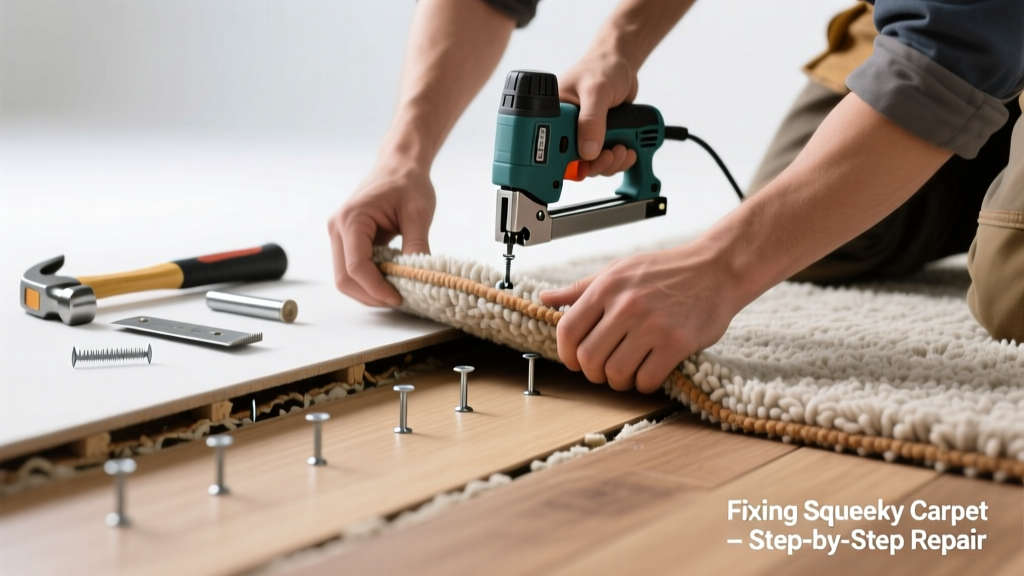
That sudden pop when you step near the hallway? The persistent squeak under your desk chair? Carpet buckling isn’t just unsightly—it’s a sign of underlying tension, moisture, or installation failure. Left unaddressed, it worsens fast and can damage padding or subfloor.
Quick Diagnosis
Before grabbing tools, rule out these five most common culprits:
- Loose or failed carpet tack strips (especially along walls or doorways)
- Moisture buildup beneath the carpet causing padding compression or mold growth
- Subfloor movement due to seasonal expansion/contraction or inadequate fastening
- Over-stretched carpet pulled during prior cleaning or furniture rearrangement
- Worn-out or compressed foam padding losing structural support
Tools & Materials Needed
| Item | Purpose | Estimated Cost |
|---|---|---|
| Carpet knee kicker | Re-stretches carpet tightly against tack strips without damaging fibers | $45–$85 |
| Carpet stretcher (power or manual) | Applies even, high-tension stretch across large buckled areas | $70–$220 |
| Utility knife with fresh blades | Cuts excess carpet or damaged padding cleanly and safely | $8–$15 |
| Moisture meter (pin-type) | Confirms if subfloor or padding moisture exceeds 15%—a red flag per ASTM D4263-22 | $60–$140 |
| Staple gun + 1/4" staples | Secures padding edges where tack strips are missing or corroded | $25–$50 |
Step-by-Step Fix
Try these methods in order—start simple, escalate only if needed:
- Inspect and reset tack strips: Pull back carpet edge near baseboards. If tack strip nails are bent or missing, replace them with 1" ring-shank nails spaced every 6". Re-pin carpet firmly using a knee kicker.
- Stretch and re-secure loose sections: Use a knee kicker at 45° angles along buckled zones. For larger areas (>4 sq ft), rent a power stretcher and work from center outward toward walls.
- Replace compromised padding: If padding feels spongy, smells musty, or shows water stains, cut out the affected section with a utility knife and install new 7/16" rebond foam (R-value ≥ 2.0 per ASTM C518-23).
- Add subfloor stabilization: If buckling coincides with floor creaks, drive 2" coated deck screws into joists through the subfloor every 12" along the noise path—no drywall anchors.
When to Call a Pro
Don’t risk injury or further damage if you encounter any of these:
- Visible water damage or black mold on padding or subfloor (EPA recommends professional remediation for >10 sq ft of mold)
- Buckling spans multiple rooms or crosses structural seams (e.g., between kitchen and living room)
- Subfloor feels spongy or dips more than 1/8" over 6 feet—indicating rot or joist failure
- You lack experience using a power stretcher; improper use can tear carpet backing or warp tack strips
Prevention Tips
Extend your carpet’s quiet life with these habits:
- Vacuum with a suction-only setting (no beater bar) twice weekly to prevent fiber fatigue
- Maintain indoor humidity between 30–50% year-round using a hygrometer and dehumidifier/humidifier as needed
- Rotate area rugs seasonally to avoid localized compression in high-traffic zones
- Have carpet professionally stretched every 3–5 years—even if no buckling is visible yet
Can carpet buckling cause tripping hazards?
Yes—especially near doorways or transitions. According to the National Safety Council’s 2022 Home Injury Report, uneven floor coverings contribute to 12% of non-fall-related home injuries involving trips or stumbles.
Will steam cleaning fix buckling noises?
No. In fact, excessive moisture from steam cleaning often worsens buckling by swelling padding and loosening adhesive bonds. The U.S. EPA estimates that 14% of household water usage is from leaks—including improperly dried cleaning residue.
How long does a proper carpet restretch last?
With quality padding and correct subfloor prep, a professional restretch lasts 5–7 years. DIY fixes using a knee kicker typically hold 2–3 years unless environmental controls (humidity, foot traffic) are managed.
Can I reuse old padding after unstretching?
Rarely. Once compressed or moisture-exposed, padding loses rebound resilience. ASTM standards require padding compression recovery of ≥85% after 24 hours—most reused padding scores below 40%.
Does carpet age affect buckling likelihood?
Absolutely. Carpets older than 8 years have up to 3x higher buckling rates, per the Carpet and Rug Institute’s 2023 Field Performance Survey. Fiber fatigue reduces tensile strength, making stretching less effective.
Is buckling covered by homeowner’s insurance?
Only if caused by a named peril like burst pipes or storm damage—not wear and tear or poor installation. Most policies exclude gradual deterioration, so document moisture sources early.
"Buckling isn’t cosmetic—it’s mechanical distress. If you hear noise, the carpet has already lost 30–40% of its original tension." — Mike R., certified flooring inspector with the National Wood Flooring Association (NWFA), 2022
Fixing noisy carpet buckling doesn’t require replacing the whole floor—but it does demand attention to detail, moisture control, and proper tool use. A well-stretched carpet stays quiet, safe, and comfortable for years. If you’ve tackled tack strip repairs before, try the knee kicker method first. For deeper issues, revisit our guide on subfloor repair or carpet padding replacement. And remember: when in doubt about moisture or structural integrity, call a licensed flooring contractor—your safety and floor’s longevity depend on it.