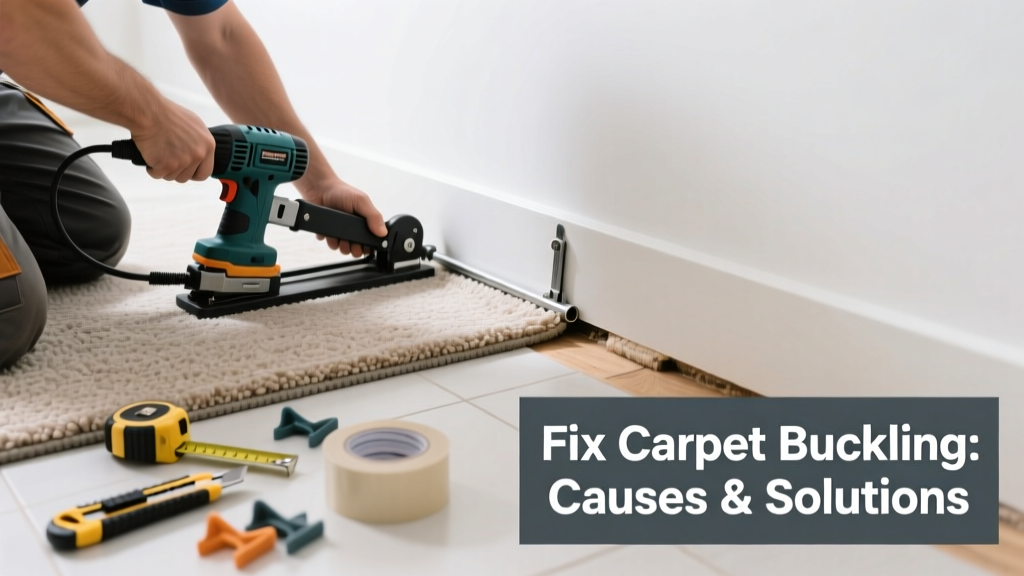
Carpet buckling in the bathroom isn’t just unsightly—it’s a red flag for moisture damage, improper installation, or structural issues beneath the floor. Unlike buckling in dry areas, bathroom carpet distortion often signals hidden water intrusion or subfloor warping. Ignoring it risks mold growth, slip hazards, and irreversible padding deterioration.
Quick Diagnosis
Before grabbing tools, identify the root cause. Most bathroom carpet buckling stems from one or more of these:
- Moisture trapped under the carpet or padding (from leaks, poor ventilation, or steam)
- Subfloor swelling or cupping due to chronic humidity exposure
- Carpet installed without proper stretching or tackless strip anchoring
- Expansion gap missing or blocked along baseboards or doorways
- Water-damaged or compressed padding losing structural support
Tools & Materials Needed
| Item | Purpose | Estimated Cost |
|---|---|---|
| Carpet stretcher (knee kicker or power stretcher) | Re-tensions carpet over damp or uneven subfloor | $45–$120 |
| Utility knife with fresh blades | Cuts away saturated padding or damaged carpet edges | $8–$15 |
| Moisture meter (pin-type) | Measures subfloor and padding moisture content (ideal: <12% MC) | $60–$180 |
| Dehumidifier (50+ pint/day capacity) | Dries subfloor and air before reinstallation | $150–$300 |
| Replacement synthetic carpet padding (25% rubber, 75% foam) | Resists moisture better than standard rebond; meets ASTM D1777-22 standards | $25–$45 per 30 sq ft |
Step-by-Step Fix
Choose the method that matches your diagnosis and severity. Start with moisture testing—never stretch carpet over wet surfaces.
- Test moisture levels: Use a pin-type moisture meter on the subfloor, padding, and carpet backing. If subfloor reads >15% MC, stop and dry first (see our dehumidifier setup guide).
- Remove affected padding: Cut out all padding showing discoloration, compression, or odor. Discard completely—do not reuse.
- Stretch and re-anchor: Use a knee kicker to re-stretch carpet toward walls, then secure with new tackless strips if original ones are corroded or loose. Leave a 1/4" expansion gap at all walls.
- Install moisture-resistant padding: Lay new 7/16" synthetic padding with vapor barrier facing up. Avoid latex-backed options—they delaminate in high-humidity zones.
- Seal perimeter gaps: Apply mildew-resistant silicone caulk (e.g., GE Advanced Silicone II) where carpet meets tub/shower threshold to limit steam infiltration.
When to Call a Pro
DIY fixes fail—and become unsafe—when:
- Subfloor feels spongy or deflects under foot pressure (indicates rot or structural failure)
- Mold is visible on subfloor or behind baseboards (EPA recommends professional remediation for >10 sq ft of mold)
- Buckling recurs within 72 hours after drying and re-stretching
- Your home was built before 1978 and you discover deteriorating adhesive or asbestos-containing padding (testing required before removal)
According to the Insurance Institute for Business & Home Safety's 2023 report, 68% of bathroom carpet failures involve undetected subfloor moisture—and half of those require subfloor replacement, not just surface repair.
Prevention Tips
Long-term stability depends on controlling the environment—not just the carpet:
- Run your bathroom exhaust fan for 20 minutes after every shower (not just during); upgrade to a timer switch if yours lacks one.
- Replace carpet with waterproof luxury vinyl plank (LVP) in full-bathrooms—our flooring comparison shows LVP lasts 3× longer than carpet in wet zones.
- Inspect supply lines and shutoff valves quarterly for slow leaks (the U.S. EPA estimates 14% of household water usage is from leaks).
- Use a hygrometer to monitor relative humidity—keep it below 55% year-round to prevent padding degradation.
Can I use bleach on the buckled carpet to kill mold?
No. Bleach only kills surface mold spores and doesn’t penetrate padding or backing where mold roots thrive. It also degrades nylon fibers and accelerates carpet breakdown. Instead, discard affected padding and treat subfloor with Concrobium Mold Control (EPA-registered, non-toxic, no rinsing required).
Will a steam cleaner fix the buckle?
Steam cleaning worsens buckling. Heat and moisture swell carpet backing and padding, increasing tension loss. Wait until the area is fully dried (48+ hours with dehumidifier + fans) before attempting any re-stretch.
Is carpet even allowed in bathrooms by code?
The International Residential Code (IRC R302.2.1, 2021 edition) doesn’t ban carpet—but requires flooring in bathrooms to be ‘non-porous’ or ‘cleanable’. Most local inspectors reject carpet in full baths unless it’s part of an approved moisture-managed system (e.g., perforated pad + sealed perimeter + dedicated HVAC vent). Half-baths are more lenient.
How long does it take for padding to dry after a small spill?
Standard rebond padding holds moisture for 72–96 hours in a typical bathroom. Even with fans running, internal RH stays >80% for over 3 days—enough time for mold to colonize. Synthetic moisture-resistant padding dries in ~24 hours with active dehumidification.
Can I glue down the buckled edges instead of re-stretching?
Temporary gluing (e.g., carpet seam tape or spray adhesive) fails within days in humid environments. Adhesives soften, yellow, and lose bond strength above 75°F and 60% RH. Re-stretching with proper tools is the only lasting fix.
What’s the best carpet fiber for bathrooms if I must keep it?
Nylon 6,6 with antimicrobial treatment (e.g., Antron Lumena) withstands humidity better than polyester or olefin. But even premium nylon fails without proper subfloor prep and ventilation—so prioritize environmental controls over fiber choice.
Carpet in bathrooms is inherently high-maintenance, but buckling doesn’t have to mean immediate replacement. With precise moisture control, the right padding, and disciplined stretching technique, many installations can be restored safely. Still, if your bathroom sees daily steam exposure or has poor airflow, consider upgrading to a truly moisture-resilient floor—it’ll save you time, health risk, and money over the next decade.