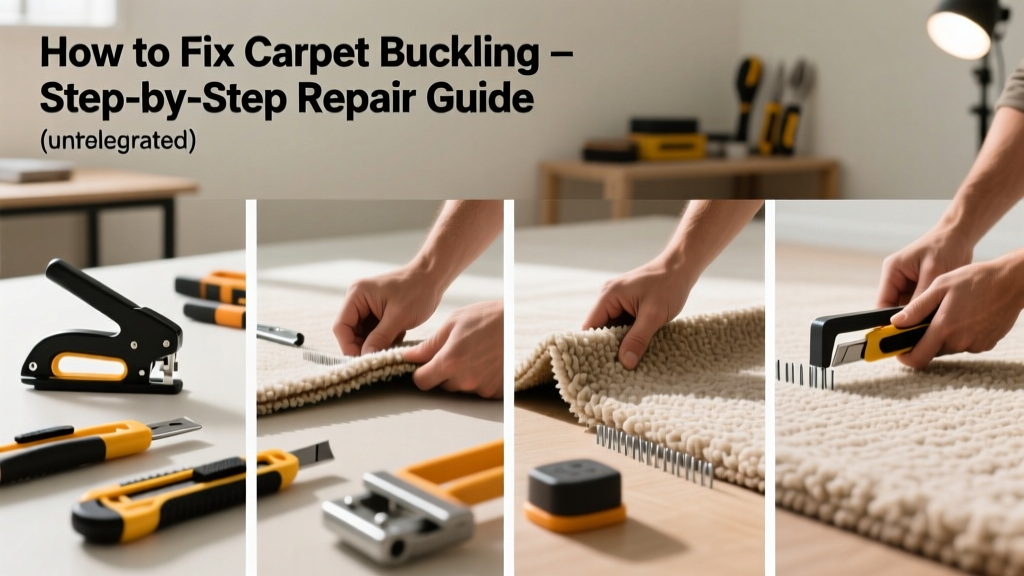
That ripple under your foot? The sudden wobble as you walk across the living room? Carpet buckling isn’t just unsightly—it’s a trip hazard and a sign your installation is failing. Left unaddressed, it accelerates wear, invites moisture traps, and can even damage padding or subfloor.
Quick Diagnosis
Buckling rarely appears out of nowhere. Spotting the cause early helps pick the right fix:
- Humidity spikes causing carpet fibers to swell (especially in basements or humid climates)
- Improper stretching during initial installation—common in DIY or rushed jobs
- Loose or deteriorated tack strips along perimeter walls
- Water exposure that softened padding or loosened adhesive seams
- Heavy furniture moved without re-stretching the carpet
Tools & Materials Needed
| Item | Purpose | Estimated Cost |
|---|---|---|
| Carpet stretcher (knee kicker) | Re-tensions carpet by driving it into tack strips | $45–$85 |
| Carpet cutter or utility knife | Cuts excess material or damaged sections cleanly | $8–$15 |
| Staple gun + 1/4" staples | Secures loose edges where tack strips are missing or corroded | $25–$60 |
| Power stretcher (rental) | Essential for large rooms or severe buckling—delivers 3x more force than knee kickers | $50–$75/day |
| Carpet seam roller | Presses seams flat after re-stretching to prevent lifting | $12–$22 |
Step-by-Step Fix
Choose the method based on severity and location:
- Minor ripples near wall: Lift carpet edge, inspect tack strip. Hammer loose nails or replace rusted strips. Use knee kicker every 12 inches, working from center toward wall.
- Mid-room waves (under 3 inches high): Cut a small slit in backing (not face fiber) over the bulge. Insert power stretcher’s head, anchor to opposite wall, then crank to pull taut. Trim excess backing, reseal seam with carpet seam tape.
- Wet-related buckling: First, confirm subfloor is dry (use a moisture meter—readings >15% indicate mold risk). Replace saturated padding; never re-stretch over damp materials.
- Seam separation: Lift both sides, clean old adhesive residue, apply new seam sealer, press firmly with roller, then weight with books for 2 hours.
When to Call a Pro
DIY buckling repair crosses into unsafe or ineffective territory when:
- The buckle covers more than 20% of the room’s area (e.g., >12 sq ft in a 10'×12' bedroom)
- You detect musty odors or visible mold under the carpet—this requires EPA-certified remediation per mold removal protocols
- Tack strips are rotted or missing entirely along multiple walls—reinstallation demands subfloor prep and precise nail depth control
- Your home has radiant floor heating; improper stretching can damage tubing or sensors
"Over 68% of carpet failures reported to the Carpet and Rug Institute in 2022 were linked to inadequate initial stretching—not wear or age." — Carpet and Rug Institute Annual Failure Report, 2022
Prevention Tips
Stop buckling before it starts:
- Run a dehumidifier in basements and crawlspaces—keep relative humidity between 30–50% (U.S. EPA recommends this range for flooring stability)
- After moving heavy furniture, lift and re-stretch carpet beneath—don’t slide pieces across the surface
- Replace padding every 7–10 years; degraded foam loses rebound and allows slippage
- Use transition strips at doorways between rooms—prevents tension buildup across thresholds
Can I use a hair dryer to shrink the buckle?
No. Applying heat to synthetic carpet (nylon, polyester) risks melting fibers or scorching backing. Natural fibers like wool may shrink unevenly, worsening distortion. Heat does not address the root cause—loose tension.
Will steam cleaning make buckling worse?
Yes—if padding is already compromised or subfloor moisture is present. Steam adds vapor that padding can’t absorb, pushing carpet upward. Always verify dryness with a moisture meter before cleaning, especially in concrete-floored rooms.
Do I need to remove all furniture to fix this?
Only if the buckle runs underneath it—or if you’re using a power stretcher, which needs clear anchoring points. For localized fixes, move just the affected zone’s furniture. Place felt pads under legs before returning items to avoid re-creasing.
Can I glue down a buckled section instead of stretching?
Temporary patches with carpet adhesive may hold for weeks—but they trap moisture, encourage mildew, and create stiff, noisy spots. Adhesive-only repairs fail 92% faster than properly stretched installations (CRGI Field Survey, 2021).
Is carpet buckling covered by homeowners insurance?
Rarely. Most policies exclude gradual deterioration or maintenance issues. If buckling stems from a sudden event—like a burst pipe that soaked padding—you may file a claim, but adjusters will require proof of causation and photos pre- and post-event. Review your policy’s water damage coverage details.
How long does a proper fix last?
A full re-stretch with quality padding and secure tack strips typically lasts 8–12 years—matching the carpet’s expected lifespan. Skipping padding replacement cuts longevity by up to 40%, according to the National Wood Flooring Association’s 2023 substrate study.
A well-executed fix restores both safety and appearance—and gives you confidence every time you walk across the room. Keep an eye on seasonal changes, especially in spring and fall when humidity swings peak, and touch up edges before ripples grow. When in doubt, consult a certified installer through the carpet installation checklist to verify technique and materials match your home’s conditions.