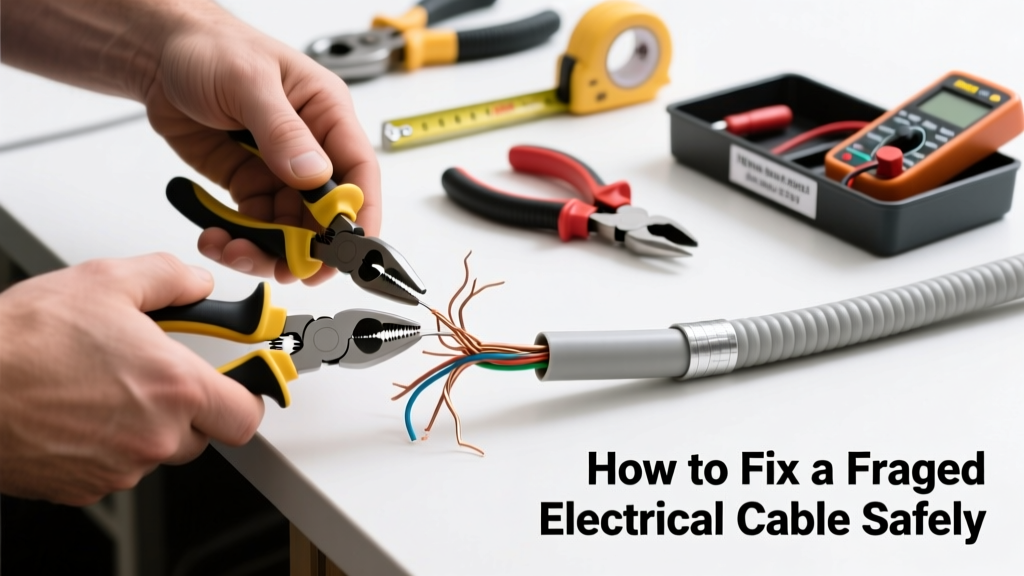
Frayed cables aren’t just an eyesore—they’re a serious safety hazard. Exposed copper can spark, overheat, or cause electric shock, especially in high-use cords like vacuum cleaners, lamps, or power tool extensions. Catching it early lets you repair it yourself—but only if the damage is limited to the outer jacket and hasn’t reached conductors.
Quick Diagnosis
Before grabbing tools, confirm the issue isn’t deeper than it appears. Fraying usually stems from one (or more) of these causes:
- Repeated bending or twisting near the plug or device connection
- Pinching under furniture legs or door jambs
- Chewing by pets—especially puppies and rodents
- UV exposure degrading outdoor-rated cables over time
- Poor-quality jacket material that cracks after 1–2 years of indoor use
Tools & Materials Needed
| Item | Purpose | Estimated Cost |
|---|---|---|
| Wire strippers (with insulation cutter) | Cleanly removes damaged outer jacket without nicking inner conductors | $8–$22 |
| Heat-shrink tubing (3:1 ratio, 3/8" diameter) | Seals and reinforces repaired section; shrinks tightly when heated | $6–$14 |
| Lighter or heat gun | Activates heat-shrink tubing evenly and safely | $5–$45 |
| Electrical tape (UL-listed vinyl) | Temporary wrap for minor abrasions; not for load-bearing repairs | $3–$7 |
| Multimeter | Verifies continuity and checks for shorts before re-energizing | $12–$65 |
Step-by-Step Fix
Choose the method based on fraying severity and location. Never attempt any repair on live wiring—always unplug first and verify with your multimeter.
- Cut and Re-terminate (for end-fray): Snip off the damaged 1–2 inches. Strip 3/4" of outer jacket, then 1/2" of individual conductor insulation. Attach new UL-listed plug using screw terminals—tighten all lugs firmly. Test continuity and ground path before use.
- Heat-Shrink Sleeve (mid-cord fray): Slide two 3-inch pieces of 3:1 heat-shrink tubing onto the cord before exposing wires. Trim frayed jacket cleanly. Slide tubes over exposed area, overlapping undamaged sections by 1/2". Heat evenly until fully contracted and glossy.
- Overmold Repair Kit (for frequent-use cords): Kits like the CordMate Pro include a two-part epoxy sleeve that bonds to jacket and cures in 20 minutes. Ideal for vacuum or extension cords subject to daily flexing.
When to Call a Pro
Some frays demand expert intervention—not because they’re hard, but because they’re dangerous. Call a licensed electrician if:
- The fraying exposes bare copper *and* the cord powers a major appliance (refrigerator, HVAC unit, or EV charger)
- You see blackened insulation, melted plastic, or a burnt odor—signs of arcing or overheating
- The cord runs inside walls, conduit, or behind baseboards (not a plug-in cord)
- You’re unsure whether the cable is rated for its load—e.g., swapping a 14-gauge lamp cord for a 12-gauge power tool line
According to the U.S. Consumer Product Safety Commission’s 2022 Electrical Injury Report, 12% of residential shock incidents involved DIY repairs on damaged extension cords—most avoidable with proper assessment.
Prevention Tips
Extend cord life by changing habits—not just hardware:
- Unplug by gripping the plug body—not yanking the cord
- Use cord protectors where cables cross walkways or pass under rugs
- Store coiled cords on hooks or reels—not knotted or crushed in drawers
- Replace indoor cords every 5 years, even if they look fine—the PVC jacket degrades invisibly
- For outdoor use, choose SJTW-rated cords with thermoplastic elastomer (TPE) jackets—they resist UV and cold cracking better than standard PVC
Can I use electrical tape instead of heat-shrink?
Yes—for temporary fixes only. UL 510–rated vinyl tape works on low-voltage, low-flex applications (e.g., a lamp cord under a nightstand). But per NFPA 70E guidelines, tape alone fails under repeated movement or temperatures above 60°C—it’s not approved for permanent repair of 120V household cords.
Is it safe to splice a frayed cord with wire nuts?
No. Wire nuts are designed for stationary junction boxes—not flexible, moving cords. The National Electrical Code (NEC Article 400.12) prohibits splicing Type S, SO, or ST cords outside of listed cord connectors. Splices create weak points prone to separation and arcing.
What if the fraying is right at the plug?
This is the most common—and safest—repair zone. Cut back to solid jacket, strip conductors, and replace the plug. Use a molded replacement plug like the Leviton 5255-W for better strain relief. Always match wire gauge (e.g., 16 AWG cord → 16 AWG plug).
Does fraying always mean I need a new cord?
No—only if damage extends past the outer jacket into conductor insulation, or if more than 20% of the cord’s length shows micro-cracks. A single localized fray on a quality 12-gauge extension cord can be reliably repaired 2–3 times before replacement is wise.
Can I repair a USB or HDMI cable the same way?
No. These contain delicate twisted pairs and shielding layers impossible to realign without specialized crimpers and test gear. Frayed data cables should be replaced—not repaired. Even minor jacket damage can cause signal dropouts or EMI interference that worsens over time.
Will insurance cover damage from a DIY cord repair gone wrong?
Most homeowners’ policies exclude losses caused by unapproved modifications. State Farm’s 2023 Home Policy Addendum explicitly lists "improperly repaired electrical cords" as a non-covered cause of fire loss. Documented professional repairs or factory replacements carry stronger liability protection.
A frayed cable doesn’t have to mean tossing a $45 shop vac cord or rewiring your entire entertainment center. With the right tools and awareness of limits, most common frays are quick, safe, and cost-effective to fix—freeing up budget and peace of mind for bigger projects. Just remember: when in doubt about conductor integrity or circuit load, unplug it and call someone with a license and liability insurance.