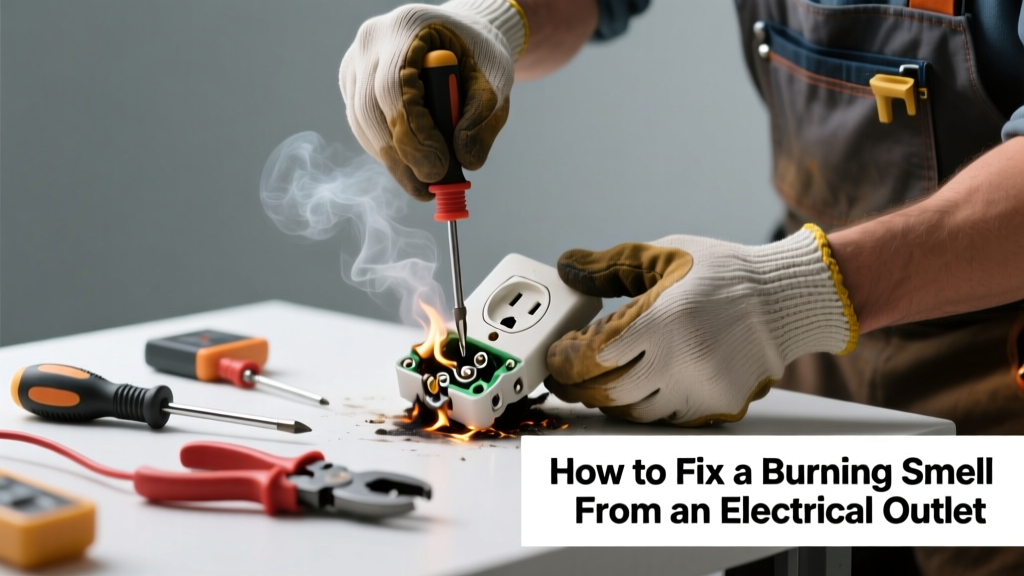
If you catch a sharp, acrid, or fishy odor near an outlet—especially one that smells like hot plastic or burnt toast—stop using it immediately. That smell is your home’s early warning system: something inside the outlet is overheating, arcing, or failing. Ignoring it risks fire, shock, or permanent circuit damage.
Quick Diagnosis
Most burning smells trace back to one of these four causes:
- Loose or corroded wire connections at the terminal screws
- Overloaded circuit powering too many high-wattage devices
- Internal outlet failure (cracked housing, worn contacts, or melted plastic)
- Dimmer switch or GFCI/AFCI device malfunctioning under load
Tools & Materials Needed
| Item | Purpose | Estimated Cost |
|---|---|---|
| Voltage tester (non-contact) | Confirms power is off before touching wires | $12–$25 |
| Insulated screwdriver set | Tightens terminal screws without risking shock | $18–$32 |
| 15-Amp tamper-resistant outlet (TR) | Modern replacement meeting NEC 2023 safety standards | $2.50–$4.99 |
| Wire strippers | Cleans insulation without nicking copper | $10–$22 |
| Needle-nose pliers | Helps bend and secure pigtail loops | $8–$15 |
Step-by-Step Fix
Follow these methods in order—only proceed if power is confirmed OFF and you’re comfortable working inside junction boxes:
- Turn off power at the breaker — Locate the correct circuit breaker (test with non-contact tester), flip it OFF, and tape it shut with warning tape.
- Remove faceplate and outlet — Unscrew the cover, then carefully pull the outlet from the box. Look for discoloration, bubbling, or melted plastic on terminals or housing.
- Inspect and tighten connections — Check all wire nuts and terminal screws. If wires are loose, stripped, or show green corrosion, cut and re-strip ½" of insulation; wrap clockwise around screw and tighten firmly.
- Replace outlet if damaged — Even minor scorch marks mean internal arc damage. Install a new TR outlet rated for your circuit’s amperage (15A or 20A). Never reuse old mounting screws—they fatigue.
- Test before restoring power — Reinstall faceplate, restore breaker, and verify operation with a lamp and outlet tester. If the smell returns within minutes, stop and call a pro.
When to Call a Pro
Do not attempt DIY repair if any of these apply:
- You see charring, black soot, or melted Romex sheathing inside the wall box
- The breaker trips repeatedly—even after replacing the outlet
- Multiple outlets in the same room smell or spark
- Your home has aluminum wiring (common in homes built 1965–1973) — improper handling can cause fires
- You lack a working voltage tester or feel uncertain about identifying hot/neutral/ground wires
According to the U.S. Fire Administration’s 2022 report, electrical distribution equipment—including outlets and switches—accounted for 17% of home structure fires involving wiring, with improper installation and aging components cited as top contributors.
Prevention Tips
Extend outlet life and reduce risk with these habits:
- Use only UL-listed power strips with built-in surge protection—not daisy-chained extensions
- Avoid plugging space heaters, microwaves, or hair dryers into the same circuit as other high-load devices
- Replace outlets every 15 years—even if they seem fine—since internal contacts wear out silently
- Install AFCI breakers in bedrooms and living areas; they detect dangerous arcs before heat builds
Can a burning smell mean the wiring behind the wall is damaged?
Yes—especially if the smell persists after replacing the outlet or appears near multiple devices on the same circuit. Melted insulation or compromised NM cable sheathing can smolder inside walls without visible signs. This requires thermal imaging or infrared inspection by a licensed electrician.
Is it safe to keep using the outlet after the smell stops?
No. A brief burning odor indicates irreversible thermal damage to internal contacts or insulation. Continuing use invites carbon tracking—a conductive path that escalates arcing and fire risk. The outlet must be replaced, and the circuit inspected.
Why does my GFCI outlet smell like fish?
A fishy odor often signals overheating of polymeric materials used in GFCI electronics or nearby insulation. It’s a known failure mode in older GFCIs (pre-2015 models), especially when exposed to humidity or sustained loads over 12 amps. Replace with a newer model tested to UL 94 V-0 flame rating.
Can I replace the outlet myself if it’s in a bathroom or kitchen?
You can—but only if it’s a GFCI outlet and you test both LINE and LOAD terminals correctly. Miswiring a GFCI in wet locations creates false safety and may leave downstream outlets unprotected. Always verify operation with the TEST/RESET buttons and a GFCI tester. For complex multi-location GFCI setups, refer to our GFCI wiring guide.
What’s the average cost to hire an electrician for this issue?
Most licensed electricians charge $85–$125/hour, with a typical diagnostic-and-repair visit costing $175–$320. If wall repair or AFCI upgrades are needed, costs rise. According to Angi’s 2023 Home Services Report, 68% of homeowners who delayed outlet repairs spent 2.3× more after fire damage required remediation.
Does homeowner’s insurance cover outlet-related fire damage?
Yes—if the cause isn’t negligence (e.g., ignoring repeated burning smells or using unlisted adapters). However, insurers increasingly require proof of recent electrical inspections for claims over $10,000. Document all repairs and keep receipts for outlet replacements and panel upgrades.
A burning smell from an outlet isn’t just inconvenient—it’s your home telling you something critical has failed. Acting quickly, methodically, and safely protects your family and avoids costly emergency calls. When in doubt, prioritize verification over speed: a properly tightened connection today prevents a smoke alarm at 3 a.m. tomorrow. And if you’ve replaced three outlets in one room over five years, it’s time to audit your circuit load—not just swap parts.